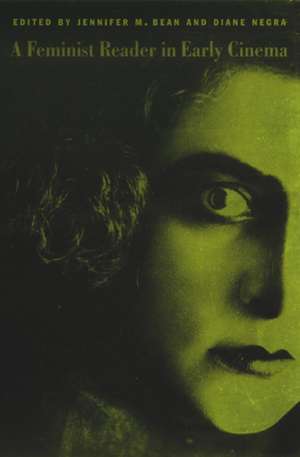
A Feminist Reader in Early Cinema: A Camera Obscura book
Autor Jennifer M. Bean, Diane Negraen Limba Engleză Paperback – 20 noi 2002
Pentru a naviga prin universul fascinant al începuturilor cinematografiei, avem nevoie, în primul rând, de o arhivă bogată și de o perspectivă critică dispusă să recupereze vocile uitate. A Feminist Reader in Early Cinema ne oferă exact aceste ingrediente: o colecție impresionantă de 20 de eseuri care transformă modul în care înțelegem istoria filmului. Suntem de părere că această lucrare nu este doar un exercițiu academic, ci o reconstrucție vitală a rolului pe care femeile l-au jucat în definirea modernismului vizual.
Observăm cum volumul reușește să integreze analize complexe despre staruri precum Mary Pickford și divele cinematografiei italiene, punându-le în dialog cu fenomene globale, de la industria din Shanghai la serialele de crimă franceze. Fanii volumului Cinematic Representations of Women in Modern Celebrity Culture, 1900–1950 vor recunoaște aceeași atenție metodică la contribuțiile feminine în producție și regie, aplicată aici într-un context mai larg, care include filozofia corpului și studiile postcoloniale. Cartea demonstrează cum „Femeia Nouă” a fost o prezență proteică în primele decenii ale secolului XX, oscilând între imaginea de vampă, sportivă sau „flapper” cinetic.
Putem afirma că acest volum reprezintă un punct de cotitură în studiile de gen, oferind 62 de ilustrații care ancorează dezbaterea teoretică în realitatea vizuală a epocii. Față de lucrări precum Feminism and Film Theory, care se concentrează pe evoluția teoretică a deceniilor recente, antologia editată de Jennifer M. Bean și Diane Negra privește direct spre rădăcinile tehnologice și narative ale mediului cinematografic. Este o experiență de lectură densă, dar extrem de satisfăcătoare, care redefinește autoratul și spectacolul prin prisma experienței feminine.

Preț: 286.36 lei
Carte indisponibilă temporar
Specificații
ISBN-10: 0822329999
Pagini: 592
Ilustrații: 62 illustrations
Dimensiuni: 167 x 233 x 37 mm
Greutate: 0.91 kg
Editura: MD – Duke University Press
Seria A Camera Obscura book
V-ar putea interesa
-
 -26%Preț: 206.12 lei280.21 lei
 -
 The Oxford Handbook of Dance and the Popular ScreenMelissa Blanco Borelli-14%Preț: 1005.11 lei1168.73 lei
 -
 Old and New Media After KatrinaDiane NegraPreț: 380.67 lei
 -
 Lady in the Dark – Iris Barry and the Art of FilmRobert SittonPreț: 358.76 lei
 -
 Preț: 364.83 lei
 -
 Preț: 378.81 lei
 -
 Mukhats PeopleBeanPreț: 214.49 lei
 -
 WetMira SchorPreț: 151.54 lei
 -
 Gay Fandom and Crossover StardomMichael DeangelisPreț: 248.25 lei
 -
 Soundtrack AvailableArthur KnightPreț: 291.82 lei
 -
 Extreme Weather and Global MediaJulia LeydaPreț: 379.51 lei
 -
 Picture ThisMolly Bang-15%Preț: 116.33 lei137.56 lei
De ce să citești această carte
Această carte este esențială pentru cercetătorii și pasionații de istoria filmului care doresc să descopere contribuțiile reale, adesea ignorate, ale femeilor în perioada mută și timpurie. Cititorul câștigă o înțelegere profundă a modului în care genul a modelat tehnologia și estetica cinematografică. Este un instrument critic de excepție care transformă simpla vizionare a unui film vechi într-o explorare politică și culturală riguroasă.
Despre autor
Jennifer M. Bean este directoarea programului de studii cinematografice și profesor asociat de literatură comparată la University of Washington. Expertiza sa în epoca filmului mut este recunoscută internațional, fiind laureată a premiului Katherine Singer Kovacs pentru eseu. În opera sa, Bean explorează adesea intersecțiile dintre estetică și politică, așa cum reiese din lucrări precum Silent Cinema and the Politics of Space sau American Cinema of the 1920s. Prin munca sa de editor și cercetător, ea reușește să aducă la lumină complexitatea istoriei filmului, deconstruind miturile simpliste despre începuturile industriei cinematografice americane și globale.
Descriere scurtă
Reflecting the stimulating diversity of early cinematic styles, technologies, and narrative forms, essays address a range of topics--from the dangerous sexuality of the urban" flaneuse" to the childlike femininity exemplified by Mary Pickford, from the Shanghai film industry to Italian diva films--looking along the way at birth-control sensation films, French crime serials, "war actualities," and the stylistic influence of art deco. Recurring throughout the volume is the protean figure of the New Woman, alternately garbed as childish tomboy, athletic star, enigmatic vamp, languid diva, working girl, kinetic flapper, and primitive exotic.
"Contributors." Constance Balides, Jennifer M. Bean, Kristine Butler, Mary Ann Doane, Lucy Fischer, Jane Gaines, Amelie Hastie, Sumiko Higashi, Lori Landay, Anne Morey, Diane Negra, Catherine Russell, Siobhan B. Somerville, Shelley Stamp, Gaylyn Studlar, Angela Dalle Vacche, Radha Vatsal, Kristen Whissel, Patricia White, Zhang Zhen