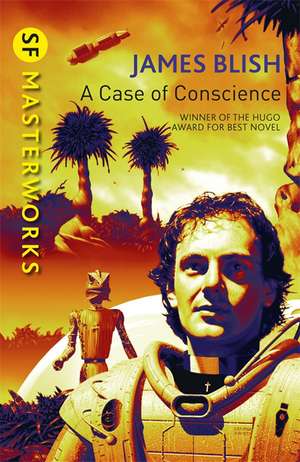
A Case Of Conscience: S.F. MASTERWORKS
Autor James Blishen Limba Engleză Paperback – 15 mai 2014
Ce se întâmplă atunci când o civilizație extraterestră pare să fi atins perfecțiunea morală fără a cunoaște divinitatea? Suntem de părere că această dilemă centrală transformă „A Case Of Conscience” într-o piesă fundamentală a literaturii speculative. Părintele Ruiz-Sanchez, un biolog iezuit, se confruntă pe planeta Lithia cu o specie de creaturi reptiliene a căror societate este guvernată de o logică impecabilă și de o etică naturală desăvârșită, dar care sunt complet lipsite de viață spirituală. Această absență a păcatului într-un univers pur rațional nu este pentru protagonist o dovadă a evoluției, ci o provocare teologică devastatoare, sugerând o erezie pe care mintea sa de cercetător se luptă să o proceseze.
Construcția lumii este remarcabilă prin rigoarea cu care Blish, el însuși un pasionat de microbiologie, descrie ecosistemul litian. Dacă The Sparrow de Mary Doria Russell v-a captivat prin explorarea tragică a misiunilor religioase în spațiu și a barierelor culturale, această carte extinde experiența în direcția unei dezbateri metafizice abstracte, unde miza nu este doar supraviețuirea fizică, ci mântuirea a două lumi. Ritmul narațiunii este unul intelectual, dar intensitatea crește pe măsură ce sistemul de credințe al protagonistului se fisurează sub presiunea datelor științifice.
În contextul operei sale, romanul se distanțează de amploarea tehnologică din Cities In Flight, preferând să se concentreze pe „spațiul interior” al conștiinței umane. Considerăm că forța acestui text rezidă tocmai în refuzul de a oferi soluții facile, plasând cititorul în centrul unui conflict insolubil între dogma religioasă și evidența empirică, o temă recurentă în cele mai bune lucrări ale colecției S.F. MASTERWORKS.
Din seria S.F. MASTERWORKS
- 26%
 Preț: 58.66 lei
 - 25%
 Preț: 81.82 lei
 - 25%
 Preț: 60.11 lei
 - 26%
 Preț: 57.99 lei
 - 27%
 Preț: 57.53 lei
 - 24%
 Preț: 83.09 lei
 - 26%
 Preț: 58.84 lei
 - 27%
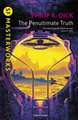 Preț: 57.58 lei
 - 25%
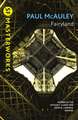 Preț: 60.51 lei
 - 26%
 Preț: 52.48 lei
 - 26%
 Preț: 58.53 lei
 - 25%
 Preț: 60.00 lei
 - 25%
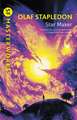 Preț: 59.78 lei
 - 27%
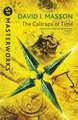 Preț: 51.80 lei
 - 22%
 Preț: 76.72 lei
 - 25%
 Preț: 59.80 lei
 - 27%
 Preț: 57.64 lei
 - 27%
 Preț: 52.20 lei
 - 25%
 Preț: 59.13 lei
 - 24%
 Preț: 82.82 lei
 - 27%
 Preț: 57.89 lei
 - 27%
 Preț: 57.41 lei
 - 26%
 Preț: 57.64 lei
 - 25%
 Preț: 82.31 lei
 - 28%
 Preț: 56.25 lei
 - 24%
 Preț: 83.99 lei
 - 26%
 Preț: 58.20 lei
 - 25%
 Preț: 59.71 lei
 - 26%
 Preț: 58.93 lei
 - 25%
 Preț: 59.46 lei
 - 26%
 Preț: 58.50 lei
 - 26%
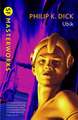 Preț: 58.74 lei
 - 25%
 Preț: 59.57 lei
 - 26%
 Preț: 58.69 lei
 - 25%
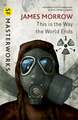 Preț: 60.18 lei
 - 25%
 Preț: 60.28 lei
 - 26%
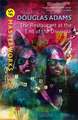 Preț: 79.25 lei
 - 27%
 Preț: 57.26 lei
 - 27%
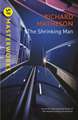 Preț: 57.58 lei
 - 26%
 Preț: 58.43 lei
 - 26%
 Preț: 58.91 lei
 - 26%
 Preț: 58.33 lei
 - 25%
 Preț: 60.22 lei
 - 26%
 Preț: 58.87 lei
 - 24%
 Preț: 60.40 lei
 - 27%
 Preț: 57.76 lei
 - 25%
 Preț: 59.24 lei
 - 27%
 Preț: 57.46 lei
 - 25%
 Preț: 60.59 lei
Preț: 57.76 lei
Preț vechi: 78.75 lei
-27%
Carte disponibilă
Livrare economică 16-30 noiembrie
Livrare express 30 octombrie-05 noiembrie pentru 39.88 lei
Specificații
ISBN-10: 1473205433
Pagini: 208
Dimensiuni: 132 x 196 x 16 mm
Greutate: 0.19 kg
Editura: Orion Publishing Group
Colecția Gollancz
Seria S.F. MASTERWORKS
Locul publicării:London, United Kingdom
V-ar putea interesa
-
 SolarisStanislaw LemPreț: 101.96 lei
 -
 Don't Burn Anyone at the Stake TodayNaomi AldermanPreț: 121.20 lei
 -
 Children of GodMary Doria RussellPreț: 102.91 lei
 -
 The SparrowMary Doria RussellPreț: 123.63 lei
 -
 The SparrowMary Doria Russell-16%Preț: 68.00 lei80.86 lei
 -
 ShroudAdrian TchaikovskyPreț: 80.46 lei
 -
 The Collected StoriesCixin Liu-39%Preț: 143.60 lei235.81 lei
 -
 The Best of All Possible WorldsKaren Lord-25%Preț: 53.54 lei71.68 lei
 -
 Downward To The EarthRobert Silverberg-25%Preț: 58.96 lei79.13 lei
 -
 The Book of Strange New ThingsMichel FaberPreț: 81.73 lei
 -
 Apostles of MercyLindsay Ellis-23%Preț: 57.32 lei74.13 lei
 -
 Truth of the DivineLindsay Ellis-15%Preț: 57.63 lei67.69 lei
 -
 The Alien PerspectiveDavid WhitehousePreț: 77.88 lei
 -
 The ImmortalistsAleks KrotoskiPreț: 123.00 lei
 -
 Man Against Being: Body Horror and the Death of Lifeaurora linneaPreț: 151.91 lei
 -
 The Time MachineH. G. WellsPreț: 33.23 lei
 -
 Tokyo Alien Bros., Vol. 3Keigo Shinzo-20%Preț: 62.23 lei77.76 leiRecomandat
De ce să citești această carte
Recomandăm această carte cititorilor care caută un science-fiction cerebral, axat pe filozofie și etică. Este o lectură esențială pentru cei interesați de modul în care religia și știința se pot ciocni în fața necunoscutului extraterestru. Veți câștiga o perspectivă fascinantă asupra conceptului de „moralitate fără credință”, totul într-un format clasic ce a definit standardele genului în perioada sa de aur.
Despre autor
James Benjamin Blish (1921–1975) a fost un scriitor american de science-fiction și fantezie, membru marcant al grupului Futurians. Cu o formație solidă în microbiologie obținută la Rutgers, Blish a adus o rigoare științifică rară în scrierile sale, fiind creditat cu inventarea termenului „gigant gazoasă”. Este faimos pentru ciclul Cities In Flight și pentru adaptările literare ale universului Star Trek. Spirit critic acerb, a scris sub pseudonimul William Atheling Jr., contribuind major la maturizarea teoretică a genului. „A Case Of Conscience” rămâne cea mai apreciată lucrare a sa, fiind recompensată cu prestigiosul premiu Hugo.
Descriere
Winner of the Hugo Award for best novel, 1959.
Notă biografică
Extras
a door too heavy, complex, or cleverly tracked to prevent him from closing
it with a sound like a clap of doom. And no planet in the universe could
possess an air sufficiently thick and curtained with damp to muffle that
sound--not even Lithia.
Father Ramon Ruiz-Sanchez, late of Peru, and always Clerk Regular of the
Society of Jesus, professed father of the four vows, continued to read. It
would take Paul Cleaver's impatient fingers quite a while to free him from
his jungle suit, and in the meantime the problem remained. It was a
century-old problem, first propounded in 1939, but the Church had never
cracked it. And it was diabolically complex (that adverb was official,
precisely chosen, and intended to be taken literally.) Even the novel
which had proposed the case was on the Index Expurgatorius, and Father
Ruiz-Sanchez had spiritual access to it only by virtue of his Order.
He turned the page, scarcely hearing the stamping and muttering in the
hall. On and on the text ran, becoming more tangled, more evil, more
insoluble with every word:
. . . Magravius threatens to have Anita molested by Sulla, an orthodox
savage (and leader of a band of twelve mercenaries, the Sullivani,) who
desires to procure Felicia for Gregorius, Leo Vitellius and Macdugalius,
four excavators, if she will not yield to him and also deceive Honuphrius
by rendering conjugal duty when demanded. Anita who claims to have
discovered incestuous temptations from Jeremias and Eugenius--
There now, he was lost again. Jeremias and Eugenius were--? Oh, yes, the
"philadelphians" or brotherly lovers (another crime hidden there, no
doubt) at the beginning of the case, consanguineous to the lowest degree
with both Felicia and Honuphrius--the latter the apparent prime villain and
husband of Anita. It was Magravius, who seemed to admire Honuphrius, who
had been urged by the slave Mauritius to solicit Anita, seemingly under
the aegis of Honuphrius himself. This, however, had come to Anita through
her tirewoman Fortissa, who was or at one time had been the common-law
wife of Mauritius and had borne him children--so that the whole story had
to be weighed with the utmost caution. And that entire initial confession of
Honuphrius had come out under torture--voluntarily consented to, to be sure,
but still torture. The Fortissa-Mauritius relationship was even more dubious, really
only a supposition of the commentator Father Ware--
7
"Ramon, give me a hand, will you?" Cleaver shouted suddenly. "I'm stuck,
and--and I don't feel well."
The Jesuit biologist arose in alarm, putting the novel aside. Such an
admission from Cleaver was unprecedented.
The physicist was sitting on a pouf of woven rushes, stuffed with a
sphagnumlike moss, which was bulging at the equator under his weight. He
was half-way out of his glass-fiber jungle suit, and his face was white
and beaded with sweat, although his helmet was already off. His uncertain,
stubby fingers tore at a jammed zipper.
"Paul! Why didn't you say you were ill in the first place? Here, let go of
that; you're only making things worse. What happened?"
"Don't know exactly," Cleaver said, breathing heavily but relinquishing
the zipper. Ruiz-Sanchez knelt beside him and began to work it carefully
back onto its tracks. "Went a ways into the jungle to see if I could spot
more pegmatite lies. It's been in the back of my mind that a pilot-plant
for turning out tritium might locate here eventually--ought to be able to
produce on a prodigious scale."
"God forbid," Ruiz-Sanchez said under his breath.
"Hm? Anyhow, I didn't see anything. A few lizards, hoppers, the usual
thing. Then I ran up against a plant that looked a little like a
pineapple, and one of the spines jabbed right through my suit and nicked
me. Didn't seem serious, but--"
"But we don't have the suits for nothing. Let's look at it. Here, put up
your feet and we'll haul those boots off. Where did you get the--oh. Well,
it's angry-looking, I'll give it that. Any other symptoms?"
"My mouth feels raw," Cleaver complained.
"Open up," the Jesuit commanded. When Cleaver complied, it became evident
that his complaint had been the understatement of the year. The mucosa
inside his mouth was nearly covered with ugly and undoubtedly painful
ulcers, their edges as sharply defined as though they had been cut with a
cookie punch.
Ruiz-Sanchez made no comment, however, and deliberately changed his
expression to one of carefully calculated dismissal. If the physicist
needed to minimize his ailments, that was all right with Ruiz-Sanchez. An
alien planet is not a good place to strip a man of his inner defenses.
"Come into the lab," he said. "You've got some inflammation in there."
Cleaver arose, a little unsteadily, and followed the Jesuit into the
laboratory. There Ruiz-Sanchez took smears from several of the ulcers onto
microscope slides, and Gram-stained them. He filled the time consumed by
the staining process with the ritual of aiming the microscope's substage
mirror out the window at a brilliant white cloud. When the timer's alarm
went off, he rinsed and flame-dried the first slide and slipped it under
the clips.
As he had half-feared, he saw few of the mixed bacilli and spirochetes
which would have indicated a case of ordinary, Earthly, Vincent's
angina--"trench mouth," which the clinical picture certainly suggested, and
which he could have cured overnight with a spectrosigmin pastille.
Cleaver's oral flora were normal, though on the increase because of all
the exposed tissue.
"I'm going to give you a shot," Ruiz-Sanchez said gently. "And then I
think you'd better go to bed."
"The hell with that," Cleaver said. "I've got nine times as much work to
do as I can hope to clean up now, without any additional handicaps."
"Illness is never convenient," Ruiz-Sanchez agreed. "But why worry about
losing a day or so, since you're in over your head anyhow?"
"What have I got?" Cleaver asked suspiciously.
"You haven't got anything," Ruiz-Sanchez said, almost regretfully. "That
is, you aren't infected. But your 'pineapple' did you a bad turn. Most
plants of that family on Lithia bear thorns or leaves coated with
polysaccharides that are poisonous to us. The particular glucoside you ran
up against today was evidently squill, or something closely related to it.
It produces symptoms like those of trench mouth, but a lot harder to clear
up."