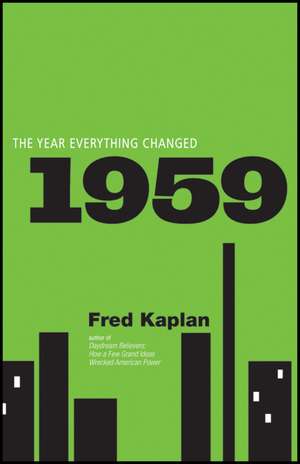
1959
Autor Fred Kaplanen Limba Engleză Paperback – apr 2010
Fred Kaplan, profesor emerit și un biograf de o rigoare remarcabilă — fiind finalist al premiului Pulitzer pentru lucrările sale despre Charles Dickens și Thomas Carlyle — își îndreaptă atenția către un an pe care mulți l-au considerat, în mod eronat, doar un preludiu calm: 1959. În acest volum, autorul demonstrează că nu anii '60 au inventat modernitatea, ci mai degrabă anul 1959 a fost adevăratul 'annus mirabilis', momentul în care structurile vechi ale societății au început să se fisureze sub presiunea inovației. Notăm cu interes cum Kaplan părăsește pentru un moment sfera biografiilor literare pentru a scrie o 'biografie' a unei întregi civilizații aflate în flux. Cine a apreciat 1968 de Mark Kurlansky va găsi aici aceeași energie narativă și dorință de a surprinde spiritul vremii, dar cu o perspectivă ce mută accentul de pe revolta stradală explicită către geneza silențioasă a tehnologiei și culturii pop. Dacă în The Bomb sau The Insurgents Kaplan analiza mecanismele puterii militare și politice, în 1959 el integrează aceste elemente într-un tablou mult mai vast. Structura cărții, organizată în 25 de capitole percutante, ne conduce de la 'ruperea lanțurilor' la apariția microcipului, a jazz-ului experimental și a noii diplomații de tip superpower. Este o analiză holistică ce refuză fragmentarea, legând nașterea computerului de mișcările de avangardă și de tensiunile Războiului Rece. Credem că forța acestui volum rezidă în capacitatea autorului de a demonstra cum evenimente aparent disparate au pavat drumul către lumea hiper-conectată în care trăim astăzi.
Preț: 99.46 lei
Carte disponibilă
Livrare economică 27 august-10 septembrie
Specificații
ISBN-10: 0470602031
Pagini: 322
Dimensiuni: 139 x 216 x 29 mm
Greutate: 0.4 kg
Editura: Turner Publishing Company
Locul publicării:Hoboken, United States
V-ar putea interesa
-
 LincolnFred KaplanPreț: 115.21 lei
 -
 Dinner at Mr. Jefferson'sCharles A. CeramiPreț: 204.34 lei
 -
 Preț: 157.33 lei
 -
 Daydream BelieversFred KaplanPreț: 86.50 lei
 -
 This Is Your Country on DrugsRyan GrimPreț: 87.62 lei
 -
 Columbus in the AmericasWilliam Least Heat-MoonPreț: 104.77 lei
 -
 The Right WordsWynton C HallPreț: 196.31 lei
 -
 Gore VidalFred Kaplan-52%Preț: 110.82 lei229.47 lei
 -
 Colombia's Narcotics Nightmare: How the Drug Trade Destroyed PeaceJames D. HendersonPreț: 265.49 lei
 -
 Dickens – A BiographyFred KaplanPreț: 307.50 lei
 -
 Gilded: How Newport Became America's Richest ResortDeborah DavisPreț: 120.05 lei
 -
 Texas GunslingersBill O'NealPreț: 131.24 lei
Public țintă
Books about a specific year in American history have done well in the past and are still doing well now. Plus, the 1950s have replaced the 1960s as the decade Americans want to hear the most about, and this book covers the abrupt transition not just from one decade to another, but from one epoch in American history into the world of Modern America.De ce să citești această carte
Recomandăm această carte oricărui cititor pasionat de istoria culturală care dorește să înțeleagă rădăcinile lumii moderne. Veți descoperi că 1959 nu a fost doar un an de tranziție, ci punctul zero pentru tot ceea ce definim astăzi ca fiind contemporan: de la tehnologia digitală la libertățile sociale. Este o lectură esențială pentru a vedea cum ideile revoluționare prind formă în momente de maximă tensiune istorică.
Despre autor
Fred Kaplan este profesor emerit distins de limba engleză la Queens College și la Graduate Center din cadrul City University of New York. Reputația sa de istoric și biograf este consolidată de lucrări monumentale dedicate unor figuri precum Mark Twain, Henry James sau Gore Vidal. Munca sa academică și literară a fost recunoscută la cel mai înalt nivel, fiind finalist pentru National Book Critics Circle Award și pentru prestigiosul premiu Pulitzer. Expertiza sa în analiza documentelor de arhivă și în portretizarea personalităților complexe se reflectă în modul meticulos în care a reconstruit atmosfera anului 1959.
Descriere scurtă
Textul de pe ultima copertă
--"Los Angeles Times"
"Clever . . . Fun . . . Kaplan makes an intriguing case that 1959 was an authentic annus mirabellis."
--"The Wall Street Journal"
"Enormously engaging. . . . Kaplan is wonderful at chronicling what changed and how."
--"Washington Post"
"Immensely enjoyable reading. . . . A first-rate book."
--George Packer, "The New Yorker"
"This sprawling, holistic joy of a book explores, expands, and provokes reassessment of an entire era--not just a year--in a way that is deeply satisfying and enlightening. Social, political, and historical commentary doesn't get much better than this."
--"Daily Kos"
It was the year of the microchip, the birth-control pill, the space race, and the computer revolution; the rise of Pop art, free jazz, "sick comics," the New Journalism, and indie films; the emergence of Castro, Malcolm X, and personal superpower diplomacy; the beginnings of Motown, Happenings, and the Generation Gap--all bursting against the backdrop of the Cold War, the fallout-shelter craze, and the first American casualties of the war in Vietnam. Drawing on original research, untapped archives, and interviews with major figures of the time, Fred Kaplan pieces together the vast, untold story of a civilization in flux--and paints vivid portraits of the men and women whose inventions, ideas, and energy paved the way for the world we know today.