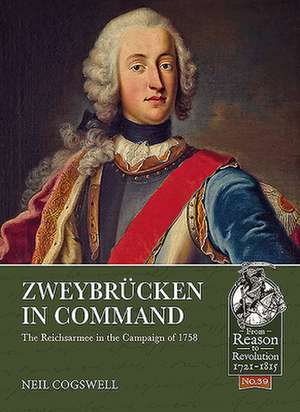
Zweybrücken in Command
Autor Neil Cogswellen Limba Engleză Paperback – 13 noi 2019
Recomandăm acest volum ca o lucrare de referință pentru nivelul de licență și master în istorie militară, fiind un instrument de cercetare esențial pentru studiul campaniilor Reichsarmee din anul 1758. ZweybruCken in Command se concentrează pe eforturile de reconstrucție a 'Armatei Imperiului' după dezastrul de la Rossbach, sub comanda Prințului Friedrich-Michael. Nucleul cărții este constituit din traducerea adnotată a unui jurnal oficial de campanie, oferind o perspectivă tehnică și cronologică asupra operațiunilor din Saxonia și apărarea Bambergului. Ceea ce distinge acest volum este dualitatea surselor primare utilizate de Neil Cogswell. Dacă jurnalul oferă rigoarea unui registru oficial, scrisorile anexate ale contelui de Boisgelin aduc acea notă de experiență personală, speculație și context social care lipsește documentelor administrative. Această abordare echilibrată permite cititorului să înțeleagă nu doar mișcările de trupe, ci și atmosfera din rândul corpului ofițeresc francez care servea alături de trupele imperiale. Neil Cogswell își consolidează poziția de specialist în conflictul austro-prusac, volumul de față fiind o continuare firească a analizelor detaliate începute în Olmütz to Torgau și Lobositz to Leuthen. Dacă lucrarea Between Scylla and Charybdis - The Army of Elector Frederich August II of Saxony, 1733-1763 de Marco Pagan se concentrează pe estetica și organizarea armatei saxone, volumul de față este mult mai aplicat pe dinamica de comandă și execuție tactică în teren. Tonul este unul sobru, academic, susținut de un aparat critic bogat, hărți detaliate și planșe color care ilustrează uniformologia epocii, oferind o claritate vizuală necesară înțelegerii manevrelor complexe descrise.
Preț: 181.31 lei
Carte indisponibilă temporar
Specificații
ISBN-10: 1911628550
Pagini: 134
Ilustrații: 13 b/w maps, 11 tables, 6 Order of Battle, 8pp colour plates
Dimensiuni: 182 x 250 x 9 mm
Greutate: 0.38 kg
Ediția:Adnotată
Editura: HELION & COMPANY
De ce să citești această carte
Această lucrare se adresează istoricilor și pasionaților de secol XVIII care caută surse primare traduse și comentate. Cititorul câștigă o înțelegere profundă a logisticii și provocărilor de comandă ale Reichsarmee în 1758, beneficiind de contrastul fascinant dintre un jurnal oficial de operațiuni și corespondența privată a unui ofițer de legătură francez.