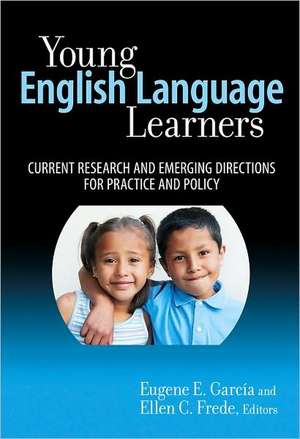
Young English Language Learners
Editat de Eugene E Garcia, Ellen C Fredeen Limba Engleză Paperback – 30 iul 2010
- What does the research clearly indicate for policy and practice?
- How solid is this database and what findings are emerging?
- What should the research agenda be for young ELLs?
Preț: 260.83 lei
Puncte Express: 391
Carte indisponibilă temporar
Doresc să fiu notificat când acest titlu va fi disponibil:
Se trimite...
Specificații
ISBN-13: 9780807751114
ISBN-10: 0807751111
Pagini: 224
Dimensiuni: 157 x 226 x 15 mm
Greutate: 0.32 kg
Editura: Teachers College Press
ISBN-10: 0807751111
Pagini: 224
Dimensiuni: 157 x 226 x 15 mm
Greutate: 0.32 kg
Editura: Teachers College Press
Notă biografică
Eugene E. García is Professor of Education and Vice President for Education Partnerships at Arizona State University. Ellen C. Frede is Co-Director of the National Institute for Early Education Research at the Graduate School of Education, Rutgers, The State University of New Jersey.
Descriere
Provides up-to-date syntheses of the research base for young English language learners on critical topics such as demographics, development of bilingualism, cognitive and neurological benefits of bilingualism, and family relationships, as well as classroom, assessment, and teacher-preparation practices.