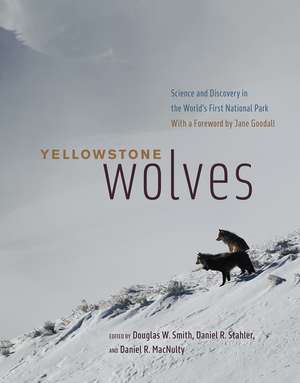
Yellowstone Wolves: Science and Discovery in the World's First National Park
Editat de Douglas W. Smith, Daniel R. Stahler, Daniel R. MacNulty Cuvânt înainte de Jane Goodallen Limba Engleză Hardback – 7 dec 2020
Descoperim în Yellowstone Wolves nu doar o cronică a succesului ecologic, ci o fereastră deschisă către modul în care natura se recalibrează atunci când un prădător de vârf revine acasă. Cititorul va putea înțelege, prin date concrete și imagini spectaculoase, cum prezența lupilor a transformat cursul râurilor și compoziția vegetației, oferind un model de restaurare a ecosistemelor recunoscut la nivel mondial. Remarcăm efortul monumental de a aduna sub aceeași copertă contribuțiile a peste 70 de specialiști, transformând acest volum în resursa definitivă despre lupii din cel mai vechi parc național al lumii.
Fanii lucrării The Ecology of Large Mammals in Central Yellowstone de Robert A Garrott vor recunoaște aceeași atenție la interacțiunile complexe dintre climă, peisaj și faună, aplicată aici la dinamica fascinantă a haitelor de lupi. Cartea se distinge prin rigoarea științifică dublată de o componentă vizuală bogată, incluzând planșe color și acces la un documentar semnat de Bob Landis. Subliniem modul în care Douglas W. Smith evoluează de la perspectiva narativă din Decade of the Wolf către o analiză exhaustivă, multidisciplinară, care acoperă totul, de la genetica populațiilor la politicile de management și controversele culturale.
Structurată logic, de la contextul istoric al eradicării lupilor până la biologia lor fundamentală și dinamica de familie, cartea ghidează cititorul printr-un deceniu de descoperiri. Nu este doar o poveste despre supraviețuire, ci un studiu despre reziliența naturii, oferind soluții practice pentru conflictele actuale dintre om și carnivorele mari. Este, fără îndoială, punctul culminant al carierei lui Douglas W. Smith și o mărturie a muncii depuse în cadrul Yellowstone Wolf Project.
Preț: 297.58 lei
Carte disponibilă
Livrare economică 05-19 noiembrie
Livrare express 22-28 octombrie pentru 121.19 lei
Specificații
ISBN-10: 022672834X
Pagini: 344
Ilustrații: 62 color plates, 29 halftones, 24 line drawings
Dimensiuni: 216 x 279 x 33 mm
Greutate: 1.63 kg
Ediția:First Edition
Editura: University of Chicago Press
Colecția University of Chicago Press
De ce să citești această carte
Această carte este esențială pentru oricine pasionat de conservare și viață sălbatică, oferind o perspectivă rară asupra modului în care știința aplicată poate salva specii întregi. Cititorul câștigă acces la decenii de cercetare de teren, explicate clar și susținute vizual. Este recomandarea noastră pentru cei care doresc să înțeleagă dincolo de mituri rolul vital al lupului în menținerea echilibrului natural și a biodiversității.
Despre autor
Douglas W. Smith este un biolog senior și liderul proiectului de monitorizare a lupilor din Parcul Național Yellowstone. Cu o carieră dedicată studierii carnivorelor mari, el a devenit una dintre cele mai respectate voci în domeniul conservării. Experiența sa vastă se reflectă în lucrări anterioare precum Wolves on the Hunt și Yellowstone's Birds, demonstrând o capacitate unică de a sintetiza date complexe în formate accesibile. Munca sa a fost fundamentală pentru succesul reintroducerii lupilor, transformând Yellowstone într-un laborator viu pentru ecologia modernă.
Descriere scurtă
Here, for the first time in a single book, is the incredible story of the wolves’ return to Yellowstone National Park as told by the very people responsible for their reintroduction, study, and management. Anchored in what we have learned from Yellowstone, highlighting the unique blend of research techniques that have given us this knowledge, and addressing the major issues that wolves still face today, this book is as wide-ranging and awe-inspiring as the Yellowstone restoration effort itself. We learn about individual wolves, population dynamics, wolf-prey relationships, genetics, disease, management and policy, newly studied behaviors and interactions with other species, and the rippling ecosystem effects wolves have had on Yellowstone’s wild and rare landscape. Perhaps most importantly of all, the book also offers solutions to ongoing controversies and debates.
Featuring a foreword by Jane Goodall, beautiful images, a companion online documentary by celebrated filmmaker Bob Landis, and contributions from more than seventy wolf and wildlife conservation luminaries from Yellowstone and around the world, Yellowstone Wolves is a gripping, accessible celebration of the extraordinary Yellowstone Wolf Project—and of the park through which these majestic and important creatures once again roam.
Notă biografică
Cuprins
A Note on Accompanying Video
Robert K. Landis
Foreword
Jane Goodall
Preface
Douglas W. Smith, Daniel R. Stahler, and Daniel R. MacNulty
Part 1 History and Reintroduction
1 Historical and Ecological Context for Wolf Recovery
Douglas W. Smith, Daniel R. Stahler, Daniel R. MacNulty, and Lee H. Whittlesey
Box 1.1 Wolf History and Surveys in Yellowstone National Park
2 How Wolves Returned to Yellowstone
Box 2.1 To Reintroduce or Not to Reintroduce, That Is the Question
Diane Boyd
Guest Essay: Why Are Yellowstone Wolves Important?
Part 2 Behavioral and Population Ecology
3 Essential Biology of the Wolf: Foundations and Advances
Daniel R. MacNulty, Daniel R. Stahler, Tim Coulson, and Douglas W. Smith
4 Ecology of Family Dynamics in Yellowstone Wolf Packs
Box 4.1 Naming Wolf Packs
5 Territoriality and Competition between Wolf Packs
John B. Theberge and Mary T. Theberge
6 Population Dynamics and Demography
Guest Essay: Yellowstone Wolves Are Important Because They Changed Science
Part 3 Genetics and Disease
7 Yellowstone Wolves at the Frontiers of Genetic Research
8 The K Locus: Rise of the Black Wolf
9 Infectious Diseases in Yellowstone’s Wolves
Guest Essay: Why Are Yellowstone Wolves Important? A European Perspective
Part 4 Wolf-Prey Relationships
10 How We Study Wolf-Prey Relationships
Douglas W. Smith
Ky Koitzsch and Lisa Koitzsch
11 Limits to Wolf Predatory Performance
Blaire Van Valkenburgh
12 What Wolves Eat and Why
Box 12.1 Bison in Wood Buffalo National Park
L. N. Carbyn
13 Wolf Predation on Elk in a Multi-Prey Environment
Mark Hebblewhite
Matthew C. Metz
Box 13.3 Lessons from Denali National Park: Stability in Predator-Prey Dynamics Is a Pause on the Way to Somewhere Else
Layne Adams
14 Population Dynamics of Northern Yellowstone Elk after Wolf Reintroduction
Robert A. Garrott, P. J. White, Claire Gower, Matthew S. Becker, Shana Drimal, Ken L. Hamlin, and Fred G. R. Watson
Daniel R. Stahler and Daniel R. MacNulty
Guest Essay: The Value of Yellowstone’s Wolves? The Power of Choice
Part 5 Ecosystem Effects and Species Interactions
15 Indirect Effects of Carnivore Restoration on Vegetation
Daniel B. Tyers
16 Competition and Coexistence among Yellowstone’s Meat Eaters
Guest Essay: Old Dogs Taught Old Lessons
Part 6 Conservation, Management, and the Human Experience
17 Wolves and Humans in Yellowstone
18 The Wolf Watchers
Box 18.2 Seeing Wolves
Robert Hayes
19 Conservation and Management: A Way Forward
Guest Essay: Making Better Sense of Wolves
Rebecca J. Watters, Douglas W. Smith, Daniel R. Stahler, and Daniel R. MacNulty
Acknowledgments
Appendix: Species Names Used in the Text
Literature Cited
List of Contributors
Author Index
Subject Index