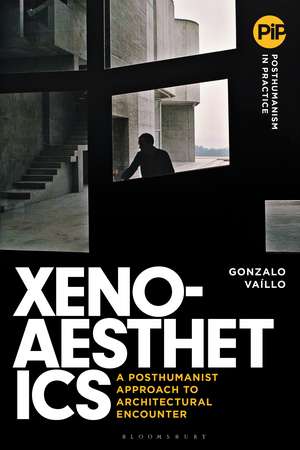
Xenoaesthetics: A Posthumanist Approach to Architectural Encounter: Posthumanism in Practice
Autor Dr Gonzalo Vailloen Limba Engleză Hardback – 8 iun 2026
Descoperim în Xenoaesthetics o lucrare ce marchează o schimbare de paradigmă în teoria spațiului, propunând o perspectivă postumanistă asupra întâlnirii cu arhitectura. Spre deosebire de literatura clasică ce plasează omul în centrul designului, Dr Gonzalo Vaillo tratează proiectul arhitectural ca pe o entitate autonomă, cu propria sa existență și logică internă. Această abordare rezonează cu temele explorate în Architecture and Objects de Graham Harman, însă Xenoaesthetics se distinge prin introducerea conceptului de „xenoestetică” — un mod cognitiv specific de a percepe tensiunea dintre unitate și multiplicitate în spațiul construit.
Remarcăm o structură riguroasă, organizată în trei secțiuni care ghidează cititorul de la abstract la practic. Prima parte stabilește cadrul xenologic, definind proiectul ca obiect, în timp ce a doua parte explorează „cogniția profundă” și experiența imaterială a unității. Ultima parte, dedicată „cogniției deschise”, analizează infrastructura experienței și actul de a locui. Apreciem modul în care autorul sintetizează concepte din Ontologia Orientată spre Obiect cu studiul de caz aplicat pe arhitectura lui Enric Miralles, oferind o metodologie hibridă, teoretico-practică.
Ca alternativă la The Architecture of Human Exceptionalism de Eva Perez de Vega pentru cursurile de estetică sau teorie contemporană, lucrarea lui Vaillo aduce avantajul unei analize axate pe „obiectul” arhitectural în sine, nu doar pe relațiile ecologice sau speciiste. Este o resursă densă, publicată sub egida Bloomsbury Academic, care nu încearcă să rezolve problemele sociale imediate prin design, ci să redefinească fundamental modul în care interacționăm cu mediul construit la nivel ontologic.


Preț: 527.15 lei
Preț vechi: 791.20 lei
-33% Precomandă
Carte nepublicată încă
Specificații
ISBN-10: 1350515035
Pagini: 304
Ilustrații: 10 bw illus
Dimensiuni: 156 x 234 x 28 mm
Greutate: 0.45 kg
Editura: Bloomsbury Publishing
Colecția Bloomsbury Academic
Seria Posthumanism in Practice
Locul publicării:London, United Kingdom
De ce să citești această carte
Recomandăm această carte arhitecților și cercetătorilor care doresc să depășească viziunea tradițională asupra designului centrat pe utilizator. Xenoaesthetics oferă un instrumentar critic nou, extras din filozofia contemporană, util pentru a înțelege arhitectura ca entitate independentă. Cititorul câștigă o perspectivă profundă asupra modului în care spațiul ne modelează percepția, dincolo de sistemele de valori prescrise sau de funcționalismul îngust.
Descriere
Drawing together insights from philosophy and architecture, this book delves into the conditions, roles, and implications of architectural encounters, conceptualising the architectural project as a site of unity-multiplicity tension, and introducing the concept of xenoaesthetics as a cognitive mode attuned to this structure. This approach invites readers to reimagine architectural experience as a dual action that reveals the project to us and realizes itself through us.
As well as implying disciplinary consequences for design questions, Vaillo's work holds socio-political significance for our everyday architectural interactions, contributing to the quest for practices and discourses on equality. Methodologically, his argument draws from Object-Oriented Ontology and the architect Enric Miralles, offering an additional retrospective crossover that enriches both references.
A resource for students, architects, scholars, and enthusiasts interested in exploring architecture beyond assumptions and prescribed value systems, Xenoaesthetics encourages a deeper understanding of the intricate relationship between humans and the architectural project.
Cuprins
Acknowledgements
Introduction
Part I: The Xenological Framework
1. The Architectural Project as Object
2. The Cognitive-unit
3. The Xenoaesthetic Approach
Part II: Deep cognition
4. The Immaterial Experience of Unity
5. The Role of the Cognizer
6. Vertical techne
Part III: Open Cognition
7. The Infrastructure of Experience
8. Designing
9. Inhabiting
Conclusion
Bibliography
Recenzii
Gonzalo Vaíllo's Xenoaesthetics: A Posthumanist Approach to Architectural Encounter is a welcome addition to contemporary discourse on architecture and aesthetics. Vaillo provocatively lays out an alternate position for design, one where architecture does not pretend to solve the problems of the day but instead operates as an open-ended process articulating strange realities, disturbing familiar backgrounds, and helping us to engage in architectural projects that cannot be reduced to their existence as buildings.