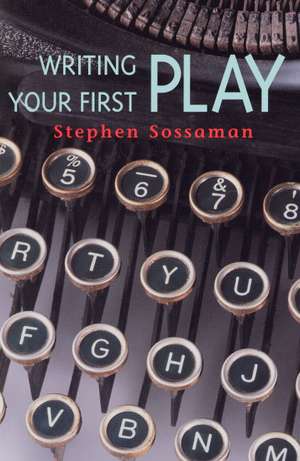
Writing Your First Play
Autor Stephen Sossamanen Limba Engleză Paperback – 31 iul 2000
Concentrating on clearly stated fundamental principles, this brief but efficient reference guide takes writers, step-by-step, to the completion of their first play. A practical workbook, it covers everything from selecting an idea to doing critical revision and how to avoid the frustrating errors that typically plague first time playwrights. Chapter topics include situation and story, characters, play structure, keys to holding an audience, dialogue, stage movement, and theme. Exercises throughout the book focus on the playwright and the play in progress, allowing readers to better assess their own drafts. For individuals and community writers groups even those with little theatre-going experience, as they pen their first one-act or full-length naturalistic drama. "
Preț: 629.27 lei
Preț vechi: 776.88 lei
-19%
Carte tipărită la comandă
Livrare economică 27 noiembrie-11 decembrie
Specificații
ISBN-10: 013027416X
Pagini: 126
Dimensiuni: 152 x 229 x 6 mm
Greutate: 0.2 kg
Ediția:1
Editura: Pearson
Locul publicării:New York, United States
V-ar putea interesa
-
 Is This a Dagger Which I See Before Me?William Shakespeare-37%Preț: 18.44 lei29.05 lei
 -
 Pride and PrejudiceJane AustenPreț: 304.13 lei
 -
 A Preface to T S EliotRon Tamplin-15%Preț: 490.09 lei576.57 lei
 -
 Ravenclaw ReaderJohn Patrick PazdzioraPreț: 160.95 lei
 -
 -18%Preț: 78.61 lei96.40 lei
 -
 The Curious Incident of the Dog in the Night-Time GCSE Student GuideJacqueline Bolton-11%Preț: 77.31 lei87.23 lei
 -
 -26%Preț: 91.21 lei122.83 lei
 -
 Rosalind: A Biography of Shakespeare’s Immortal HeroineAngela Thirlwell-17%Preț: 141.76 lei170.26 lei
 -
 Romeo and JulietWilliam Shakespeare-41%Preț: 46.36 lei78.09 lei
Descriere
This brief, practical workbook guides students step by step through writing their first play. It covers the process from selecting an idea to doing critical revision and saves students from common frustrations by explaining and walking through the basics. Great as a stand-alone, packaged with other creative writing texts or in drama or acting courses.
Cuprins
Introduction.
THE BEGINNING PLAYWRIGHT.
Are There Rules for Playwriting?
What Is Special About Theater?
Theater Isn't Film. Theaters' Requirements.Being a Playwright.
The Writer's Workbook. Personal Journal.Where Play Ideas Come From.
Situation. Story. THE PLAYWRIGHT'S TOOLBOX.
Characters.
Major Characters. Protagonist and Antagonist. Levels of Motivation. Treating Characters As Individuals. Minor Characters. The Audience and Your Characters.Play Structure.
Elements of Plot. Subplots. Acts. Scenes. Beats.Five Keys to Holding Your Audience.
Emotions and Secrets. Conflict. Obstacles and Complications. Tension and Suspense. Action.What Your Audience Sees and Hears.
Sets, Props, Lighting, Music, and Costumes. Stage Movement.Dialog.
Dialog's Nine Major Functions. Characters Have Unique Speaking Styles. Pauses and Silences. Dramatic Irony. Subtext. Showing Emotions By Speech Disruptions. Exposition.Theme.
WRITING YOUR FIRST PLAY.
Select and Evaluate Your Idea.
Decide How to Write Your First Draft.
If you Decide to Plan Carefully. If you Decide to Write Freely. Select a Working Title.Write Your First Draft.
Troubleshooting. Writer's Block.Evaluate Your Draft.
Evaluation Checklist.Revise Your Play.
Develop Your Play.
Prepare Your Script and Ancillary Materials. Production Options.What's Next?
Appendix A: Script Format.
Appendix B: Sample Synopsis.
Appendix C: Record of Submissions.
Appendix D: Addresses and Web Sites.
Appendix E: An Example: Ibsen's A Doll's House.
Index.
Textul de pe ultima copertă
The beginning writer will learn the secrets to effective structure, intriguing characters, and powerful dialog.
This writing-group tested guide breaks down a sometime overwhelming and intimidating task into a logical and manageable sequence. The emphasis on first-draft evaluation and effective revision will help the beginning playwright get it written and get it right.
Caracteristici
- Concise focus on the basics—For today's students with little theatre-going experience.
- Saves students from making frustrating blunders and false starts, and using inappropriate playwriting conventions. Ex.___
- Saves students from making frustrating blunders and false starts, and using inappropriate playwriting conventions. Ex.___
- Reader-friendly—Eliminates dense text with ideas buried inside.
- Assists instructors making in-class references to particular points. Enables students to easily re-read and refer to conventions during the revision process. Ex.___
- Assists instructors making in-class references to particular points. Enables students to easily re-read and refer to conventions during the revision process. Ex.___
- A series of checklists—Which alert writers to common mistakes.
- Offers students more practical advice and less theory, so that they are able to avoid or solve the most common problems faced by beginning playwrights. Ex.___
- Offers students more practical advice and less theory, so that they are able to avoid or solve the most common problems faced by beginning playwrights. Ex.___
- Relevant assignments—Provides students with exercises that focus on the play in progress (not “busy work”), and assures a solid foundation for each writing stage.
- Keeps students motivated by dividing overwhelming tasks into manageable pieces, and revealing fundamental problems before time is wasted on dead ends. Allows instructors to assign play writing in logical stages, and easily spot problems early—using student work (not famous plays) as classroom material. Ex.___
- Keeps students motivated by dividing overwhelming tasks into manageable pieces, and revealing fundamental problems before time is wasted on dead ends. Allows instructors to assign play writing in logical stages, and easily spot problems early—using student work (not famous plays) as classroom material. Ex.___
- Extensive guidelines for revisions—Acknowledges theatre wisdom that “plays aren't written, they're rewritten.”
- Teaches students to do self-directed analysis and revision—critical stages of playwriting often ignored or slighted in other texts. Ex.___
- Teaches students to do self-directed analysis and revision—critical stages of playwriting often ignored or slighted in other texts. Ex.___