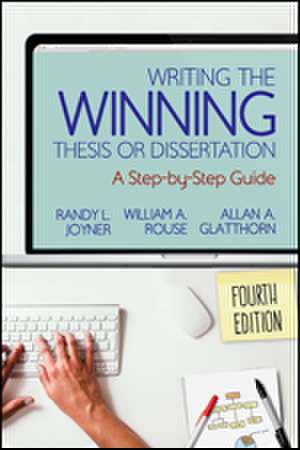
Writing the Winning Thesis or Dissertation
Autor Randy L. Joyner, William A. Rouse, Allan A. Glatthornen Limba Engleză Paperback – 29 iun 2018
Observăm că Writing the Winning Thesis or Dissertation se adresează deopotrivă studenților de la masterat, doctoranzilor și cadrelor didactice coordonatoare, oferind un cadru riguros pentru gestionarea celui mai complex proiect academic. Ajuns la a patra ediție, acest volum publicat de SAGE Publications sub amprenta Corwin rafinează metodologia care a consacrat lucrarea încă din 1998, integrând acum soluții tehnologice moderne pentru eficientizarea fluxului de lucru. Remarcăm o organizare pragmatică a conținutului, structurată pentru a ghida cititorul prin etapele critice ale cercetării. Partea întâi stabilește fundamentele, clarificând diferențele esențiale dintre o teză de masterat și o dizertație doctorală, în timp ce capitolele dedicate comitetului de doctorat oferă strategii concrete pentru prevenirea și rezolvarea conflictelor interpersonale sau administrative. Un element distinctiv este includerea cerințelor privind Institutional Review Board (IRB), un pas adesea subestimat, dar vital pentru conformitatea etică a cercetării. Cititorii familiarizați cu Dissertations and Theses from Start to Finish de Debora J Bell vor aprecia în acest volum focalizarea sporită pe mecanismele instituționale și pe studiile de caz care ancorează teoria în realitatea academică curentă. În timp ce alte ghiduri se concentrează pe stilul de scriere, Randy L. Joyner, William A. Rouse și Allan A. Glatthorn pun un accent egal pe logistică și managementul resurselor. Tonul este unul de îndrumare autoritară, dar accesibilă, facilitând tranziția de la faza de explorare a temei la cea de susținere publică a lucrării.
Preț: 310.11 lei
Carte disponibilă
Livrare economică 18 mai-01 iunie
Livrare express 02-08 mai pentru 72.94 lei
Specificații
ISBN-10: 1544317204
Pagini: 346
Dimensiuni: 152 x 229 x 19 mm
Greutate: 0.5 kg
Ediția:4. Auflage
Editura: Corwin
Locul publicării:Thousand Oaks, United States
De ce să citești această carte
Această resursă este esențială pentru cercetătorii care doresc să navigheze procesul de redactare fără a se pierde în detalii administrative. Cititorul câștigă un plan de acțiune verificat, care acoperă atât aspectele academice, cât și pe cele de relaționare cu tutorii. Este o investiție în finalizarea cu succes a studiilor, oferind instrumente pentru a transforma o cercetare vastă într-o publicație coerentă și ușor de susținut în fața comisiei.
Despre autor
Randy L. Joyner este profesor în cadrul Departamentului de Leadership Educațional la East Carolina University, unde coordonează cursuri de cercetare dedicate doctoranzilor. Expertiza sa este recunoscută prin numeroase distincții, printre care premiile Delta Pi Epsilon și Omicron Tau Theta pentru cercetare doctorală. Randy L. Joyner și-a dedicat cariera studierii strategiilor de instruire la nivel înalt, publicând rezultatele cercetărilor sale în jurnale de prestigiu internațional. Experiența sa directă în ghidarea doctoranzilor se reflectă în abordarea aplicată și structurată a ghidului de față.
Descriere scurtă
Recenzii
Writing the Winning Dissertation is an essential guidebook for students writing a master’s thesis or doctoral dissertation. I used the first edition to write an award-winning dissertation and now use the updated edition with the doctoral students I advise. Each chapter of this cogent and comprehensive book addresses crucial elements that lead to success. I highly recommend it to both students and advisors.
In this book, Joyner, Rouse, and Glatthorn thoroughly introduce and explore writing a thesis or a dissertation – walking the reader through every path and pitfall imaginable. It is a must-read for anyone starting one of these writing processes and a good read for the faculty working with them.
Cuprins
Preface
About the Authors
Publisher’s Acknowledgments
Part I: The Foundations
Chapter 1. Groundwork for Theses and Dissertations
Dissertation’s Special Nature
Securing the Needed Resources
Thesis and Dissertation Key Differences
Chapter 2. The Thesis or Doctoral Committee
Roles and Responsibilities of the Committee
The Dynamics of the Committee
Preventing Problems With the Committee
Dealing With Committee Problems
Solving Personal Problems With the Dissertation
Chapter 3. The Degree-Granting Institution’s Requirements
Degree Completion Time Lines
Styles
Specific University Guidelines or Requirements
Chapter 4. The Institutional Review Board
Knowledge Requirements (Training)
IRB Resources
Certification Time Frame
Case Study I: Selecting Members of the Doctoral Committee
Forming the Committee/Selecting Committee Members
Points to Ponder
Part II: Research Problem Development
Chapter 5. The Research Problem
Make a Personal Assessment of Topics
Reflect and Discuss
Fix on the Research Topic and Research Problem
Chapter 6. The Focused Review of the Literature
Reorganize Your Files
Retrieve All Related Abstracts
Evaluate the Results
Check for Prior Dissertations
Retrieve the Full Texts of the Most Useful Sources
Use Primary Sources
Develop an Annotated Bibliography
Chapter 7. Comprehensive Critique of the Literature
Maintain Good Research Practices Throughout the Search
Develop a Focused Outline of the Search
Establish Parameters for the Search
Conduct a Comprehensive Search
Critique All Sources Retrieved
Chapter 8. Focused Review of Available Methodologies for Data Collection and Analyses
Quantitative and Qualitative Perspectives
Research Types
Research Methods
Make Preliminary Choices
Chapter 9. Selected Methodology
The Research Design: Its General Nature
The Research Design: Type-Specific Issues
Develop Your Research Design
Case Study II: Selecting/Developing a Research Topic
Developing a Research Topic
Points to Ponder
Part III: The Prospectus Preparation
Chapter 10. The Work Plan
Develop a Planning Chart
Make the Tentative Entries
Chapter 11. The Prospectus Overview
Peer Collaboration
Weighing the Advantages and Disadvantages
Structuring the Collaborative
Formalize the Structure and Request Adviser Approval
Help the Group Remain Productive
Chapter 12. The Doctoral Committee and the Prospectus
Developing the Prospectus and Organizing the Committee
Prospectus Rationale
Prospectus Development
Committee Selection
Committee Dynamics
Developing the Proposal: Writing Chapter 1
Developing the Proposal: Writing Chapter 2
Developing the Proposal: Writing Chapter 3
Developing the Proposal: The References
Developing the Proposal: The Appendices
Chapter 13. The Prospectus Defense
Coordinate Committee Schedules: Date and Time
Prepare for the Proposal Defense
Present the Proposal Defense
Facilities
Deal With Other Defense Issues
Committee Requirements
Postproposal Steps
Case Study III: Developing the Research Proposal
The Research Proposal
Points to Ponder
Part IV: The Dissertation
Chapter 14. The Communication Process and the Writing of the Dissertation
Communicate Periodically With the Chair
Ensure Access to the Research Site
Avoid Premature Data Collection
Develop a Detailed Planning Calendar
Change the Schedule as Needed
Prevent Problems With the Intervention
Use Computers Mindfully
Ensure a High Rate of Return on Surveys
Maintain Careful and Duplicate Records
Chapter 15. Academic Style
Recommended Style Guide
The Writing Process
The Academic Style
Writing Software
Chapter 16. The Dissertation Organization
How Are Dissertations Organized?
What Principles Govern the Organization of Individual Chapters?
How Can the Organization Be Made Clear to the Reader?
How Is the Dissertation Finally Packaged?
Chapter 17. The Introduction
Introduction to the Chapter
The Background of the Study
The Problem Statement
The Professional Significance of the Study
Overview of Methodology
Limitations and Delimitations
Definition of Terms
Chapter 18. Review of the Literature
Comprehensive Critique of the Literature
Reread All Sources
Develop the Final Outline
Levels of Headings
Write the Introductory Paragraph
First Section of the Review
The Remaining Sections, Including a Summary
Chapter 19. Methodology
Prepare to Write
Use an Objective Writing Style
Determine the Chapter Content
Outline the Chapter and Use Headings Appropriately
Describe the Study’s Context
Identify the Subjects or Participants
Identify the Data Collection Instruments
Explain the Research Design Procedures
Explain the Data Analysis/Analyses Procedure(s)
Write a Summary
Chapter 20. Data Analysis/Analyses
Prepare to Present the Results
Decide on the Contents and Format of the Chapter
Determine the Organization of the Chapter
Develop the Tables and Figures
Write the Introductory Paragraph
Write the First Section
Write the Remaining Sections, Using Appropriate Headings
Revise the Chapter and Submit for Review
Chapter 21. The Results Discussion
Review the Results Reported
Develop an Outline of the Final Chapter
Write the Introductory Paragraph
Restate the Problem and Review the Methodology
Summarize the Results
Discuss the Meaning of the Study
Case Study IV: Writing the Dissertation
The Dissertation
Points to Ponder
Part V: The Dissertation Defense
Chapter 22. Defense Committee Meeting
Planning
Secure Needed Resources
Edit the Dissertation
Check on Content and Order
Write the Abstract
Write the Title and Approval Pages
Write the Acknowledgments Page
Write the Table of Contents and Lists of Tables and Figures
Include the Chapters
Finalize the References
Finalize Any Appendices
Submit the Dissertation
Holding the Defense
After Your Presentation
After the Defense
Institutional Review Board Completion Requirements
Chapter 23. The Degree-Granting Institution’s Graduation Requirements
Handbooks: A Source of Information
Graduation Requirements
Chapter 24. The Publication of the Dissertation
Add to the Research Knowledge Base
Present a Scholarly Paper
Publish a Journal Article
Develop a Plan to Publish a Book
Case Study V: Defending the Dissertation
The Dissertation Defense Hearing
Points to Ponder
Part VI: Technology
Chapter 25. Technology and the Dissertation
University Research Librarians
Software
Software Capabilities
Creating Charts
Creating Figures and Tables
Collecting and Analyzing Data
Numbering Pages
Editing the Style
Editing the Content
Telecommunicating
Software Compatibility
Formatting
Packaging the Final Dissertation
References
Index
Descriere
Newly revised and updated, this edition uses a step-by-step approach, providing specific models and examples that will take you through the complex writing process.