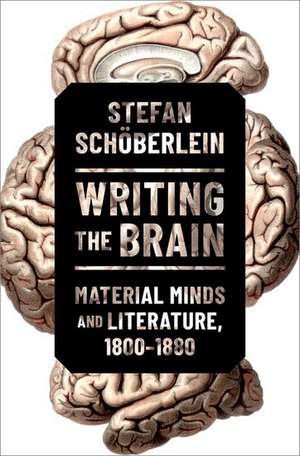
Writing the Brain: Material Minds and Literature, 1800-1880
Autor Stefan Schöberleinen Limba Engleză Hardback – 7 noi 2023
Prin volumul Writing the Brain, Stefan Schöberlein aduce o perspectivă nouă asupra modului în care literatura anglo-americană a secolului al XIX-lea a servit drept laborator pentru testarea și modelarea conceptelor neuroștiințifice emergente. Spre deosebire de studiile care tratează literatura doar ca pe un receptor pasiv al științei, această lucrare demonstrează că schimbul de idei între scriitori și „alieniști” a fost unul public și reciproc. Considerăm că noutatea majoră a volumului constă în demonstrarea faptului că metaforele literare ale unor autori precum Charles Dickens sau Emily Dickinson nu au fost doar ornamentale, ci au oferit cadre conceptuale prin care cercetătorii epocii au început să înțeleagă funcționarea materiei cenușii.
Cititorii familiarizați cu Literary Neurophysiology de Randall Knoper vor aprecia aici extinderea analizei către prima jumătate a secolului al XIX-lea, acoperind perioada crucială în care „mintea materială” a început să înlocuiască discursul despre suflet. În timp ce Nervous Fictions de Jess Keiser explorează fanteziile nervoase ale secolelor XVII-XVIII, Schöberlein se concentrează pe momentul în care neuroștiința modernă prinde contur prin numirea și cartografierea ariilor cerebrale. Structura narativă a cărții alternează între analiza textelor literare și examinarea periodicelor științifice ale vremii, oferind o imagine de ansamblu asupra unei epoci în care poezia și anatomia împărțeau aceleași pagini de revistă. Cele 30 de ilustrații incluse sunt esențiale pentru a înțelege cum vizualizarea creierului a modificat reprezentarea identității umane în beletristică.
Preț: 383.44 lei
Preț vechi: 552.75 lei
-31%
Carte disponibilă
Livrare economică 26 iunie-07 iulie
Specificații
ISBN-10: 0197693687
Pagini: 280
Ilustrații: 30 illustrations
Dimensiuni: 229 x 160 x 36 mm
Greutate: 0.54 kg
Editura: Oxford University Press
Colecția OUP USA
Locul publicării:New York, United States
De ce să citești această carte
Recomandăm această carte cercetătorilor și studenților interesați de intersecția dintre istoria științei și studiile literare. Cititorul va câștiga o înțelegere profundă a modului în care conceptele moderne despre creier au fost prefigurate de dezbaterile culturale victoriene. Este un instrument critic valoros pentru oricine dorește să exploreze rădăcinile neuroștiinței dincolo de laborator, în paginile marilor romane și poeme ale secolului al XIX-lea.
Despre autor
Stefan Schöberlein este un cercetător axat pe intersecția dintre literatură, media și istoria științei, cu un interes particular pentru secolul al XIX-lea. Experiența sa în analizarea textelor de arhivă și a manuscriselor este vizibilă și în celelalte lucrări ale sale, precum Walt Whitman's New Orleans sau Whitman's Southern Sojourn, unde recuperează și editează scrieri periodice uitate pentru a reconstrui contexte culturale complexe. În Writing the Brain, el aplică aceeași rigoare arhivistică pentru a trasa evoluția conceptului de creier în cultura transatlantică, consolidându-și profilul de istoric literar atent la transformările discursului materialist.
Descriere
Recenzii
The brain contains multitudes. This revisionist and often surprising book rewrites that organ, fighting against forgetting. Our worries about neuropharmaceuticals and machine learning have a long pre-history. The brain as a cybernetic network of matter and metaphors, protoplasm and electricity, was born around 1800 and nineteenth-century explorations of the material mind glisten here with fresh relevance. As a literary and cultural historian, Stefan Schöberlein is both truffle-hunter and landscape painter. He has a knack for finding things on both sides of the Atlantic no one has read in a century to rediscover authors we never stopped reading...Writing the Brain orchestrates a scintillating call-and-response between literature and science. Farewell to the two cultures. The brain is their meeting-point.
Writing the Brain makes a considerable contribution to the study of literature and science... Writing the Brain delineates a compelling account of the literary life of the material mind.