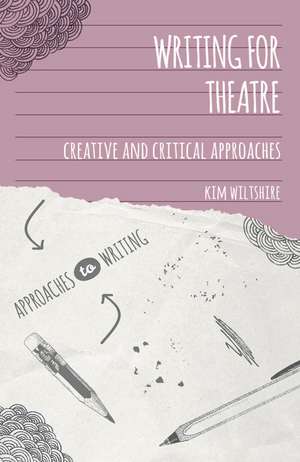
Writing for Theatre: Creative and Critical Approaches: Approaches to Writing
Autor Kim Wiltshireen Limba Engleză Paperback – 2 dec 2015


Preț: 196.33 lei
Preț vechi: 235.10 lei
-16%
Puncte Express: 294
Carte tipărită la comandă
Livrare economică 08-22 decembrie
Livrare prin curier în România Termenul estimat este afișat lângă disponibilitate.
Transport gratuit de la 400.00 lei Plată online sau ramburs, în funcție de opțiunile comenzii.
Retur gratuit în 14 zile Comandă securizată și suport în română.
Specificații
ISBN-13: 9781137369192
ISBN-10: 1137369191
Pagini: 212
Dimensiuni: 136 x 214 x 14 mm
Greutate: 0.28 kg
Ediția:1st ed. 2015
Editura: Bloomsbury Publishing
Colecția Red Globe Press
Seria Approaches to Writing
Locul publicării:London, United Kingdom
ISBN-10: 1137369191
Pagini: 212
Dimensiuni: 136 x 214 x 14 mm
Greutate: 0.28 kg
Ediția:1st ed. 2015
Editura: Bloomsbury Publishing
Colecția Red Globe Press
Seria Approaches to Writing
Locul publicării:London, United Kingdom
V-ar putea interesa
-
 Preț: 169.95 lei
 -
 Creative Screenwriting: Understanding Emotional StructureChristina KallasPreț: 242.61 lei
 -
 Research Methods in Creative WritingJeri KrollPreț: 240.63 lei
 -
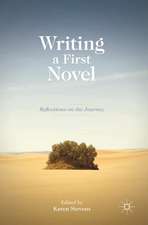 Writing a First Novel: Reflections on the JourneyDr Karen Stevens-25%Preț: 183.72 lei246.51 lei
 -
 The Creative Writing HandbookJohn SingletonPreț: 237.38 lei
 -
 Preț: 276.69 lei
 -
 The Road to Somewhere: A Creative Writing CompanionRobert Graham-25%Preț: 193.96 lei257.68 lei
 -
 Preț: 246.54 lei
 -
 Inspired Creative Writing: FlashStephen MayPreț: 112.05 lei
 -
 The Novel-Writer's ToolkitCaroline (Edited By) TaggartPreț: 122.24 lei
 -
 Ready, Set, Novel!Lindsey GrantPreț: 108.01 lei
 -
 Our Secret TerritoryLaura SimmsPreț: 115.77 lei
Cuprins
Introduction
Collaboration
Critical Engagement
What is writing for theatre?
On A Practical Note
Using This Book
A Collaborative Approach to Writing About Playwriting
Role definitions
PART 1: FOUNDATIONS
1. A Brief History of Theatre for Playwrights Ancient Theatre Medieval Theatre The Renaissance The Seventeenth Century to the Twentieth Century
2. The Cultures of Writing for Theatre - Innovators Innovators of the past Nineteenth Century Innovators Twentieth Century Innovators Who else can new playwrights learn from?
3. Establishing Practice What is theatre for? Why write for theatre?
4. Becoming a Playwright Empathy Ambition/Drive Humility Knowing Your Craft Imagination Knowing the business of theatre
5. Building Blocks Subject and Story Structure Form Voice and Style Building the world Character and Dialogue
6. Foundational Exercises and Key Points Exercise 1 Starting Point Exercise 2 - Character Exercise 3 - Character Exercise 4 - Plotting and Story Exercise 5 - Location Exercise 6 - Economy and exploration of Language Exercise 7 - Performing Work Exercise 8 - Plotting
Theatre Shapes
Conclusion to Part 1
PART 2: SPECULATIONS
Introduction
7. Exploring Possibilities Types of theatre Theatre in the digital age
8. Cultures of Writing for Theatre - Innovators Bringing Theatre to a new audience Who can new playwrights learn from?
9. Exploring Practice: Making Theatre in the 21st Century Changing practice New Forms of Theatre Ethnographic, Verbatim and Participant Led Theatre Dramaturgs and Dramaturgy
10. New Voices, New Forms Collaboration Collaborative Writing Theatre Making Collaboration with other artists Collaboration with other art forms
11. Speculative Exercises and Key Points Exercise 1 - Pitching Exercise 2 - Awareness Exercise 3 - Sensory Exercise 4 - Objects Exercise 5 - Unblocking Exercise 6 - Improvise/Devise Exercise 7 - Art forms Exercise 8 - Patience Exercise 9 - Secrets and Lies Where to go next?
A Final Word of Advice on Social Media
Conclusion.
Collaboration
Critical Engagement
What is writing for theatre?
On A Practical Note
Using This Book
A Collaborative Approach to Writing About Playwriting
Role definitions
PART 1: FOUNDATIONS
1. A Brief History of Theatre for Playwrights Ancient Theatre Medieval Theatre The Renaissance The Seventeenth Century to the Twentieth Century
2. The Cultures of Writing for Theatre - Innovators Innovators of the past Nineteenth Century Innovators Twentieth Century Innovators Who else can new playwrights learn from?
3. Establishing Practice What is theatre for? Why write for theatre?
4. Becoming a Playwright Empathy Ambition/Drive Humility Knowing Your Craft Imagination Knowing the business of theatre
5. Building Blocks Subject and Story Structure Form Voice and Style Building the world Character and Dialogue
6. Foundational Exercises and Key Points Exercise 1 Starting Point Exercise 2 - Character Exercise 3 - Character Exercise 4 - Plotting and Story Exercise 5 - Location Exercise 6 - Economy and exploration of Language Exercise 7 - Performing Work Exercise 8 - Plotting
Theatre Shapes
Conclusion to Part 1
PART 2: SPECULATIONS
Introduction
7. Exploring Possibilities Types of theatre Theatre in the digital age
8. Cultures of Writing for Theatre - Innovators Bringing Theatre to a new audience Who can new playwrights learn from?
9. Exploring Practice: Making Theatre in the 21st Century Changing practice New Forms of Theatre Ethnographic, Verbatim and Participant Led Theatre Dramaturgs and Dramaturgy
10. New Voices, New Forms Collaboration Collaborative Writing Theatre Making Collaboration with other artists Collaboration with other art forms
11. Speculative Exercises and Key Points Exercise 1 - Pitching Exercise 2 - Awareness Exercise 3 - Sensory Exercise 4 - Objects Exercise 5 - Unblocking Exercise 6 - Improvise/Devise Exercise 7 - Art forms Exercise 8 - Patience Exercise 9 - Secrets and Lies Where to go next?
A Final Word of Advice on Social Media
Conclusion.