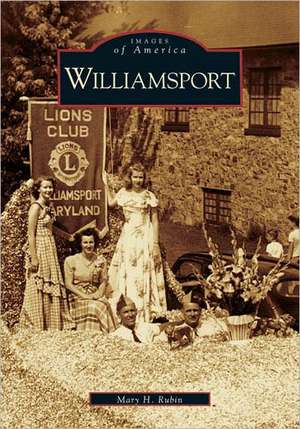
Williamsport
Autor Mary H Rubinen Limba Engleză Paperback – 7 sep 2005
Preț: 132.32 lei
Puncte Express: 198
Carte indisponibilă temporar
Doresc să fiu notificat când acest titlu va fi disponibil:
Se trimite...
Specificații
ISBN-13: 9780738541761
ISBN-10: 0738541761
Pagini: 128
Dimensiuni: 167 x 236 x 9 mm
Greutate: 0.3 kg
Editura: Arcadia Publishing (SC)
ISBN-10: 0738541761
Pagini: 128
Dimensiuni: 167 x 236 x 9 mm
Greutate: 0.3 kg
Editura: Arcadia Publishing (SC)
Descriere
Conococheague and Potomac Streets, Doubleday Hill, Springfield Farm, the C&O Canal--these names conjure up images of Williamsport, Maryland. The first settlement in what was to become Washington County was located here in the heart of the Cumberland Valley in the late 1730s. This small trading post, set amid local Native American tribes, formed the basis of the town of Williamsport. Gen. Otho Holland Williams, a Revolutionary War hero from the region, laid out what he intended to be a grand city with wide avenues on the banks of the great and mighty Potomac. Upon hearing that George Washington favored a site along the Potomac for the new nation's capital, Williams persuaded Washington to visit his town, and "Williams' Port" was given due consideration as a possible location. Williamsport became an important stopping-off point for settlers heading west, and the town quickly grew to be the second largest in Washington County. The arrival of the Chesapeake and Ohio Canal in 1834 brought a boom to Williamsport as warehouses, shipping firms, and many other businesses were established to handle the increased population and trade. The Civil War, the arrival of the railroad, and a series of disastrous floods also impacted the town. Today, Williamsport is a quiet community rich with local history and flavor.
Notă biografică
Join local author Mary H. Rubin in a look back at the town of Williamsport as seen through photographs of days gone by. Images culled from the Williamsport Town Museum and other local sources all help bring the past back to life for readers' present enjoyment.