Cantitate/Preț
Produs

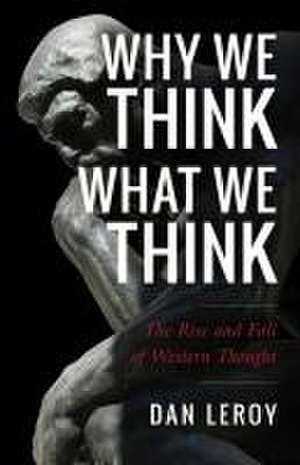
Why We Think What We Think

Autor Daniel Leroy
en Limba Engleză Paperback – 20 feb 2024

Evoluția gândirii umane nu este o linie dreaptă spre progres, ci un parcurs sinuos marcat de alegeri intelectuale care ne dictează astăzi modul în care percepem realitatea. Observăm o fragmentare tot mai accentuată a limbajului și a valorilor comune, o criză de sens pe care volumul Why We Think What We Think o abordează nu prin lentila sociologiei de moment, ci prin recursul la istoria ideilor. Daniel Leroy propune o călătorie în timp pentru a identifica momentul precis în care societatea occidentală a părăsit traseul logicii clasice, oferind o perspectivă critică asupra modului în care concepte precum empirismul, dualismul sau materialismul au modelat instituțiile noastre fundamentale. Ceea ce distinge această lucrare de alte sinteze de istorie a filosofiei este structura sa narativă dinamică, ce combină rigoarea academică cu stilul alert al unei investigații. Apreciem modul în care Daniel Leroy integrează contribuțiile lui Augustin și Toma d'Aquino, demonstrând că ruptura contemporană dintre rațiune și credință nu a fost inevitabilă, ci rezultatul unor reconfigurări teoretice petrecute acum aproape un mileniu. Ca alternativă la Human Thinking de S. Ian Robertson pentru cursurile de psihologie cognitivă sau istoria culturii, acest volum aduce avantajul unei analize aprofundate a rădăcinilor creștine ale civilizației vestice și a modului în care abandonarea acestora a creat „câmpul minat” lingvistic din prezent. Dacă The Human Mind de Paul Bloom se concentrează pe mecanismele interne ale psihicului, Why We Think What We Think privește spre exterior, spre arhitectura ideologică în care suntem imersați, oferind cititorului instrumentele necesare pentru a recupera reperele pierdute ale gândirii raționale.

Citește tot Restrânge

Preț: 12042 lei

Puncte Express: 181

Carte disponibilă

Livrare economică 08-22 septembrie

Livrare prin curier în România Termenul estimat este afișat lângă disponibilitate.
Transport gratuit de la 40000 lei Plată online sau ramburs, în funcție de opțiunile comenzii.
Retur gratuit în 14 zile Comandă securizată și suport în română.

Specificații

ISBN-13: 9781644137284
ISBN-10: 1644137283
Pagini: 400
Dimensiuni: 151 x 226 x 29 mm
Greutate: 0.56 kg
Ediția:1
Editura: Sophia Institute Press

De ce să citești această carte

Recomandăm această carte celor care doresc să înțeleagă de ce dialogul social a devenit atât de dificil astăzi. Cititorul câștigă o hartă clară a marilor curente filosofice, de la antici la moderni, explicată într-un stil accesibil. Este o lectură esențială pentru a descifra modul în care ideile abstracte din trecut dictează deciziile politice, educaționale și etice ale prezentului, oferind totodată o cale spre restaurarea logicii clasice.


Despre autor

Daniel Leroy este un autor și cercetător dedicat istoriei ideilor, cunoscut pentru capacitatea sa de a traduce concepte filosofice complexe într-un limbaj percutant și accesibil publicului larg. În opera sa, Leroy explorează intersecția dintre teologie, filosofie și structura socială, punând accent pe modul în care tradiția creștină a influențat dezvoltarea gândirii raționale în Occident. Abordarea sa este marcată de o examinare critică a modernității, căutând mereu să reconecteze omul contemporan cu fundamentele intelectuale ale civilizației sale.


Notă biografică

Dan LeRoy is an author, journalist, and teacher. His writing about music and politics has appearing in The New York Times, Roling Stone, Newsweek, The Village Voice, Alternative Press, and National Review Online.

Descriere

We're all starting to hear people ask how the world has gotten to be the way it is. Grafted onto the usual complaints about why people are so greedy, self-absorbed, and callous toward one another are new expressions of frustration about even more fundamental concerns. Why can't we agree on concepts that used to be basic common sense? Why does our very language now seem to be a minefield that only the most wily and tactical (or cynical) among us can navigate? The only way to understand fully how we have arrived at this state -- and what, if anything, we might be able to do about it -- is to embark on a journey back in time to see where we went off the rails. With candor and occasional humor, Dan LeRoy tells the sweeping story of Western thought from its beginnings to the present, revealing the souls and idiosyncrasies of its greatest thinkers. Through stirring vignettes, he tells the real story of how our customs and thought patterns developed and then relates it to our current moment of rupture. In pages that sometimes read like an Indiana Jones adventure, LeRoy explains the detour that philosophy took nearly a thousand years ago that has led Western society to its current, dire situation. With sharp pen and clear eye, he reveals: The roots of classical philosophy, including empiricism (Ready to wade into the water?) How views on ethics and morality began to take shape even before Christ The three ways to attain happiness, according to the Big Three philosophers Four splinter groups and how their philosophies impact us today The enduring teachings of Sts. Augustine and Aquinas, among many othersYou will find out about amazing discoveries during the early days of rationalism, from mathematical equations to intervals between music notes, and how this universal ratio applied to another scientific revelation. Along the way, you will see the relevance of famous (and infamous) beliefs, including the Realm of Forms, the Four Causes, and Pascal's Wager as well as dualism, humanism, materialism, and pantheism. Additionally, you will learn about how these ideologies provided the basis for modern-day politics, education, and belief in the transcendent, and the bridge between ancient philosophy and Christianity. LeRoy unveils the ways in which the beliefs our society has largely abandoned still affect our everyday lives. Knowing why we think what we think is the only way to recover the ideas -- many of them Christian in origin -- that can help turn things around and restore belief in the Unmoved Mover. This is a philosophy book not just for philosophers but for all of us.