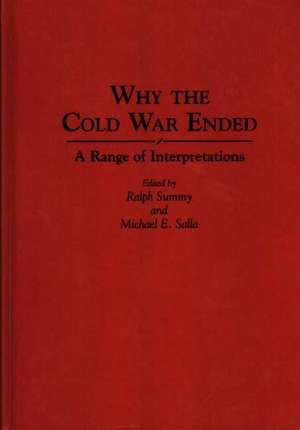
Why the Cold War Ended: A Range of Interpretations: Contributions in Political Science
Autor Michael E. Salla, Ralph Summyen Limba Engleză Hardback – 17 iul 1995
The contributors consider a range of views from the contention that the West's military resolve and economic capacity forced the Soviet Union into submission to arguments focusing on U.S. and West European peace movements and East European dissent movements. Between these diametric positions, they weigh the significance of such factors as the new thinking in the Soviet Union and the intelligentsia of Eastern Europe. Through a range of many views, they provide a broad interpretive framework for understanding the Cold War's end, and suggest how that understanding is related to the solving of future conflicts.
Din seria Contributions in Political Science
- 40%
 Preț: 474.36 lei
 - 30%
 Preț: 477.00 lei
 - 30%
 Preț: 471.78 lei
 - 40%
 Preț: 473.25 lei
 - 40%
 Preț: 374.64 lei
 - 26%
 Preț: 509.68 lei
 - 31%
 Preț: 480.50 lei
 - 31%
 Preț: 472.89 lei
 - 25%
 Preț: 250.42 lei
 - 40%
 Preț: 472.65 lei
 - 30%
 Preț: 373.76 lei
 - 30%
 Preț: 373.39 lei
 - 30%
 Preț: 471.98 lei
 - 40%
 Preț: 372.94 lei
 - 30%
 Preț: 471.54 lei
 - 26%
 Preț: 185.74 lei
 - 30%
 Preț: 372.35 lei
 - 30%
 Preț: 472.89 lei
 - 40%
 Preț: 473.51 lei
 - 25%
 Preț: 241.13 lei
 - 31%
 Preț: 472.62 lei
 - 40%
 Preț: 374.64 lei
 - 30%
 Preț: 374.64 lei
 - 30%
 Preț: 473.16 lei
 - 30%
 Preț: 474.27 lei
 - 40%
 Preț: 471.98 lei
 - 30%
 Preț: 470.52 lei
 - 40%
 Preț: 473.25 lei
 - 40%
 Preț: 373.95 lei
 - 24%
 Preț: 247.92 lei
 - 30%
 Preț: 476.07 lei
 - 40%
 Preț: 373.50 lei
 - 40%
 Preț: 473.08 lei
 - 30%
 Preț: 472.65 lei
 - 40%
 Preț: 471.98 lei
 - 31%
 Preț: 451.56 lei
 - 30%
 Preț: 474.36 lei
 - 11%
 Preț: 384.90 lei
 - 30%
 Preț: 473.08 lei
 - 34%
 Preț: 250.32 lei
 - 40%
 Preț: 473.79 lei
 - 30%
 Preț: 498.02 lei
 - 34%
 Preț: 250.53 lei
 - 21%
 Preț: 196.63 lei
 - 40%
 Preț: 470.37 lei
 - 40%
 Preț: 474.36 lei
 - 40%
 Preț: 472.07 lei
Preț: 500.29 lei
Preț vechi: 713.24 lei
-30%
Puncte Express: 750
Carte tipărită la comandă
Livrare economică 28 noiembrie-12 decembrie
Livrare prin curier în România Termenul estimat este afișat lângă disponibilitate.
Transport gratuit pentru acest produs Plată online sau ramburs, în funcție de opțiunile comenzii.
Retur gratuit în 14 zile Comandă securizată și suport în română.
Specificații
ISBN-13: 9780313295690
ISBN-10: 0313295697
Pagini: 296
Dimensiuni: 156 x 235 x 18 mm
Greutate: 0.59 kg
Editura: Bloomsbury Publishing
Colecția Praeger
Seria Contributions in Political Science
Locul publicării:New York, United States
ISBN-10: 0313295697
Pagini: 296
Dimensiuni: 156 x 235 x 18 mm
Greutate: 0.59 kg
Editura: Bloomsbury Publishing
Colecția Praeger
Seria Contributions in Political Science
Locul publicării:New York, United States
V-ar putea interesa
-
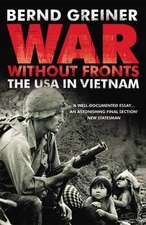 War Without FrontsBernd GreinerPreț: 125.81 lei
 -
 The CageGordon WeissPreț: 114.71 lei
 -
 In the Shadow of the General: Modern France and the Myth of De GaulleSudhir Hazareesingh-11%Preț: 353.89 lei398.26 lei
 -
 The Cold WarJohn Lamberton Harper-16%Preț: 215.27 lei257.38 lei
 -
 -12%Preț: 365.05 lei416.46 lei
 -
 The Chechen StruggleI. AkhmadovPreț: 442.87 lei
 -
 Conversations With MyselfNelson Mandela-17%Preț: 102.11 lei123.14 lei
 -
 Hunting EvilGuy Walters-17%Preț: 92.05 lei110.47 lei
 -
 Manhattan '45Jan MorrisPreț: 91.71 lei
 -
 Aphrodite's KillersDavid CarterPreț: 389.58 lei
 -
 Impotent WarriorsSusie KilshawPreț: 159.65 lei
 -
 Claus Schenk Graf von StauffenbergPeter HoffmannPreț: 143.63 lei
Cuprins
Foreword by David Lange
Acknowledgments
Introduction; Challenging the Emergent Orthodoxy by Ralph Summy
Political Leaders and Their Policies
Did Reagan "Win" the Cold War? by April Carter
Ronald Reaganism Ended the Cold War-In the 1960s by Robert Elias
The End of the Cold War: The Brezhnev Doctrine by Joanne Wright
Mass Movements and "New Thinking"
The Peace Movement Role in Ending the Cold War by David Cortright
Gorbachev, the Peace Movement, and the Death of Lenin by Jennifer Turpin
The Peace Movement's Role in Ending the Cold War by David Cortright
Europe 1989: The Role of Peace Research and the Peace Movement by Johan Galtung
The Erosion of Regime Legitimacy in Eastern European Satellite States: The Case of the German Democratic Republic by Ulf Sundhaussen
Economic Determinants
"Upper Volta With Rockets": Internal vs. External Factors in the Decline of the Soviet Union by Dennis Phillips
Marxism, Capitalism, and Democracy: Some Post-Soviet Dilemmas by Geoff Dow
Whose Cold War? by Rick Kuhn
Systemic Global Changes
Carrots Were More Important Than Sticks in Ending the Cold War by Kevin Clements
How the Cold War Became an Expensive Irrelevance by Keith Suter
Emerging Paradigms & Lessons Learnt
The Continuing Cold War by John Burton
In the Shadow of the Middle Kingdom Syndrome: China in the Post-Cold War World by C. L. Chiou
The Cold War and After: A New Period of Upheaval in World Politics by Joseph Camilleri
Conclusion
The End of the Cold War: A Political, Historical, and Mythological Event by Michael E. Salla
Bibliography
Index
Acknowledgments
Introduction; Challenging the Emergent Orthodoxy by Ralph Summy
Political Leaders and Their Policies
Did Reagan "Win" the Cold War? by April Carter
Ronald Reaganism Ended the Cold War-In the 1960s by Robert Elias
The End of the Cold War: The Brezhnev Doctrine by Joanne Wright
Mass Movements and "New Thinking"
The Peace Movement Role in Ending the Cold War by David Cortright
Gorbachev, the Peace Movement, and the Death of Lenin by Jennifer Turpin
The Peace Movement's Role in Ending the Cold War by David Cortright
Europe 1989: The Role of Peace Research and the Peace Movement by Johan Galtung
The Erosion of Regime Legitimacy in Eastern European Satellite States: The Case of the German Democratic Republic by Ulf Sundhaussen
Economic Determinants
"Upper Volta With Rockets": Internal vs. External Factors in the Decline of the Soviet Union by Dennis Phillips
Marxism, Capitalism, and Democracy: Some Post-Soviet Dilemmas by Geoff Dow
Whose Cold War? by Rick Kuhn
Systemic Global Changes
Carrots Were More Important Than Sticks in Ending the Cold War by Kevin Clements
How the Cold War Became an Expensive Irrelevance by Keith Suter
Emerging Paradigms & Lessons Learnt
The Continuing Cold War by John Burton
In the Shadow of the Middle Kingdom Syndrome: China in the Post-Cold War World by C. L. Chiou
The Cold War and After: A New Period of Upheaval in World Politics by Joseph Camilleri
Conclusion
The End of the Cold War: A Political, Historical, and Mythological Event by Michael E. Salla
Bibliography
Index