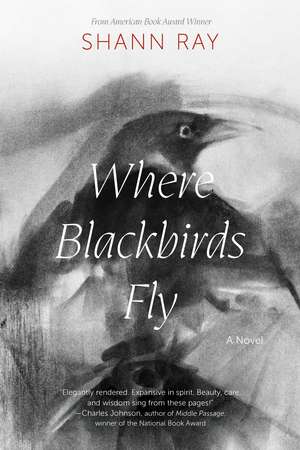
Where Blackbirds Fly: A Novel
Autor Shann Rayen Limba Engleză Paperback – oct 2025
A novel in five novellas, Where Blackbirds Fly offers a prismatic deep dive into the human heart through fierce narratives of intimacy both lovely and heartbreaking. Countering social upheavals, Shann Ray affirms the power of empathy, the wisdom of wilderness, and the felt presence of divine mystery echoed in the recurring appearances of blackbirds, as if etching flight patterns of mercy over the landscapes of human life. John Sender and Samantha Valeria Arrarás seek love in the financial industry, their initial attraction leading to unforeseen perils that will echo in those who enter and exit their lives. The characters of this novel form a compelling cross section of humanity met with revelation, suffering, and possibility. With spare and muscular prose, luminosity, and psychological grace, Ray weaves a tapestry as multihued as America in a vision of love’s transgressive power.
Preț: 162.94 lei
Puncte Express: 244
Carte disponibilă
Livrare economică 02-16 noiembrie
Livrare prin curier în România Termenul estimat este afișat lângă disponibilitate.
Transport gratuit de la 400.00 lei Plată online sau ramburs, în funcție de opțiunile comenzii.
Retur gratuit în 14 zile Comandă securizată și suport în română.
Specificații
ISBN-13: 9781496243577
ISBN-10: 1496243579
Pagini: 484
Dimensiuni: 152 x 229 x 30 mm
Greutate: 0.66 kg
Editura: BISON BOOKS
Colecția Bison Books
Locul publicării:United States
ISBN-10: 1496243579
Pagini: 484
Dimensiuni: 152 x 229 x 30 mm
Greutate: 0.66 kg
Editura: BISON BOOKS
Colecția Bison Books
Locul publicării:United States
V-ar putea interesa
-
 A Love Story from the End of the WorldJuhea KimPreț: 105.53 lei
 -
 Everyone Dies Famous in a Small TownBonnie-Sue HitchcockPreț: 64.60 lei
 -
 Consider the BirdsCallie Smith GrantPreț: 104.75 lei
 -
 Turning to BirdsLili Taylor-44%Preț: 78.49 lei140.29 lei
 -
 -25%Preț: 86.41 lei115.98 lei
 -
 Wild JourneyA. M. Dassu-26%Preț: 63.81 lei85.79 lei
 -
 Heart of the SunMia SheridanPreț: 74.73 lei
 -
 People Like UsJason MottPreț: 113.62 lei
 -
 Birds of a Lesser ParadiseMegan MayhewPreț: 94.93 lei
 -
 -26%Preț: 84.68 lei114.34 lei
 -
 Groundwater: ‘Complex, chilling, masterful' Financial TimesThomas McMullan-26%Preț: 99.21 lei134.96 lei
 -
 BroodJackie Polzin-34%Preț: 46.36 lei70.57 lei
 -
 The Flightless Birds of New HopeFarah Naz RishiPreț: 64.00 lei
 -
 Birdlane Island: A NovelV.C. Andrews-19%Preț: 113.93 lei141.19 leiRecomandat
 -
 Stories From a Stranger: Every person has a story.Hunter Prosper-21%Preț: 156.49 lei198.36 leiRecomandat
 -
 Hunting in AmericaTehila HakimiPreț: 76.89 lei
 -
 Cry of the WildCharles Foster-19%Preț: 63.54 lei78.63 lei
 -
 Wild Dark ShoreCharlotte McConaghyPreț: 72.26 lei
 -
 To Cage a Wild BirdBrooke FastPreț: 110.66 lei
Notă biografică
Shann Ray teaches leadership and forgiveness studies at Gonzaga University and poetry at Stanford University. He is the author of the story collection American Masculine, winner of numerous prizes including the American Book Award; the novel American Copper; and the poetry collection Atomic Theory 7. Ray grew up in Alaska and on the Northern Cheyenne Reservation in southeast Montana.
Extras
The simple truth: John Sender believed in love.
Thirty-three. Still single. Driven, overly driven. So much head work, and
such solitude, but into his self-doubt, love. Real love. A love he could hardly
believe after such drought, but yes, he believed. He’d even gone home to
Montana and borrowed his long-dead grandfather’s black Florsheim wingtips
from his recently dead grandmother’s bedroom closet, and from her
bureau the diamond ring she’d kept through two foreign wars—his mom
wanted him to have it—the ring he’d be giving to his bride.
Only he hadn’t much spoken with his bride yet.
He pressed his hands down on the desk, flattening them, staring. Big
boned, rough. Late night; everyone gone. Alone again. The day had been difficult,
another without tone or hue, loans drawn up, rates secured, moneys
meted out. He worked for the world renowned National American Bank, on
the seventh floor of its massive headquarters in downtown Seattle. Strange,
the bones of a hand, beautiful in their way. His were like his father’s, not
afraid of work. White as moonlight and pocked from field work, he thought,
with his Czech-German blood, a fraction of it Cheyenne. His hands were
also strong like his father’s, but shy with women. His grandfather, a suicide,
had been shy with women too. In that echo John always felt uneasy, but he
took comfort in how the outline of his fingers against the woodgrain made
him think of home.
He had thought he might just stick to horses. They calmed him every bit
as much as he calmed them, the kind-spirited ones, the wild ones too, like
bolts of lightning he could get a heel into and fight. He missed it, breaking
for Dad and the neighbors. That and all the rodeoing he’d done.
Spooked since he could remember, he felt awkward on every date he’d
been on, which were few. Tall man: six foot one, wired tight. Bridge of the
nose bony as a crowbar, broken on a fence in Flagstaff. Rodeo docs always
salty, that one laid him flat on the ground, shoved two metal rods up his
nose and got on top of him, then jerked the rods hard. The sound was unnatural,
the pain like a landslide in the brain. Straightened things out but left
a crude notch. Too tall for saddle broncs, the doc said, but he’d made do.
“Hardnosed,” his dad said when he saw the nose.
“Keeps the women away,” John answered, and they chuckled.
John’s looks were distinctive. Shoulder-length black hair, drawn back,
crow-like. Dark blue eyes. Bold features. Big. Just quiet with women, and
morose, he thought. His mind tended to focus on things that depressed him.
He put his hands through his hair. Easier to see people enter his office hoping
to secure a loan, a home. Single or together, they were enthused or subdued.
Alone or fused, sometimes disoriented, often good-hearted, isolate or
bound like the threading on well-mated nuts and bolts. Secretly, he loved
the spectrum of all who hoped for a better life together. He often found
the older couples the most savvy. From his own yearning he was undoubtedly
biased. Some who married called each other pet names. Others used
first names. Still others, silent, said nothing. Engaged, married, or simply
together, they don’t know what they have, John thought. When it comes
to love, they should realize what they borrow is a person: we borrow them
from their family, from their parents. Maybe we borrow them from God.
He admitted he hadn’t had much luck with love. But he knew when people
thought love dead it surprised you with its presence, and those who commodified
love were bankrupt.
Tailored suit and silk tie. Late again, after dark, he needed to finish the
paperwork and get home. No cowboy hat, no boots, he felt at odds with himself.
A rodeo scholarship and a ba in English from the University of Montana,
then three seasons on the professional rodeo circuit and an mba along
with a smattering of additional graduate work in philosophy from Seattle
University. He’d been in loans now for a few years, and until he met Samantha
everything had seemed caught in a time foreign to him and uglified.
Hollow, missing the land and sky. The ranch. Mom and Dad by themselves
and him a corporate hired hand, trapped like a pawn in some thoughtless
efficiency. He was leery, and still afraid of women. But he wasn’t one to be
afraid of darkness. He loved the night—the ocean north of the city not held
in city light but illumined by an immensity of stars and the night’s own lantern.
The scent of kelp and mud wash and cold.
And of the women and men who borrowed?
He suffered over them, as he did himself, and his heart went out to them.
John never forgot a face, and those days it was true, life so hectic, so
recessed and downhearted, so bubbled with economy, so mealy with anx-
iety, no one felt compelled to remember, though even slight remembering
might have meant help, and remembering well might have meant salvation.
People stayed the same or arced upward or fell like meteors from an incomprehensible
height. He recalled both the feminist thought leader bell hooks
and the Enlightenment philosopher Rousseau: we borrow the land we live
on, whispers in the dark, shouts of exultation, the ways we listen or speak,
draw near or fade away, the very fruits of the earth and the absolute clarity
of unexpected grace. We not only borrow money, he thought, we borrow
the unique and versatile manner of our individual and collective lives, and
even our common deaths.
Thirty-three. Still single. Driven, overly driven. So much head work, and
such solitude, but into his self-doubt, love. Real love. A love he could hardly
believe after such drought, but yes, he believed. He’d even gone home to
Montana and borrowed his long-dead grandfather’s black Florsheim wingtips
from his recently dead grandmother’s bedroom closet, and from her
bureau the diamond ring she’d kept through two foreign wars—his mom
wanted him to have it—the ring he’d be giving to his bride.
Only he hadn’t much spoken with his bride yet.
He pressed his hands down on the desk, flattening them, staring. Big
boned, rough. Late night; everyone gone. Alone again. The day had been difficult,
another without tone or hue, loans drawn up, rates secured, moneys
meted out. He worked for the world renowned National American Bank, on
the seventh floor of its massive headquarters in downtown Seattle. Strange,
the bones of a hand, beautiful in their way. His were like his father’s, not
afraid of work. White as moonlight and pocked from field work, he thought,
with his Czech-German blood, a fraction of it Cheyenne. His hands were
also strong like his father’s, but shy with women. His grandfather, a suicide,
had been shy with women too. In that echo John always felt uneasy, but he
took comfort in how the outline of his fingers against the woodgrain made
him think of home.
He had thought he might just stick to horses. They calmed him every bit
as much as he calmed them, the kind-spirited ones, the wild ones too, like
bolts of lightning he could get a heel into and fight. He missed it, breaking
for Dad and the neighbors. That and all the rodeoing he’d done.
Spooked since he could remember, he felt awkward on every date he’d
been on, which were few. Tall man: six foot one, wired tight. Bridge of the
nose bony as a crowbar, broken on a fence in Flagstaff. Rodeo docs always
salty, that one laid him flat on the ground, shoved two metal rods up his
nose and got on top of him, then jerked the rods hard. The sound was unnatural,
the pain like a landslide in the brain. Straightened things out but left
a crude notch. Too tall for saddle broncs, the doc said, but he’d made do.
“Hardnosed,” his dad said when he saw the nose.
“Keeps the women away,” John answered, and they chuckled.
John’s looks were distinctive. Shoulder-length black hair, drawn back,
crow-like. Dark blue eyes. Bold features. Big. Just quiet with women, and
morose, he thought. His mind tended to focus on things that depressed him.
He put his hands through his hair. Easier to see people enter his office hoping
to secure a loan, a home. Single or together, they were enthused or subdued.
Alone or fused, sometimes disoriented, often good-hearted, isolate or
bound like the threading on well-mated nuts and bolts. Secretly, he loved
the spectrum of all who hoped for a better life together. He often found
the older couples the most savvy. From his own yearning he was undoubtedly
biased. Some who married called each other pet names. Others used
first names. Still others, silent, said nothing. Engaged, married, or simply
together, they don’t know what they have, John thought. When it comes
to love, they should realize what they borrow is a person: we borrow them
from their family, from their parents. Maybe we borrow them from God.
He admitted he hadn’t had much luck with love. But he knew when people
thought love dead it surprised you with its presence, and those who commodified
love were bankrupt.
Tailored suit and silk tie. Late again, after dark, he needed to finish the
paperwork and get home. No cowboy hat, no boots, he felt at odds with himself.
A rodeo scholarship and a ba in English from the University of Montana,
then three seasons on the professional rodeo circuit and an mba along
with a smattering of additional graduate work in philosophy from Seattle
University. He’d been in loans now for a few years, and until he met Samantha
everything had seemed caught in a time foreign to him and uglified.
Hollow, missing the land and sky. The ranch. Mom and Dad by themselves
and him a corporate hired hand, trapped like a pawn in some thoughtless
efficiency. He was leery, and still afraid of women. But he wasn’t one to be
afraid of darkness. He loved the night—the ocean north of the city not held
in city light but illumined by an immensity of stars and the night’s own lantern.
The scent of kelp and mud wash and cold.
And of the women and men who borrowed?
He suffered over them, as he did himself, and his heart went out to them.
John never forgot a face, and those days it was true, life so hectic, so
recessed and downhearted, so bubbled with economy, so mealy with anx-
iety, no one felt compelled to remember, though even slight remembering
might have meant help, and remembering well might have meant salvation.
People stayed the same or arced upward or fell like meteors from an incomprehensible
height. He recalled both the feminist thought leader bell hooks
and the Enlightenment philosopher Rousseau: we borrow the land we live
on, whispers in the dark, shouts of exultation, the ways we listen or speak,
draw near or fade away, the very fruits of the earth and the absolute clarity
of unexpected grace. We not only borrow money, he thought, we borrow
the unique and versatile manner of our individual and collective lives, and
even our common deaths.
Recenzii
“Each story in this complex novel is a mindfully wrought world of the human condition. The characters are people we know, people we yearn to be, and people we are terrified of becoming. Through it all is Ray’s ear for poetry, his love of Montana’s open spaces, and the almost mystical appearance of blackbirds arriving at poignant moments in all the characters’ lives.”—Marc Beaudin, Big Sky Journal
“With its large cast of wounded, complex, and ethnically diverse characters, all yearning for love, Where Blackbirds Fly creates a world that looks very much like America. That it does so with rich lyricism and polymathic learning is a testament to the love Shann Ray himself has for humankind. Read this novel for the perception-altering poetry in Ray’s prose, the vividly and sympathetically drawn characters, the precise attention to detail, and the expansive spirit that courses through this elegantly rendered story. Beauty, care, and wisdom sing from these pages!”—Charles Johnson, author of Middle Passage, winner of the National Book Award
“The language, sharp. The story, riveting. The love, physical. Where Blackbirds Fly left me breathless as I caught the thread of Divine Mystery woven in its pages.”—Drew Jackson, author of Touch the Earth
“There is a spirit in the American West—a spirit calling out—and Shann Ray envisions it beautifully. Vivid. Grounding. In imagery of skies, wildlife, and mountainscapes, Ray immerses readers in a story deeply personal and boundless. Thoughtful with the complexities of identity, heritage, and connection, he evokes the timeless bond between land, heart, and the shared human experience.”—CooXooEii Black, author of The Morning You Saw a Train of Stars Streaking Across the Sky, winner of the Rattle Chapbook Prize
“A breathtaking narrative of the unspoken histories of couples. How do we find a way to love when there are multigenerational wounds? That struggle informs Where Blackbirds Fly as each pairing carries different burdens and different intimacies. The blackbirds’ appearance is subtle but prophetic, and as with the tricolored blackbird, the startle of its color in flight, their path echoes the uncommon strength of this narrative. Over the years each interwoven life takes on power and poetic significance as we question if love will triumph over loneliness, over loss. We come to care deeply about the people here, their trials and vicissitudes. We celebrate with them, and grieve with them, and when the novel is complete, we don’t want to leave them.”—Mary Jane Nealon, author of Beautiful Unbroken, winner of the Bakeless Prize
“Shann Ray’s prose defies limitations and boundaries. In Where Blackbirds Fly the world he creates is a brutal one where empathy only glows brighter. His sentences stipple the page with such grace and beauty we’re left not with just a book or a story but a true work of art.”—Dane Bahr, author of Stag
“In Shann Ray’s kaleidoscopic and cinematic novel we bear witness to characters grappling to kindle and keep love. Characters yearn, strive, and soften for a transcendent wholeness, a healing they glimpse tenderly in each other. Where no redemption seems isolated or linear, this hard and lovely work urges us to consider the healing strength of love and how we can just as easily ruin each other. The precise telling resists reveling in love’s sweetness. Around each corner another couple rises into view, scuffed and scarred with trying. We mourn the inevitable damage they cause and rejoice in the moments they are able to break loose from personal and collective pain, able to be available and steady for each other. Ray articulates a vital and palpable interconnectedness of humanity.”—Natalie J. Graham, author of Begin with a Failed Body, winner of the Cave Canem Poetry Prize
Descriere
Where Blackbirds Fly offers a journey into the human heart through fierce narratives of intimacy both lovely and heartbreaking. Countering social upheavals, Shann Ray affirms the power of empathy, the wisdom of wilderness, and weaves a tapestry as multihued as America in a vision of love’s transgressive power.