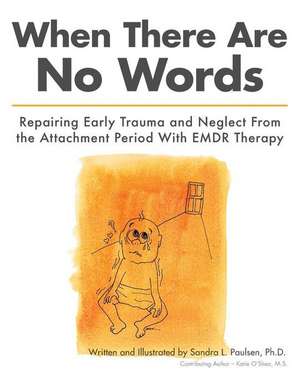
When There Are No Words
Autor Paulsen, Ph. D. Sandra L. Ilustrat de Paulsen, Ph. D. Sandra L. Contribuţii de O'Shea, M. S. Katieen Limba Engleză Paperback
Provocarea majoră în psihoterapia traumelor preverbale rezidă în absența reprezentărilor narative; cum putem procesa ceea ce corpul a înmagazinat înainte ca limbajul să fie disponibil? În volumul When There Are No Words, Sandra L. Paulsen propune o metodologie clinică riguroasă pentru repararea neglijării și a traumelor de atașament timpurii prin terapia EMDR. Ne-a atras atenția modul în care autoarea reușește să pună în dialog teorii complexe ale neurobiologiei, precum sistemele afective ale lui Panksepp sau teoria polivagală a lui Porges, cu protocoale practice de intervenție. Acolo unde Healing the Fragmented Selves of Trauma Survivors de Janina Fisher se concentrează pe transformarea relației de sine prin acceptare compasivă, acest volum aprofundează mecanica tehnică a „integrării temporale”, oferind instrumente specifice pentru resetarea circuitelor afective subcorticale. Putem afirma că originalitatea lucrării constă în utilizarea a peste o sută de ilustrații care servesc drept punți metaforice între emisferele cerebrale, facilitând înțelegerea conceptelor de disociere atât pentru clinician, cât și pentru client. Structura editorială este pragmatică, utilizând liste punctate și studii de caz care ilustrează scripting-ul necesar pentru gestionarea introiecților agresorului și alinierea sistemului de ego-uri cu obiectivele terapeutice. Merită menționat că, deși ancorată în EMDR, lucrarea împrumută tehnici valoroase din tradiția somatică a lui Peter Levine, fiind esențială pentru specialiștii care tratează tulburări disociative complexe unde trauma este stocată în memoria implicită.
Preț: 244.06 lei
Preț vechi: 256.90 lei
-5%
Carte disponibilă
Livrare economică 02-16 noiembrie
Specificații
ISBN-10: 1507507194
Pagini: 236
Dimensiuni: 216 x 280 x 13 mm
Greutate: 0.56 kg
V-ar putea interesa
-
 Genomics and Health in the Developing WorldDhavendra Kumar-52%Preț: 1715.47 lei3610.70 lei
 -
 Specialty Competencies in Counseling PsychologyJairo N. Fuertes-17%Preț: 547.71 lei659.82 lei
 -
 -26%Preț: 1061.50 lei1436.38 lei
 -
 -25%Preț: 386.67 lei517.15 lei
 -
 Social Cognition in Schizophrenia: From Evidence to TreatmentDavid L. Roberts-29%Preț: 930.78 lei1309.03 lei
 -
 Public Health Practice: What WorksJonathan E. Fielding-26%Preț: 657.15 lei886.18 lei
 -
 -25%Preț: 474.69 lei629.17 lei
 -
 -29%Preț: 716.21 lei1014.27 lei
 -
 Hippocrates Cried: The Decline of American PsychiatryMichael A Taylor-26%Preț: 357.84 lei480.44 lei
 -
 -26%Preț: 482.83 lei650.69 lei
 -
 The Measurement of Affect, Mood, and EmotionPanteleimon Ekkekakis-5%Preț: 271.97 lei286.29 lei
 -
 Stahl's Illustrated Substance Use and Impulsive DisordersStephen M. Stahl-5%Preț: 446.46 lei469.96 lei
 -
 Get into UK Medical School For DummiesChris Chopdar-5%Preț: 88.53 lei93.20 lei
 -
 Diabetes Mellitus: A Concise Clinical GuideLeonid Poretsky-5%Preț: 774.75 lei815.52 lei
 -
 Liver Disease & Peritonitis: Causes, Treatment & PreventionMao Kang Voung-23%Preț: 927.42 lei1210.24 lei
De ce să citești această carte
Recomandăm această carte terapeuților care lucrează cu trauma complexă și caută o metodă structurată de a accesa perioadele de dezvoltare preverbale. Cititorul câștigă un protocol clar de „integrare temporală” și instrumente vizuale unice care simplifică psihoeducația. Este o resursă indispensabilă pentru a „prinde și elibera” sechelele traumatice invizibile, oferind fișe de lucru și anexe tehnice pentru o practică etică și eficientă în format intensiv.