When the Steam Railroads Electrified, Revised Second Edition: Indiana University Press
Autor William D. Middletonen Limba Engleză Hardback – 29 mar 2002
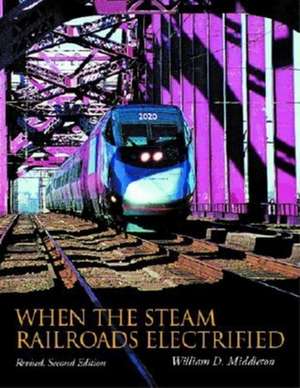
Prezentat într-un format generos de tip hardback, When the Steam Railroads Electrified, Revised Second Edition impresionează de la prima atingere prin calitatea execuției. Cele 470 de pagini sunt imprimate pe o hârtie rezistentă, capabilă să pună în valoare cele 791 de fotografii alb-negru care documentează o eră a transformării tehnologice profunde. Această ediție revizuită, publicată de Indiana University Press, nu este doar o carte de istorie, ci un obiect de colecție pentru pasionații de inginerie și infrastructură.
Ne-a atras atenția modul în care William D. Middleton reușește să sintetizeze complexitatea tranziției de la abur la electricitate. Autorul demonstrează cum, în prima jumătate a secolului XX, Statele Unite au dominat peisajul feroviar mondial, eficientizând transportul de marfă și pasageri prin reducerea costurilor de întreținere. Lectura oferă o perspectivă fascinantă asupra paradoxului american: deși electrificarea a fost un succes tehnic incontestabil, factori economici și politici au dus la un declin surprinzător în fața altor națiuni. Fanii lucrării Electric Traction on the Pennsylvania Railroad vor recunoaște aceeași atenție la detaliul tehnic și rigoare istorică, aplicată aici la un context mult mai larg, care cuprinde întregul continent nord-american.
Stilul narativ este unul echilibrat, evitând jargonul excesiv în favoarea unei expuneri clare a „sușurilor și coborâșurilor” acestei industrii. De la primele experimente până la actualele trenuri de mare viteză din Northeast Corridor, volumul funcționează ca o cronică ambițioasă a progresului. Este o resursă esențială pentru a înțelege cum infrastructura electrică revine astăzi în actualitate, promițând o capacitate de transport extinsă și o sustenabilitate sporită în contextul crizei energetice moderne.
Din seria Indiana University Press
-
 Preț: 250.13 lei
 -
 Preț: 196.04 lei
 -
 Preț: 156.67 lei
 -
 Preț: 191.75 lei
 -
 Preț: 192.03 lei
 -
 Preț: 183.44 lei
 -
 Preț: 303.74 lei
 -
 Preț: 317.27 lei
 -
 Preț: 224.19 lei
 -
 Preț: 216.27 lei
 -
 Preț: 252.09 lei
 -
 Preț: 254.58 lei
 -
 Preț: 125.25 lei
 -
 Preț: 209.41 lei
 - 19%
 Preț: 602.04 lei
 -
 Preț: 323.04 lei
 -
 Preț: 157.20 lei
 - 5%
 Preț: 153.06 lei
 -
 Preț: 216.71 lei
 -
 Preț: 250.63 lei
 -
 Preț: 153.81 lei
 -
 Preț: 173.08 lei
 -
 Preț: 263.18 lei
 -
 Preț: 201.53 lei
 -
 Preț: 138.26 lei
 -
 Preț: 252.09 lei
 -
 Preț: 233.20 lei
 -
 Preț: 155.14 lei
 -
 Preț: 194.93 lei
 -
 Preț: 192.76 lei
 -
 Preț: 302.20 lei
 -
 Preț: 157.40 lei
 -
 Preț: 192.73 lei
 -
 Preț: 235.15 lei
 -
 Preț: 295.89 lei
 -
 Preț: 128.32 lei
 -
 Preț: 205.24 lei
 - 19%
 Preț: 419.60 lei
 -
 Preț: 223.17 lei
 -
 Preț: 150.82 lei
 -
 Preț: 114.26 lei
 -
 Preț: 302.99 lei
 -
 Preț: 193.99 lei
 -
 Preț: 172.78 lei
 -
 Preț: 166.20 lei
 - 8%
 Preț: 529.48 lei
 -
 Preț: 281.66 lei
 -
 Preț: 383.22 lei
 -
 Preț: 247.07 lei
Preț: 498.20 lei
Carte disponibilă
Livrare economică 18 noiembrie-02 decembrie
Specificații
ISBN-10: 0253339790
Pagini: 470
Ilustrații: 791 b&w photographs
Dimensiuni: 220 x 289 x 29 mm
Greutate: 1.8 kg
Ediția:Revised Second Edition
Editura: Indiana University Press
Colecția Indiana University Press
Seria Indiana University Press
V-ar putea interesa
-
 Railway GeotechnicsDingqing Li-18%Preț: 1341.55 lei1636.03 lei
 -
 -13%Preț: 113.91 lei130.66 lei
 -
 Elektrische StrassenbahnenJohannes ZachariasPreț: 228.57 lei
De ce să citești această carte
Recomandăm această lucrare oricărui pasionat de istoria transporturilor care dorește să înțeleagă mecanismele din spatele modernizării feroviare. Cititorul câștigă o viziune de ansamblu asupra modului în care tehnologia modelează economia unei națiuni. Este un volum de referință datorită arhivei fotografice impresionante și a analizei lucide despre viitorul trenurilor de mare viteză, fiind un cadou ideal pentru colecționarii de beletristică tehnică și istorie industrială.
Descriere scurtă
For most of the first half of the twentieth century the United States led the world in railroad electrification. Before the outbreak of World War II, it had some 2400 route-miles and more than 6300 track-miles operating under electric power, far more than any other country and more than 20 percent of the world total.
In almost every instance, electrification was a huge success. Running times were reduced. Tonnage capacities were increased. Fuel and maintenance costs were lowered, and the service lives of electric locomotives promised to be twice as long as those of steam locomotives. In many cases, the savings resulting from electric operation were sufficient to repay the cost of electrification in as little as five years.
Yet despite its many triumphs, electrification of U.S. railroads failed to achieve the wide application that once was so confidently predicted. By the 1970s, it was the Soviet Union, with almost 22,000 electrified route-miles, that led the way, and the U.S. had declined to 17th place behind such countries as Czechoslovakia, Austria, Norway, and Brazil. For a while, the prospects for electric operation for U.S. railroads brightened during the energy crisis of the 1970s, and as power companies began to consider the major market represented by railroads, and then faded away again.
Today, electric operation of U.S. railroads is back in the limelight. The federally funded Northeast Corridor Improvement Program has provided an expanded Northeast Corridor electrification, with high-speed trains that are giving the fastest rail passenger service ever seen in North America, while still other high-speed corridors are planned for other parts of the country. And with U.S. rail freight tonnage at its highest levels in history, the ability of electric locomotives to expand capacity promises to bring renewed consideration of freight railroad electrification.
Middleton begins his ambitious chronicle of the ups and downs of railway electrification with the history of its early days, and brings it right up to the present which is surely not the end of this complex and mercurial story.
Cuprins
Preface
1: Electricity challenges steam
2: Electrics into Grand Central
3: New Haven's bold venture
4: Under the rivers to Manhattan
5: Taming the tunnels
6: Conquering the Cascades
7: Big motors in the Appalachians
8: Montana copper carrier
9: Catenary over the mountains
10: Electrifying the 5:15
11: The great Pennsy electrification
12: Mine haul and miscellaneous
13: Traction in Latin America
14: What future for electrification?
Appendixes
A: The technology of electrification
B: The motive power of electrification
C: The what, where, and when of electrification
Bibliography
Index