What Do They Do With All That Poo?
Autor Jane Kurtz Ilustrat de Allison Blacken Limba Engleză Paperback – 21 mar 2019 – vârsta de la 3 ani
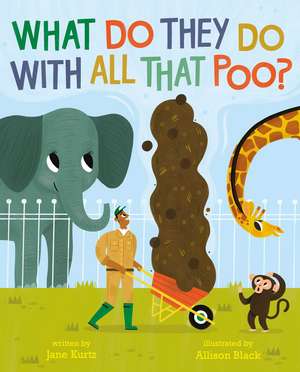
Ne-a atras atenția, încă de la prima răsfoire, stilul artistic al ilustratoarei Allison Black. Prin tehnica sa vibrantă și utilizarea unor palete de culori îndrăznețe, ea reușește să transforme un subiect considerat tabu într-o experiență vizuală plină de umor și farmec. Ilustrațiile nu doar că acompaniază textul, ci „îndulcesc” curiozitatea naturală a celor mici, făcând ca fiecare pagină să fie o descoperire veselă, departe de a fi respingătoare. Suntem de părere că această abordare grafică este esențială pentru a menține angajamentul copiilor față de o temă educativă neconvențională. What Do They Do With All That Poo? propune o premisă pe cât de simplă, pe atât de fascinantă: ce se întâmplă cu muntele de resturi produs zilnic într-o grădină zoologică? Jane Kurtz ghidează micii cititori printr-un inventar surprinzător al naturii, explicând cum deșeurile ajung în laboratoare de cercetare sau devin îngrășământ pentru grădini. Subliniem modul în care autoarea păstrează rigoarea informativă pe care am întâlnit-o și în Mary Morland in the Time of Dinosaur Discovery, unde curiozitatea științifică primează. Dacă în Clara the Triumphant Rhinoceros Kurtz ne familiariza cu noblețea animalelor mari, aici ea umanizează biologia prin rime jucăușe și fapte concrete. Părinții care au citit cu plăcere Who Pooped in the Zoo? San Diego Zoo de Caroline Patterson vor aprecia și această carte pentru accentul pus pe utilitatea ecologică a proceselor naturale, oferind o perspectivă mai aplicată și mai ritmată asupra subiectului.
Preț: 48.04 lei
Preț vechi: 57.29 lei
-16%
Carte disponibilă
Livrare economică 30 octombrie-11 noiembrie
Livrare express 14-20 octombrie pentru 29.02 lei
Specificații
ISBN-10: 1471182541
Pagini: 40
Dimensiuni: 279 x 229 x 6 mm
Greutate: 0.21 kg
Editura: Simon&Schuster
Colecția Simon & Schuster Children's UK
V-ar putea interesa
-
 Preț: 65.06 lei
 -
 Preț: 206.77 lei
 -
 Lift-the-flap Questions and Answers about AnimalsKatie Daynes-33%Preț: 59.36 lei88.60 lei
 -
 The Thing about SpringDaniel KirkPreț: 32.31 lei
 -
 Mouse's First SpringLauren ThompsonPreț: 57.25 lei
 -
 -37%Preț: 40.67 lei64.61 lei
 -
 What about Moose?Corey Rosen SchwartzPreț: 115.78 lei
 -
 Night AnimalsJenny Wren-30%Preț: 35.20 lei50.44 lei
 -
 Wild AnimalsJenny Wren-29%Preț: 37.67 lei52.97 lei
 -
 In the JungleCampbell Books-27%Preț: 37.07 lei50.57 lei
 -
 -23%Preț: 72.93 lei94.81 lei
 -
 Find Out About ... Animal BabiesMartin JenkinsPreț: 56.90 lei
 -
 A Wild Child's Guide to Endangered AnimalsMillie Marotta-16%Preț: 82.24 lei97.40 lei
De ce să citești această carte
Recomandăm această carte părinților cu copii curioși (3-7 ani) care pun întrebări incomode despre lumea înconjurătoare. Dincolo de porția sănătoasă de râs, volumul oferă lecții valoroase de ecologie și biologie, explicând circuitul materiei în natură. Este un instrument excelent pentru a demistifica procesele fiziologice, transformând o temă „murdară” într-o oportunitate de învățare relaxată și plină de culoare.
Despre autor
Jane Kurtz este o autoare de prestigiu, recunoscută pentru capacitatea sa de a traduce subiecte complexe pe înțelesul copiilor. Cu o copilărie petrecută în Etiopia, experiență care a inspirat lucrări premiate precum Fire on the Mountain (onorată cu Marion Vannett Ridgeway Award), Kurtz aduce în scrierile sale o sensibilitate aparte față de natură și istorie. Fie că scrie despre paleontologie sau despre viața animalelor la grădina zoologică, ea pune accent pe rigoarea faptelor, fiind distinsă de-a lungul carierei cu premii importante precum Golden Kite Award și Parents' Choice Gold Award.
Descriere scurtă
So what do zoos do with all of that poo?
This laugh-out-loud picture book explores all kinds of zoo poo, from cube-shaped wombat poo to teeny tiny worm droppings, and all of the places it ends up, including in science labs and your back garden!
Welcome to the wonderful world of poo! Take a whiff and learn something new...
Notă biografică
Allison Black is an illustrator and designer specializing in cute and colorful creations. Over the years Allison has developed an array of products, from Christmas ornaments to baby bedding, and has illustrated over 25 children’s books. No matter what she’s creating, Allison always brings a little flair to each project with her bold illustration style, thoughtful design, and fanciful critters. Allison lives in Columbus, Ohio, with her husband, kids, and a menagerie of furry family members.
Descriere
Recenzii
Any kid who’s been to a zoo knows that animal hygiene is not up to Mom’s standards. What might come as news are the very good reasons animals may have to leave their droppings where they drop, and the very good uses to which scat can be put. Rhymed verse rolls continuously along the top of spreads in oversized font, offering an introductory outline for the youngest listeners: “Sloths creep down from trees to poop, but only once a week./ A penguin shoots its poo out in a fishy-smelling streak.” A sentence or two in slightly smaller sans serif type adds nuance to the simple observations. And what about disposal? Kurtz’s explanations are largely satisfactory: some poo is trucked to landfills, some ends up in labs for study, some turns into compost (worms love to eat and re-poop the stuff), and some, like fiber-rich elephant poop, even appears later in the zoo gift shop as writing paper and greeting cards. Black’s toylike animals, with anthropomorphized grins, will hold more appeal for younger listeners, but the information will delight older, independent readers. What kid wouldn’t enjoy imagining a place where nobody tells you to flush, put down the seat, and wash your hands?
Kurtz (Planet Jupiter) playfully delves into the diversity of dung found at the zoo in her latest picture book. “A wombat’s poo is cube-shaped, so it isn’t very roly. / Some snakes poop only once a year. They digest their food sloooow-ly.” Simple rhyming couplets deliver the facts, with accompanying sentences providing additional detail (e.g., “Wombats are highly territorial. They each deposit 80–100 droppings every evening as a signpost to say ‘I’m here.’ ”). The first half of the book discusses how various creatures take care of back-end business, while the second describes how zoos manage all that manure (much of it is trucked to landfills, while some is composted into “Zoo Doo,” among other things). The brightly colored, cartoon-style illustrations by Black (Barnyard Boogie!) add levity, as hippos grin, sloths smile, and bats beam. Poop of various sizes is buried, sniffed, squirted, weighed, and even thrown. Young readers going through a bathroom-humor stage should enjoy the topic and the book’s light tone but, whether appreciative, awed, or grossed out, all will come away informed.
Countless zoo books line the shelves, but how often does one discuss animal manure—and how a zoo discards it? Employing the page turn to great effect from the very start, Kurtz is bound to get youngsters' attention: "At zoo after zoo / the animals chew. / And then … // they poo!" Quick rhymes in boldface type across the top make simple statements about each animal's toilet habits. "Sloths creep down from trees to poop, / but only once a week. / A penguin shoots its poo out / in a fishy-smelling streak." Smaller text below offers more in-depth facts: "Why do sloths spend so much energy leaving the protection of trees to poop on the ground? It's a mystery scientists are trying to solve." Black's wide-eyed, expressive animals have personality, but they never cross over to cartoony garishness. After exploring 12 different zoo dwellers, Kurtz then turns her focus to the large amount of poo that accumulates at a zoo every day. What do they do with it? Much is trucked to landfills, but zoos also study it in labs to help understand their animals better. Plus, there are compost options and even elephant-poo paper!....A scatological success. (Informational picture book. 3-8)