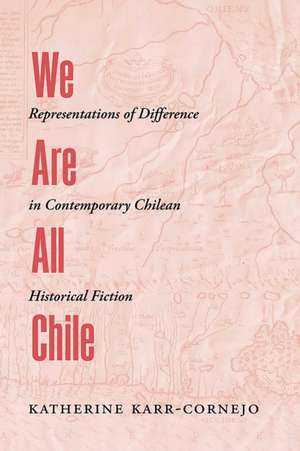
We Are All Chile: Path to Open
Autor Katherine Karr-Cornejoen Limba Engleză Hardback – 30 apr 2025
Apreciem contribuția adusă de Katherine Karr-Cornejo la înțelegerea mecanismelor prin care memoria istorică este reconstruită în spațiul sud-american. Autoarea, specialistă în studii culturale și literare, își fundamentează cercetarea pe o analiză riguroasă a modului în care ficțiunea istorică produsă în perioada post-dictatură reinterpretează trecutul colonial și republican al statului Chile (secolele XVI-XIX). Considerăm că forța acestui volum rezidă în capacitatea de a demonstra cum literatura nu este doar o oglindă a realității, ci un spațiu activ de contestare a structurilor de putere rămase moștenire de la regimul autoritar.
Textul examinează figuri și simboluri istorice prin prisma identităților marginalizate, abordând teme sensibile precum genul, orientarea sexuală și revendicările comunităților indigene. Reținem perspectiva inedită asupra „strategiilor lamentării” și a modului în care violența a fost utilizată istoric în procesul de construcție comunitară. Această ediție publicată de University of New Mexico Press propune un aparat critic care conectează sursele istoriografice primare cu narațiunile imaginative contemporane, oferind studenților și cercetătorilor un instrument de lucru interdisciplinar.
Cititorii familiarizați cu A History of Chilean Literature de Ignacio López-Calvo vor aprecia modul în care volumul de față restrânge focusul de la o panoramă generală către o analiză aprofundată a funcției politice a ficțiunii istorice. De asemenea, dacă Literature and Society in the Chilean Post-Transition de Denisse Lazo se concentrează pe tehnici narative experimentale, lucrarea lui Katherine Karr-Cornejo pune accent pe dialogul dintre arhivele istorice și nevoia de a imagina un viitor mai incluziv în Chile.








Preț: 434.95 lei
Carte indisponibilă temporar
Specificații
ISBN-10: 0826367879
Pagini: 240
Dimensiuni: 152 x 229 mm
Editura: University of New Mexico Press
Seria Path to Open
De ce să citești această carte
Recomandăm acest volum celor interesați de istoria Americii Latine și de studiile literare politice. Cititorul câștigă o înțelegere profundă a modului în care societatea chiliană contemporană își negociază traumele prin literatură. Este o lectură esențială pentru a înțelege cum ficțiunea istorică poate deveni un instrument de schimbare socială și de recuperare a vocilor marginalizate de-a lungul secolelor.
Descriere
A study of the relationship between literature and the current conditions of national life, We Are All Chile explores how artistic expression reflects lived experience. The book travels through figures, symbols, and events in Chilean history from the sixteenth to the end of the nineteenth centuries as represented through historical fiction of the late twentieth and early twenty-first centuries, an oeuvre that uses historical stories to reflect upon the challenges of Chilean society post-dictatorship. Contrasting the use of these stories with previous understanding highlights the power of legacies of the dictatorial authoritarian state, particularly as they shape possibilities for the full flourishing of people without regard for their minoritized or disadvantaged identities, such as their sex, sexual orientation, ethnicity, or race. This treatment of Chilean history and culture brings together literature and historiography to offer powerful interpretations of cultural narratives. The focus on varied dimensions of difference illustrates both overlapping representations and distinctive features of each within narratives imagining a more inclusive community. Throughout We Are All Chile, historical narratives and their source material are connected to support the creation of imaginative space for a better and more expansive future. The stories studied highlight the relationships between gender, empire, and the body; performances of race and gender that evoke a utopian dream of coexistence; symbols and systems of the nation as reflections of authoritarian practices; the legibility of the claims of indigenous communities; the role of violence in community building; and the strategies of lament inherent in the repeated stories of dreams for a more inclusive future shattered on the structures of exclusion. These historical narratives alone cannot change the material conditions in which people live, but they can awaken hope for the future that can inspire change. And it is this very process of defending, questioning, challenging, and changing historical stories that opens the door to possibility.