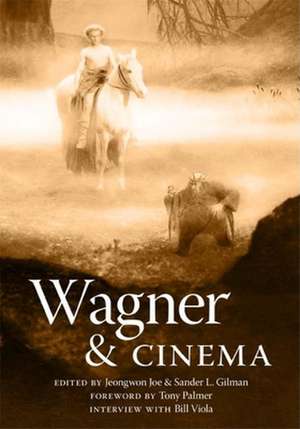
Wagner & Cinema: Indiana University Press (IPS)
Editat de Jeongwon Joe, Sander L Gilmanen Limba Engleză Paperback – feb 2010
Descoperim în Wagner & Cinema o perspectivă inedită asupra modului în care viziunea totală a lui Richard Wagner a modelat limbajul vizual și sonor al celui de-al șaptelea segment artistic. Volumul, editat de Jeongwon Joe și Sander L Gilman, ne invită să explorăm cum conceptele wagneriene au migrat din sala de operă direct în cabina de montaj, influențând nu doar coloana sonoră, ci însăși structura narativă a filmelor. Experiența de lectură este una profund senzorială; cele 35 de exemple muzicale și cele 28 de ilustrații alb-negru funcționează ca repere vizuale și auditive care ne ajută să „auzim” imaginea și să „vedem” muzica.
Structura volumului este riguros organizată în secțiuni care urmăresc cronologic și tematic această simbioză. Partea întâi ne poartă în epoca filmului mut, analizând cum motivele wagneriene au integrat narațiunea în absența dialogului, în timp ce secțiunile următoare explorează rezonanțele din perioada de aur a Hollywood-ului și prezența compozitorului în genuri neașteptate, precum science-fiction-ul anilor '50. Pe raftul de artă, alături de Cinema's Illusions, Opera's Allure, acest album se distinge prin focalizarea sa specifică pe „wagnerism” ca fenomen total, depășind simpla analiză a adaptărilor de operă pentru a investiga amprenta ideologică și estetică lăsată asupra unor regizori precum Fritz Lang sau Ridley Scott.
Putem afirma că lucrarea reușește să transforme o temă academică într-o călătorie fascinantă prin istoria culturală. De la biopicul din 1913 până la ecourile din Gladiator, eseistul James Buhler și ceilalți colaboratori demonstrează că influența lui Wagner nu este doar o relicvă a secolului al XIX-lea, ci un element viu care continuă să dicteze ritmul și tensiunea dramatică în cinematografia contemporană.
Din seria Indiana University Press (IPS)
-
 Preț: 269.11 lei
 -
 Preț: 131.48 lei
 -
 Preț: 162.16 lei
 -
 Preț: 158.71 lei
 -
 Preț: 379.13 lei
 -
 Preț: 172.46 lei
 - 19%
 Preț: 418.63 lei
 -
 Preț: 158.26 lei
 -
 Preț: 352.15 lei
 -
 Preț: 180.31 lei
 -
 Preț: 163.74 lei
 -
 Preț: 170.63 lei
 -
 Preț: 181.47 lei
 -
 Preț: 212.15 lei
 -
 Preț: 279.86 lei
 -
 Preț: 244.60 lei
 -
 Preț: 152.79 lei
 -
 Preț: 321.10 lei
 -
 Preț: 155.49 lei
 - 20%
 Preț: 169.15 lei
 -
 Preț: 185.47 lei
 -
 Preț: 208.89 lei
 -
 Preț: 238.94 lei
 -
 Preț: 281.65 lei
 -
 Preț: 184.13 lei
 -
 Preț: 470.93 lei
 -
 Preț: 233.12 lei
 -
 Preț: 196.25 lei
 -
 Preț: 303.68 lei
 -
 Preț: 265.67 lei
 -
 Preț: 287.76 lei
 -
 Preț: 123.35 lei
 -
 Preț: 105.45 lei
 -
 Preț: 395.64 lei
 -
 Preț: 306.52 lei
 -
 Preț: 134.44 lei
 -
 Preț: 199.73 lei
 -
 Preț: 180.53 lei
 -
 Preț: 170.37 lei
 -
 Preț: 194.06 lei
 -
 Preț: 249.81 lei
 -
 Preț: 196.33 lei
 -
 Preț: 262.89 lei
 -
 Preț: 208.32 lei
 -
 Preț: 293.43 lei
 -
 Preț: 195.48 lei
 -
 Preț: 160.05 lei
 -
 Preț: 195.68 lei
 -
 Preț: 104.43 lei
 -
 Preț: 175.36 lei
Preț: 240.90 lei
Carte tipărită la comandă
Livrare economică 07-21 decembrie
Specificații
ISBN-10: 0253221633
Pagini: 506
Ilustrații: 28 b&w illustrations, 35 musical exx.
Dimensiuni: 152 x 229 x 27 mm
Greutate: 0.73 kg
Editura: Indiana University Press
Colecția Indiana University Press (IPS)
Seria Indiana University Press (IPS)
Locul publicării:United States
V-ar putea interesa
-
 -23%Preț: 549.66 lei713.75 lei
 -
 Roland HayesChristopher A BrooksPreț: 305.56 lei
 -
 Preț: 188.23 lei
 -
 Guide to the Aria RepertoireMark Ross ClarkPreț: 327.14 lei
 -
 The Verdi BaritoneGeoffrey EdwardsPreț: 147.36 lei
 -
 Preț: 230.26 lei
 -
 Preț: 331.09 lei
 -
 O Let Us Howle Some Heavy NoteAmanda Eubanks WinklerPreț: 268.76 lei
 -
 Evolving Jewish Identities in German Culture: Borders and CrossingsLinda E. Feldman-30%Preț: 473.43 lei674.94 lei
 -
 Race in Contemporary MedicineSander L. GilmanPreț: 413.87 lei
 -
 The Jew's BodySander GilmanPreț: 399.59 lei
 -
 A New Germany in a New EuropeTodd HerzogPreț: 293.92 lei
 -
 Preț: 503.53 lei
 -
 FatSander L GilmanPreț: 179.03 lei
 -
 Preț: 229.90 lei
 -
 Preț: 245.77 lei
 -
 Preț: 301.35 lei
 -
 Anti-Semitism in Times of CrisisSander L GilmanPreț: 307.48 lei
 -
 Preț: 165.61 lei
 -
 Placido DomingoCristina Franchi-15%Preț: 165.31 lei194.99 lei
 -
 Pagliacci Has Nothing on Me!Marguerite PiazzaPreț: 136.35 lei
 -
 Fünfhundert gemainer newer teutscher SprüchwörterJohannes Agricola-23%Preț: 1127.09 lei1463.76 lei
 -
 Der FreischützCarl Maria Von WeberPreț: 251.66 lei
De ce să citești această carte
Recomandăm Wagner & Cinema oricărui pasionat de muzicologie sau istoria filmului care dorește să înțeleagă rădăcinile spectacolului cinematografic modern. Cititorul câștigă o înțelegere profundă a modului în care tehnici precum leitmotivul au devenit fundamentale pentru marii compozitori de film. Este o resursă esențială pentru a vedea dincolo de ecran, descifrând codurile sonore care ne dictează emoțiile în fața marilor producții de la Hollywood.
Despre autor
Jeongwon Joe și Sander L Gilman sunt cercetători reputați care au reușit să adune în acest volum voci de referință din domeniul studiilor culturale și muzicologice. Sander L Gilman este cunoscut pentru analizele sale interdisciplinare asupra istoriei ideilor și culturii germane, oferind contextul necesar pentru a înțelege controversele ideologice legate de Wagner. Împreună, aceștia coordonează o lucrare publicată de Indiana University Press, integrând perspective variate care fac legătura între estetica secolului al XIX-lea și media digitală a noului mileniu.
Descriere scurtă
Cuprins
Recenzii
"[T]he book . . . present[s] the reader with a strong and very varied attempt to discuss the relation between Wagner, opera and cinema and includes a vast array of densely detailed information covering large historical periods in many of its well-written essays." --Screening the Past, Issue 29
"A useful resource for serious students of film, theater, and/or music, the book includes numerous photos, and helpful music notation enhances the text. . . . Recommended." --Choice
[Wagner and Cinema] looks at the plethora of senses in which Wagners music and different kinds of Wagnerian reception histories have informed cinematic production throughout the twentieth and twenty-first centuries....Wagner and Cinema is a text that will no doubt be consulted for many years henceforward. - Nathan Waddell, Scope, Issue 24, 2012
"Timely, relevant, and absolutely central to what is going on in so many fields. The editors have done a terrific job in bringing together not only the most appropriate but also the most stimulating and exciting of contributors." --Linda Hutcheon, author of A Theory of Adaptation "[T]he book ... present[s] the reader with a strong and very varied attempt to discuss the relation between Wagner, opera and cinema and includes a vast array of densely detailed information covering large historical periods in many of its well-written essays." --Screening the Past, Issue 29 "A useful resource for serious students of film, theater, and/or music, the book includes numerous photos, and helpful music notation enhances the text... Recommended." --Choice "[Wagner and Cinema] looks at the plethora of senses in which Wagner's music and different kinds of Wagnerian reception histories have informed cinematic production throughout the twentieth and twenty-first centuries...Wagner and Cinema is a text that will no doubt be consulted for many years henceforward." - Nathan Waddell, Scope, Issue 24, 2012