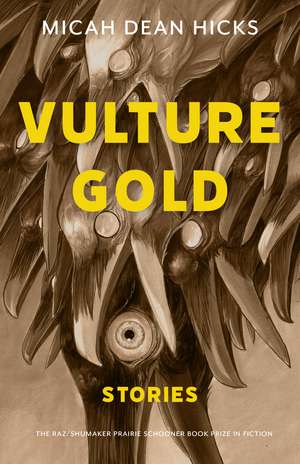
Vulture Gold: Stories: The Raz/Shumaker Prairie Schooner Book Prize in Fiction
Autor Micah Dean Hicksen Limba Engleză Paperback – sep 2026
Welcome to a dark country of sadness and wonder. Where a wedding dress turns a reluctant bride into a flock of birds, and families put on their wolf coats before devouring one another. These growling, prickly-feathered stories blur the lines between human and animal, living and dead. Teenage spirits are condemned to drive around their hometown forever. Five brothers learn that they were once crows. The bank hires a man to go into foreclosed houses and kill their monsters. Two sisters find an oven that can resurrect the dead. Plumbers kidnap mermaids trapped in a city sewer system. A mockingbird sings a woman’s sins. A boy with a single swan’s wing yearns to fly. And watching over all of them is the queen of the dead, who sends her vulture men to scavenge the bones. The characters in these modern fairy tales challenge expectations and norms in a dark and magical shared world.
Din seria The Raz/Shumaker Prairie Schooner Book Prize in Fiction
-
 Preț: 81.94 lei
 -
 Preț: 163.74 lei
 -
 Preț: 89.75 lei
 -
 Preț: 100.03 lei
 -
 Preț: 94.69 lei
 -
 Preț: 101.11 lei
 -
 Preț: 99.30 lei
 -
 Preț: 110.40 lei
 -
 Preț: 136.27 lei
 -
 Preț: 92.17 lei
 -
 Preț: 93.13 lei
 -
 Preț: 109.42 lei
 -
 Preț: 98.18 lei
 -
 Preț: 94.09 lei
 -
 Preț: 93.64 lei
 -
 Preț: 120.22 lei
 -
 Preț: 110.49 lei
 -
 Preț: 106.88 lei
 -
 Preț: 104.42 lei
 -
 Preț: 105.84 lei
 -
 Preț: 105.24 lei
Preț: 135.16 lei
Nou
Puncte Express: 203
Carte disponibilă
Livrare economică 31 octombrie-14 noiembrie
Livrare prin curier în România Termenul estimat este afișat lângă disponibilitate.
Transport gratuit de la 400.00 lei Plată online sau ramburs, în funcție de opțiunile comenzii.
Retur gratuit în 14 zile Comandă securizată și suport în română.
Specificații
ISBN-13: 9781496248251
ISBN-10: 1496248252
Pagini: 238
Dimensiuni: 140 x 216 mm
Greutate: 0.28 kg
Editura: Nebraska
Colecția University of Nebraska Press
Seria The Raz/Shumaker Prairie Schooner Book Prize in Fiction
Locul publicării:United States
ISBN-10: 1496248252
Pagini: 238
Dimensiuni: 140 x 216 mm
Greutate: 0.28 kg
Editura: Nebraska
Colecția University of Nebraska Press
Seria The Raz/Shumaker Prairie Schooner Book Prize in Fiction
Locul publicării:United States
Notă biografică
Micah Dean Hicks is the author of the novel Break the Bodies, Haunt the Bones and the story collection Electricity and Other Dreams. His writing has appeared in The Best American Science Fiction and Fantasy, the New York Times, Lightspeed, Nightmare, and Gulf Coast. He teaches creative writing as an assistant professor of English at the University of South Florida.
Extras
1
The Bone Oven
Two sisters lived in a city of the old and dying. It was all mortuaries
and embalmers, funeral parlors every block, graveyards instead
of parks with their moss-eaten stones. The sisters worked selling
coffins. Every day they helped people deal with death. A gray weight
settled over them, until they took stairs one slow step at a time,
drove below the speed limit, and swallowed vitamins until their
throats were sore.
“This isn’t living,” young sister said. They needed skinned knees,
thorny flowers blooming, spring sneezes, and racing hearts. So old
sister found them a new house outside of town, a ruined cottage
buried in the woods.
The skull-faced realtor showed them a brick and iron monument
that took up half the kitchen. “An antique oven. It’s broken.” He
opened the iron mouth and squinted into the cobwebbed hollow,
coffin-deep. “Maybe you could put dishes in it.”
The sisters shrugged. They had a microwave. “What else?”
“There is a wild dog in the woods. It belonged to the woman
who lived here. You might hear it howling at night.”
Mourning they understood. The house wasn’t much to look at,
but it had an overgrown garden full of snails, faded bird feeders
swinging from the trees, the rattle of acorns falling like rain on
the shingles.
“You can hear the world breathe out here,” old sister said.
“It’s perfect,” said young sister. “We’ll take it.”
Their first night in the house, sharing the cottage’s one tiny
bedroom, the sisters listened to the dog moaning in the woods. In
the morning, they put food out for it on the porch. It repaid them
in dead birds, rotten frogs, and bits of bone.
The sisters sighed and buried the dead things in the garden. So
far from the city, they still did the business of death.
Later, while they cleaned the floors and brought down forgotten
furniture from the attic, the sisters heard sounds on the porch:
the rude slap of a tongue in a bowl, the sucking chop of a dog
drinking water.
They eased open the door, but there was no dog. Instead, a young
man crouched naked with his face in the bowl, slurping water and
eating dog food. He cowered, dropped his eyes, and slinked away
on all fours. The sisters spent all afternoon tempting him back to
the house with scraps of bacon and saucers of milk.
“Who is he?” young sister asked.
“A silly question,” old sister said. “Clearly, he’s our dog.”
That night, luring him inside with microwaved meat, the sisters
sat on either side of the dog boy, scratching his belly and snipping
the hair that fell over his eyes. They wiped the dirt from his face
and mouth, the creases of his arms, and his chest. They clipped his
nails while he whined and growled. They crushed fleas, rubbed his
ears, let him lick their hands.
When they cleaned him up, they saw that the dog boy wasn’t as
old as most people in the city. He was young and strong, like them.
And he was handsome, golden-haired and heavy-armed, with long
legs. He lay on the floor belly-up, scratching his back on the rug
and waving his sex back and forth like a flag. The sisters blushed
and laughed. This was why they had left the city. This was youth
and life. This was blood overflowing its banks.
That night, they cleaned the attic and found boxes of old diaries.
They were written by the woman who’d lived here before them, and
every page was about the same man. The sisters dragged the boxes
downstairs and lit lamps, their greedy faces close to the page. They
wanted warm breath and sex, midnight meetings and promises.
They wanted to be stirred up.
They learned that the woman had been a witch. She sold snake-oil
cures to the paranoid city, its people spending their whole lives
thinking about how they might die. In some of the entries, she
planned a life with the man. In others, she planned to kill him.
Sometimes she wrote to apologize, sometimes to threaten. She
didn’t write one calm word, her emotions running between now
and never. The letters warmed the sisters like fire.
They heard the dog boy barking and went outside. It was fall
now. The leaves, liver-spotted and leather-faced, made their slow
waltz to the ground. The porch was covered in bones dug up from
the forest, the dog boy watching them with his snow-bright
eyes.
“No, no,” old sister said. “Is the whole world a cemetery?”
The Bone Oven
Two sisters lived in a city of the old and dying. It was all mortuaries
and embalmers, funeral parlors every block, graveyards instead
of parks with their moss-eaten stones. The sisters worked selling
coffins. Every day they helped people deal with death. A gray weight
settled over them, until they took stairs one slow step at a time,
drove below the speed limit, and swallowed vitamins until their
throats were sore.
“This isn’t living,” young sister said. They needed skinned knees,
thorny flowers blooming, spring sneezes, and racing hearts. So old
sister found them a new house outside of town, a ruined cottage
buried in the woods.
The skull-faced realtor showed them a brick and iron monument
that took up half the kitchen. “An antique oven. It’s broken.” He
opened the iron mouth and squinted into the cobwebbed hollow,
coffin-deep. “Maybe you could put dishes in it.”
The sisters shrugged. They had a microwave. “What else?”
“There is a wild dog in the woods. It belonged to the woman
who lived here. You might hear it howling at night.”
Mourning they understood. The house wasn’t much to look at,
but it had an overgrown garden full of snails, faded bird feeders
swinging from the trees, the rattle of acorns falling like rain on
the shingles.
“You can hear the world breathe out here,” old sister said.
“It’s perfect,” said young sister. “We’ll take it.”
Their first night in the house, sharing the cottage’s one tiny
bedroom, the sisters listened to the dog moaning in the woods. In
the morning, they put food out for it on the porch. It repaid them
in dead birds, rotten frogs, and bits of bone.
The sisters sighed and buried the dead things in the garden. So
far from the city, they still did the business of death.
Later, while they cleaned the floors and brought down forgotten
furniture from the attic, the sisters heard sounds on the porch:
the rude slap of a tongue in a bowl, the sucking chop of a dog
drinking water.
They eased open the door, but there was no dog. Instead, a young
man crouched naked with his face in the bowl, slurping water and
eating dog food. He cowered, dropped his eyes, and slinked away
on all fours. The sisters spent all afternoon tempting him back to
the house with scraps of bacon and saucers of milk.
“Who is he?” young sister asked.
“A silly question,” old sister said. “Clearly, he’s our dog.”
That night, luring him inside with microwaved meat, the sisters
sat on either side of the dog boy, scratching his belly and snipping
the hair that fell over his eyes. They wiped the dirt from his face
and mouth, the creases of his arms, and his chest. They clipped his
nails while he whined and growled. They crushed fleas, rubbed his
ears, let him lick their hands.
When they cleaned him up, they saw that the dog boy wasn’t as
old as most people in the city. He was young and strong, like them.
And he was handsome, golden-haired and heavy-armed, with long
legs. He lay on the floor belly-up, scratching his back on the rug
and waving his sex back and forth like a flag. The sisters blushed
and laughed. This was why they had left the city. This was youth
and life. This was blood overflowing its banks.
That night, they cleaned the attic and found boxes of old diaries.
They were written by the woman who’d lived here before them, and
every page was about the same man. The sisters dragged the boxes
downstairs and lit lamps, their greedy faces close to the page. They
wanted warm breath and sex, midnight meetings and promises.
They wanted to be stirred up.
They learned that the woman had been a witch. She sold snake-oil
cures to the paranoid city, its people spending their whole lives
thinking about how they might die. In some of the entries, she
planned a life with the man. In others, she planned to kill him.
Sometimes she wrote to apologize, sometimes to threaten. She
didn’t write one calm word, her emotions running between now
and never. The letters warmed the sisters like fire.
They heard the dog boy barking and went outside. It was fall
now. The leaves, liver-spotted and leather-faced, made their slow
waltz to the ground. The porch was covered in bones dug up from
the forest, the dog boy watching them with his snow-bright
eyes.
“No, no,” old sister said. “Is the whole world a cemetery?”
Cuprins
1. The Bone Oven
2. The Carpenter and the Beast of Teeth
3. A Ceremony of Beasts
4. Flight of the Crow Boys
5. Song Beneath the City
6. The Deer Boy
7. Ghost Jeep
8. Church of Birds
9. Fatherly
10. The Wonder Broker
11. The Listening Tree
12. Wolf Coat Mine
13. Rabbit Trap
14. Saint Josiah the Loveless
15. Vulture Gold
16. Aurelia
Acknowledgments
2. The Carpenter and the Beast of Teeth
3. A Ceremony of Beasts
4. Flight of the Crow Boys
5. Song Beneath the City
6. The Deer Boy
7. Ghost Jeep
8. Church of Birds
9. Fatherly
10. The Wonder Broker
11. The Listening Tree
12. Wolf Coat Mine
13. Rabbit Trap
14. Saint Josiah the Loveless
15. Vulture Gold
16. Aurelia
Acknowledgments
Recenzii
“Built upon the bones of fairy tales, legends, and ghost stories, this dark and lush collection offers up a fresh exploration of the human condition through the lens of the fantastic.”—A.C. Wise, author of Ballad of the Bone Road
“These stories, in the deft hand of Micah Dean Hicks, combine the grit of rural living with the soaring speculation of the fabulous. Writing in the rich vein of greats like Karen Russell, Aimee Bender, and Kelly Link, Hicks grants us entrée into complex ruminations on poverty and well-being, queerness, gender, and all of the bloody, beating moments that shape the human heart.”—Joe Baumann, author of Tell Me
“Each of Micah Dean Hicks’s short stories is a thin slice of heart perfectly preserved in prose, so that this collection is like a beautifully arranged charcuterie tray of the human experience. You won’t know whether to savor each beautiful and insightful morsel or to devour them all in a blaze of feeling. Compelling, powerful, unsettling, and gorgeous—this is must-read fiction from a major talent.”—Wendy N. Wagner, author of Girl in the Creek and The Deer Kings
“These stories, in the deft hand of Micah Dean Hicks, combine the grit of rural living with the soaring speculation of the fabulous. Writing in the rich vein of greats like Karen Russell, Aimee Bender, and Kelly Link, Hicks grants us entrée into complex ruminations on poverty and well-being, queerness, gender, and all of the bloody, beating moments that shape the human heart.”—Joe Baumann, author of Tell Me
“Each of Micah Dean Hicks’s short stories is a thin slice of heart perfectly preserved in prose, so that this collection is like a beautifully arranged charcuterie tray of the human experience. You won’t know whether to savor each beautiful and insightful morsel or to devour them all in a blaze of feeling. Compelling, powerful, unsettling, and gorgeous—this is must-read fiction from a major talent.”—Wendy N. Wagner, author of Girl in the Creek and The Deer Kings
Descriere
Welcome to a dark country of sadness and wonder, where growling, prickly-feathered stories blur the lines between human and animal, living and dead, and where characters challenge expectations and norms in a dark and magical shared world.