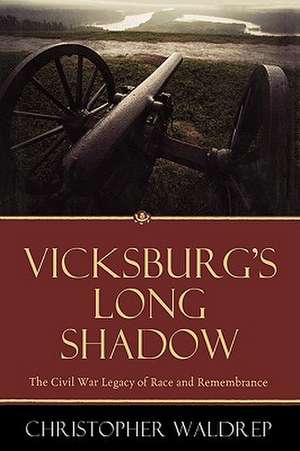
Vicksburg's Long Shadow: The Civil War Legacy of Race and Remembrance: The American Crisis Series: Books on the Civil War Era
Autor Christopher Waldrepen Limba Engleză Hardback – 31 aug 2005
In this highly-anticipated new work, Christopher Waldrep takes a fresh look at how the Vicksburg campaign was fought and remembered. He begins with a gripping account of the battle, deftly recounting the experiences of African-American troops fighting for the Union. Waldrep shows how as the scars of battle faded, the memory of the war was shaped both by the Northerners who controlled the battlefield and by the legacies of race and slavery that played out over the decades that followed.
Din seria The American Crisis Series: Books on the Civil War Era
- 17%
 Preț: 141.89 lei
 - 24%
 Preț: 265.38 lei
 - 30%
 Preț: 617.23 lei
 - 21%
 Preț: 305.75 lei
 - 25%
 Preț: 257.42 lei
 - 25%
 Preț: 257.42 lei
 - 24%
 Preț: 251.63 lei
 - 25%
 Preț: 215.00 lei
 - 26%
 Preț: 170.34 lei
 -
 Preț: 247.99 lei
 - 26%
 Preț: 172.73 lei
 - 26%
 Preț: 211.61 lei
 - 33%
 Preț: 330.40 lei
 - 25%
 Preț: 257.61 lei
 - 24%
 Preț: 339.46 lei
 - 32%
 Preț: 662.13 lei
 - 25%
 Preț: 257.99 lei
 - 25%
 Preț: 262.30 lei
 - 24%
 Preț: 259.98 lei
Preț: 176.20 lei
Preț vechi: 226.43 lei
-22%
Puncte Express: 264
Carte tipărită la comandă
Livrare economică 08-22 iunie
Specificații
ISBN-13: 9780742548688
ISBN-10: 0742548686
Pagini: 344
Dimensiuni: 152 x 235 x 25 mm
Greutate: 0.61 kg
Editura: Bloomsbury Publishing
Colecția Rowman & Littlefield
Seria The American Crisis Series: Books on the Civil War Era
Locul publicării:New York, United States
ISBN-10: 0742548686
Pagini: 344
Dimensiuni: 152 x 235 x 25 mm
Greutate: 0.61 kg
Editura: Bloomsbury Publishing
Colecția Rowman & Littlefield
Seria The American Crisis Series: Books on the Civil War Era
Locul publicării:New York, United States
V-ar putea interesa
-
 The Founders at HomeMyron MagnetPreț: 158.54 lei
 -
 Fire and AshesMichael IgnatieffPreț: 261.66 lei
 -
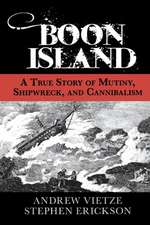 Boon IslandStephen A. ERICKSONPreț: 128.65 lei
 -
 Preț: 232.70 lei
 -
 Shooting Arrows and Slinging MudJames MuellerPreț: 236.14 lei
 -
 Main Street Oklahoma: Stories of Twentieth-Century AmericaLinda W. ReesePreț: 193.51 lei
 -
 Preț: 285.59 lei
 -
 The Wars of Spanish American Independence 1809–29John Fletcher-32%Preț: 74.89 lei110.42 lei
Cuprins
Introduction
Prologue
Chapter 1: War
Chapter 2: The Meaning of the Civil War in Reconstruction
Chapter 3: The Generals' War
Chapter 4: The Boys from Iowa
Chapter 5: The Great Reunion
Chapter 6: A Farewell to Arms
Chapter 7: A New Deal
Epilogue
Appendix 1: Herman Lieb's Report on Milliken's Bend
Appendix 2: "The Battle of Milliken's Bend," by David Cornwell
Appendix 3: Reported Lynchings in Warren County, Mississippi
Appendix 4: State Monuments on the Vicksburg Battleground
Bibliographic essay
Prologue
Chapter 1: War
Chapter 2: The Meaning of the Civil War in Reconstruction
Chapter 3: The Generals' War
Chapter 4: The Boys from Iowa
Chapter 5: The Great Reunion
Chapter 6: A Farewell to Arms
Chapter 7: A New Deal
Epilogue
Appendix 1: Herman Lieb's Report on Milliken's Bend
Appendix 2: "The Battle of Milliken's Bend," by David Cornwell
Appendix 3: Reported Lynchings in Warren County, Mississippi
Appendix 4: State Monuments on the Vicksburg Battleground
Bibliographic essay
Recenzii
Waldrep shows how reunions, memorial days, and the establishment of a national cemetery and the Vicksburg National Military Park kept alive racial memories of the battle, promoting patriotism and military heroism. . . . Highly recommended.
A fascinating analysis of how the aftermath of the Vicksburg campaign impacted soldiers, generals, African-Americans, American society north and south, and the city itself.
With unusual clarity, penetrating insight, and wry understatement, in Vicksburg's Long Shadow Chris Waldrep unravels the how and why of the Civil War commemorations of Vicksburg, Mississippi. Like the best of the 'new' memory studies, Waldrep explains historical remembrance as a function of prevailing power. White northerners, not white southerners, generally fashioned Vicksburg's historical landscape, all the while solidifying the federal government's influence and power. Vicksburg's Long Shadow combines fresh primary research and informed synthesis. Waldrep's book is an original addition to the growing field of Civil War-era historical memory.
The only thing most people know about the issue of Civil War memory in Vicksburg, Mississippi is that many locals refused to celebrate July 4th for years after the War. By studying a large cast of characters from the 1860s through the 1930s, this unique and thoroughly researched work shows that the competing memories of the Civil War involved African Americans fighting for emancipation, the defiance of local whites, the strategies of generals, the commitment of various soldiers, the issue of reconciliation, and, finally, the irony of a federally funded park that Vicksburg's residents welcomed and celebrated.
Waldrep excels in exploring the political minefield of northern veterans creating a park to Grant's success in a Southern city. Along the way, he confronts slavery's lingering legacy of racism and the federal government's concession to the Lost Cause interpretation of the war. Vicksburg's Long Shadow teaches us much about how national battlefield parks are created and Civil War memories constructed.
The artifacts uncovered for Vicksburg's Long Shadow: The Civil War Legacy of Race and Remembrance include 633 endnotes. There are references from the Civil War generals' memoirs . . . but many more taken from the journals, letters, and diaries of ordinary soldiers and civilians of Vicksburg during the war and Reconstruction era. . . . What is clear from his findings is the warning to any culture setting out to right another culture's wrongs: Understand the culture and its myths, it is one thing to prevail over it militarily. It is quite another to change its beliefs.
Memory is a hot topic in Civil War history right now, and Vicksburg's Long Shadow makes some valuable contributions to the genre. Waldrep's careful delineation of the ways that northerners and the federal government shaped the southern landscape adds nuance to our understanding of the power of the Lost Cause. At the same time, Waldrep is careful to remind us that northern memories of the war were often no more focused on emancipation and less distorted than those of white southerners.
This book, then, is both a fascinating case study that hones in on the particular memory of a critical Civil War battle and a work of scholarship that engages much broader concern and methodologies in Civil War studies.
This important study will surely serve as the standard for years to come.
A fascinating analysis of how the aftermath of the Vicksburg campaign impacted soldiers, generals, African-Americans, American society north and south, and the city itself.
With unusual clarity, penetrating insight, and wry understatement, in Vicksburg's Long Shadow Chris Waldrep unravels the how and why of the Civil War commemorations of Vicksburg, Mississippi. Like the best of the 'new' memory studies, Waldrep explains historical remembrance as a function of prevailing power. White northerners, not white southerners, generally fashioned Vicksburg's historical landscape, all the while solidifying the federal government's influence and power. Vicksburg's Long Shadow combines fresh primary research and informed synthesis. Waldrep's book is an original addition to the growing field of Civil War-era historical memory.
The only thing most people know about the issue of Civil War memory in Vicksburg, Mississippi is that many locals refused to celebrate July 4th for years after the War. By studying a large cast of characters from the 1860s through the 1930s, this unique and thoroughly researched work shows that the competing memories of the Civil War involved African Americans fighting for emancipation, the defiance of local whites, the strategies of generals, the commitment of various soldiers, the issue of reconciliation, and, finally, the irony of a federally funded park that Vicksburg's residents welcomed and celebrated.
Waldrep excels in exploring the political minefield of northern veterans creating a park to Grant's success in a Southern city. Along the way, he confronts slavery's lingering legacy of racism and the federal government's concession to the Lost Cause interpretation of the war. Vicksburg's Long Shadow teaches us much about how national battlefield parks are created and Civil War memories constructed.
The artifacts uncovered for Vicksburg's Long Shadow: The Civil War Legacy of Race and Remembrance include 633 endnotes. There are references from the Civil War generals' memoirs . . . but many more taken from the journals, letters, and diaries of ordinary soldiers and civilians of Vicksburg during the war and Reconstruction era. . . . What is clear from his findings is the warning to any culture setting out to right another culture's wrongs: Understand the culture and its myths, it is one thing to prevail over it militarily. It is quite another to change its beliefs.
Memory is a hot topic in Civil War history right now, and Vicksburg's Long Shadow makes some valuable contributions to the genre. Waldrep's careful delineation of the ways that northerners and the federal government shaped the southern landscape adds nuance to our understanding of the power of the Lost Cause. At the same time, Waldrep is careful to remind us that northern memories of the war were often no more focused on emancipation and less distorted than those of white southerners.
This book, then, is both a fascinating case study that hones in on the particular memory of a critical Civil War battle and a work of scholarship that engages much broader concern and methodologies in Civil War studies.
This important study will surely serve as the standard for years to come.