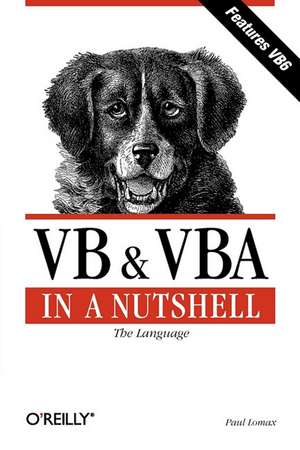
VB & VBA in a Nutshell: The Language
Autor Paul Lomaxen Limba Engleză Paperback – 10 noi 1998
Preț: 211.47 lei
Preț vechi: 264.34 lei
-20%
Puncte Express: 317
Carte disponibilă
Livrare economică 16-30 noiembrie
Livrare prin curier în România Termenul estimat este afișat lângă disponibilitate.
Transport gratuit de la 400.00 lei Plată online sau ramburs, în funcție de opțiunile comenzii.
Retur gratuit în 14 zile Comandă securizată și suport în română.
Specificații
ISBN-13: 9781565923584
ISBN-10: 1565923588
Pagini: 650
Dimensiuni: 154 x 230 x 35 mm
Greutate: 0.77 kg
Editura: O'Reilly
Locul publicării:United States
ISBN-10: 1565923588
Pagini: 650
Dimensiuni: 154 x 230 x 35 mm
Greutate: 0.77 kg
Editura: O'Reilly
Locul publicării:United States
V-ar putea interesa
-
 Microsoft Excel VBA and MacrosBill Jelen-20%Preț: 221.36 lei276.70 lei
 -
 Walkenbach, J: Excel 2010 BibleJohn Walkenbach-20%Preț: 282.07 lei352.59 lei
 -
 VBScript in a NutshellPaul Lomax-20%Preț: 257.05 lei321.31 lei
 -
 Excel 2013 Power Programming with VBAJohn Walkenbach-20%Preț: 316.91 lei396.13 lei
 -
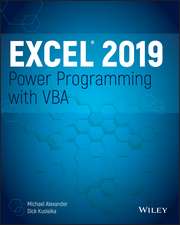 Excel 2019 Power Programming with VBADick Kusleika-20%Preț: 299.97 lei374.96 lei
 -
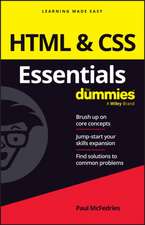 HTML & CSS Essentials For DummiesPaul McFedries-20%Preț: 79.54 lei99.42 lei
 -
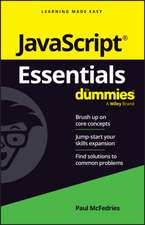 JavaScript Essentials For DummiesPaul McFedries-20%Preț: 79.76 lei99.71 lei
 -
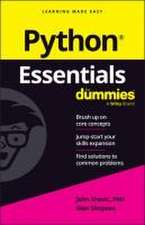 Python Essentials For DummiesJohn C. Shovic-20%Preț: 78.04 lei97.56 lei
 -
 -20%Preț: 176.97 lei221.21 lei
 -
 SQL Essentials for DummiesRichard Blum-20%Preț: 65.83 lei82.30 lei
 -
 Java Essentials for DummiesDoug Lowe-20%Preț: 78.97 lei98.70 lei
 -
 Microsoft Excel 365 BibleMichael Alexander-20%Preț: 290.19 lei362.74 lei
 -
 C++ Essentials for DummiesJohn Paul Mueller-20%Preț: 65.48 lei81.85 lei
 -
 Excel Quick and EasyDick Kusleika-20%Preț: 81.87 lei102.34 lei
 -
 Coding For Dummies, All New EditionPaul McFedries-20%Preț: 116.94 lei146.18 lei
 -
 Beginning Visual Web Programming in VB .NetChris Hart-20%Preț: 221.93 lei277.42 lei
 -
 The Rust Programming Language, 3rd EditionCarol Nichols-34%Preț: 292.45 lei444.81 lei
 -
 Python in Easy StepsMike Mcgrath-20%Preț: 74.68 lei93.35 lei
 -
 .NET 10 RevealedKajetan Duszy¿ski-20%Preț: 240.60 lei300.75 lei
 -
 Mastering ASP.NET Core 10Mabrouk Mahdhi-20%Preț: 250.42 lei313.02 lei
Cuprins
Preface;
Why Another VB Book?;
What's Wrong with the Online Help?;
Who Should Read This Book?;
How This Book Should Be Used;
How This Book Is Structured;
Conventions Used in This Book;
How to Contact Us;
Acknowledgments;
Part II: The Basics;
Chapter 1: Introduction;
1.1 What Is VBA?;
1.2 A Brief History of VBA;
1.3 What Can You Do with VBA?;
1.4 Object Models: The Power of Programming with VBA;
Chapter 2: Program Structure;
2.1 Getting a VB Program to Run;
2.2 The Structure of a VB Program;
2.3 Ending Your VB Program;
Chapter 3: VBA Variables and Data Types;
3.1 Visual Basic Data Types;
3.2 Type Conversion;
3.3 The Variant;
3.4 Declaring Variables and Constants;
3.5 Array Variables;
3.6 User -Defined Types;
3.7 Variable Scope and Lifetime;
3.8 Object Variables and Binding;
3.9 Passing Parameters;
3.10 Intrinsic Constants;
Chapter 4: Class Modules;
4.1 Properties;
4.2 Enumerated Constants;
4.3 Class Module Events;
4.4 Implementing Custom Class Methods;
4.5 Creating ActiveX Components;
4.6 Using ActiveX Components in a Project;
Chapter 5: Automation;
5.1 Creating Object Model References;
5.2 Reading the Object Model;
5.3 Working with the Object Model;
5.4 Collection Objects;
5.5 Trapping an Automation Server's Events;
5.6 Automation Examples;
5.7 Automation Performance Tips;
Chapter 6: Error Handling;
6.1 Building a Robust Application;
6.2 Error Handling in Procedures;
6.3 Error Handling in ActiveX Servers;
6.4 Reporting Errors;
Part III: Reference;
Chapter 7: The Language Reference;
Chapter 8: The Language Reference, Part 1: #Const Directive-Drives Collection Object (VB6);
Chapter 9: The Language Reference, Part 2: End... Statement-FV Function;
Chapter 10: The Language Reference, Part 3: Get Statement-PV Function;
Chapter 11: The Language Reference, Part 4: QBColor Function-Year Function;
Part IV: Appendixes;
Appendix A: Language Elements by Category;
A.1 Collection Object;
A.2 Conditional Compilation;
A.3 Data Type Conversion Functions;
A.4 Data Bindings Objects (VB6 only);
A.5 Date and Time Functions;
A.6 Dictionary Object (VB6 Only);
A.7 Err Object;
A.8 FileSystem Objects (VB6 only);
A.9 File and Folder Handling;
A.10 Financial Functions;
A.11 Formatting Functions;
A.12 Information Functions;
A.13 Interaction Functions;
A.14 Math Functions;
A.15 Programming and ActiveX Programming;
A.16 Printer ObjectNot available in hosted versions of VBA;
A.17 Program Structure and Flow;
A.18 Registry Functions;
A.19 String Manipulation;
A.20 Variable Declaration;
Appendix B: Language Constants;
B.1 Application Window Style (VbAppWinStyle);
B.2 Calendar (VBCalendar);
B.3 Call Type (VB6 only);
B.4 Compare Method (VbCompareMethod);
B.5 Data Binding Update Mode (VB6 Only);
B.6 Date Time Format Styles (VB6 Only);
B.7 Day of Week (VbDayOfWeek);
B.8 Drive Type (VB6 only);
B.9 File Attributes (VbFileAttribute);
B.10 File System Objects File Attributes (VB6 Only);
B.11 First Week of Year (VbFirstWeekOfYear);
B.12 IME Status (VbIMEStatus);
B.13 Language Constants;
B.14 Log Event Type Style (LogEventTypeConstants);
B.15 Log Mode Constants (VB6 only);
B.16 Message Box Result (VbMsgBoxResult);
B.17 Message Box Style (VbMsgBoxStyle);
B.18 Special Folder Types (VB6 only);
B.19 String Conversion (VbStrConv);
B.20 TextStream IOMode (VB6 only);
B.21 Tristate Constants (VB6 Only);
B.22 Variant Type (VbVarType);
Appendix C: Operators;
C.1 Arithmetic Operators;
C.2 String Operator;
C.3 Comparison Operators;
C.4 Logical and Bitwise Operators;
C.5 Operator Precedence;
Appendix D: What's New in VB6?;
D.1 Create DataSource and Data Consumer Classes;
D.2 Functions Can Return Arrays;
D.3 Dynamic Arrays Can Be Assigned;
D.4 Remote User-Defined Types;
D.5 New Functions;
D.6 Enhanced CreateObject Function;
D.7 New Object Models;
Colophon;
Why Another VB Book?;
What's Wrong with the Online Help?;
Who Should Read This Book?;
How This Book Should Be Used;
How This Book Is Structured;
Conventions Used in This Book;
How to Contact Us;
Acknowledgments;
Part II: The Basics;
Chapter 1: Introduction;
1.1 What Is VBA?;
1.2 A Brief History of VBA;
1.3 What Can You Do with VBA?;
1.4 Object Models: The Power of Programming with VBA;
Chapter 2: Program Structure;
2.1 Getting a VB Program to Run;
2.2 The Structure of a VB Program;
2.3 Ending Your VB Program;
Chapter 3: VBA Variables and Data Types;
3.1 Visual Basic Data Types;
3.2 Type Conversion;
3.3 The Variant;
3.4 Declaring Variables and Constants;
3.5 Array Variables;
3.6 User -Defined Types;
3.7 Variable Scope and Lifetime;
3.8 Object Variables and Binding;
3.9 Passing Parameters;
3.10 Intrinsic Constants;
Chapter 4: Class Modules;
4.1 Properties;
4.2 Enumerated Constants;
4.3 Class Module Events;
4.4 Implementing Custom Class Methods;
4.5 Creating ActiveX Components;
4.6 Using ActiveX Components in a Project;
Chapter 5: Automation;
5.1 Creating Object Model References;
5.2 Reading the Object Model;
5.3 Working with the Object Model;
5.4 Collection Objects;
5.5 Trapping an Automation Server's Events;
5.6 Automation Examples;
5.7 Automation Performance Tips;
Chapter 6: Error Handling;
6.1 Building a Robust Application;
6.2 Error Handling in Procedures;
6.3 Error Handling in ActiveX Servers;
6.4 Reporting Errors;
Part III: Reference;
Chapter 7: The Language Reference;
Chapter 8: The Language Reference, Part 1: #Const Directive-Drives Collection Object (VB6);
Chapter 9: The Language Reference, Part 2: End... Statement-FV Function;
Chapter 10: The Language Reference, Part 3: Get Statement-PV Function;
Chapter 11: The Language Reference, Part 4: QBColor Function-Year Function;
Part IV: Appendixes;
Appendix A: Language Elements by Category;
A.1 Collection Object;
A.2 Conditional Compilation;
A.3 Data Type Conversion Functions;
A.4 Data Bindings Objects (VB6 only);
A.5 Date and Time Functions;
A.6 Dictionary Object (VB6 Only);
A.7 Err Object;
A.8 FileSystem Objects (VB6 only);
A.9 File and Folder Handling;
A.10 Financial Functions;
A.11 Formatting Functions;
A.12 Information Functions;
A.13 Interaction Functions;
A.14 Math Functions;
A.15 Programming and ActiveX Programming;
A.16 Printer ObjectNot available in hosted versions of VBA;
A.17 Program Structure and Flow;
A.18 Registry Functions;
A.19 String Manipulation;
A.20 Variable Declaration;
Appendix B: Language Constants;
B.1 Application Window Style (VbAppWinStyle);
B.2 Calendar (VBCalendar);
B.3 Call Type (VB6 only);
B.4 Compare Method (VbCompareMethod);
B.5 Data Binding Update Mode (VB6 Only);
B.6 Date Time Format Styles (VB6 Only);
B.7 Day of Week (VbDayOfWeek);
B.8 Drive Type (VB6 only);
B.9 File Attributes (VbFileAttribute);
B.10 File System Objects File Attributes (VB6 Only);
B.11 First Week of Year (VbFirstWeekOfYear);
B.12 IME Status (VbIMEStatus);
B.13 Language Constants;
B.14 Log Event Type Style (LogEventTypeConstants);
B.15 Log Mode Constants (VB6 only);
B.16 Message Box Result (VbMsgBoxResult);
B.17 Message Box Style (VbMsgBoxStyle);
B.18 Special Folder Types (VB6 only);
B.19 String Conversion (VbStrConv);
B.20 TextStream IOMode (VB6 only);
B.21 Tristate Constants (VB6 Only);
B.22 Variant Type (VbVarType);
Appendix C: Operators;
C.1 Arithmetic Operators;
C.2 String Operator;
C.3 Comparison Operators;
C.4 Logical and Bitwise Operators;
C.5 Operator Precedence;
Appendix D: What's New in VB6?;
D.1 Create DataSource and Data Consumer Classes;
D.2 Functions Can Return Arrays;
D.3 Dynamic Arrays Can Be Assigned;
D.4 Remote User-Defined Types;
D.5 New Functions;
D.6 Enhanced CreateObject Function;
D.7 New Object Models;
Colophon;