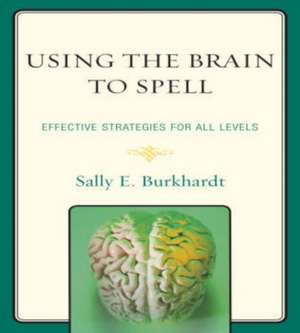
Using the Brain to Spell: Effective Strategies for All Levels
Autor Sally E. Burkhardten Limba Engleză Paperback – 16 iun 2011
Preț: 310.54 lei
Preț vechi: 391.01 lei
-21%
Puncte Express: 466
Carte tipărită la comandă
Livrare economică 08-22 decembrie
Livrare prin curier în România Termenul estimat este afișat lângă disponibilitate.
Transport gratuit de la 400.00 lei Plată online sau ramburs, în funcție de opțiunile comenzii.
Retur gratuit în 14 zile Comandă securizată și suport în română.
Specificații
ISBN-13: 9781607096993
ISBN-10: 1607096994
Pagini: 292
Dimensiuni: 156 x 230 x 23 mm
Greutate: 0.5 kg
Editura: Bloomsbury Publishing
Colecția R&L Education
Locul publicării:New York, United States
ISBN-10: 1607096994
Pagini: 292
Dimensiuni: 156 x 230 x 23 mm
Greutate: 0.5 kg
Editura: Bloomsbury Publishing
Colecția R&L Education
Locul publicării:New York, United States
V-ar putea interesa
-
 -27%Preț: 197.06 lei268.71 lei
 -
 Preț: 240.46 lei
 -
 Preț: 256.01 lei
 -
 -8%Preț: 444.64 lei483.31 lei
 -
 Teaching Languages to Young LearnersLynne Cameron-8%Preț: 384.73 lei418.18 lei
 -
 Understanding Art: A Guide for TeachersMartin W Wenham-8%Preț: 422.27 lei458.99 lei
 -
 Life SkillsSandra McTavishPreț: 219.68 lei
 -
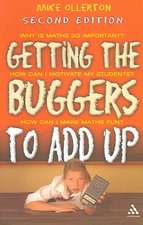 Getting the Buggers to Add Up 2nd EditionMike Ollerton-42%Preț: 97.45 lei167.79 lei
 -
 Developing Thinking in AlgebraJohn Mason-15%Preț: 603.10 lei709.52 lei
 -
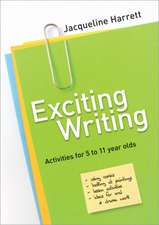 Exciting Writing: Activities for 5 to 11 year oldsJacqueline HarrettPreț: 396.16 lei
 -
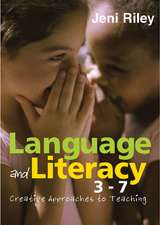 Language and Literacy 3-7Jeni Riley-15%Preț: 554.52 lei652.38 lei
 -
 -15%Preț: 540.09 lei635.40 lei
 -
 Preț: 414.37 lei
 -
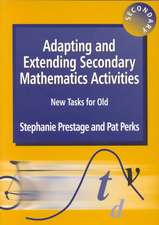 Adapting and Extending Secondary Mathematics Activities: New Tasks FOr OldStephanie PrestagePreț: 321.22 lei
Cuprins
Chapter 1 In the Beginning - Underlying Educational Principles
Chapter 2 Priming the Spelling Pump - Basic Strategies that Promote Spelling Ability
Chapter 3 Using Logic to Spell - Teaching Poor Spellers to Apply Sound - Letter Strategies
Chapter 4 Focusing on Letter Patterns - Helping Weak Spellers to Use Visualization Strategies
Chapter 5 Eye Openers - Activities to Help Poor Spellers to Notice and Remember Common Deviant Letter Combinations in Words
Chapter 6 Rules Rule - Learning to Apply Spelling Rules Will Improve Spelling Ability
Chapter 7 Which One? - Teaching Students Memory Trick Writing to Remember Homonyms and Words Commonly Confused
Chapter 8 Fine Tuning - Activities for Advanced Spellers
Part 9 Appendixes
Chapter 10 A.Richard J. Gentry's List of 500 Most Frequently Used Words in Childrenís Writing Reorganized by Patterns
Chapter 11 B.Example Words Illustrating Multiple Spellings of the Schwa Sound
Chapter 12 C.A Source List of Multi-Syllable Words for Further Logical Spelling Practice
Chapter 13 D.Student Assignment Sheets to Reinforce Logical Spelling Principles
Chapter 14 E.Student Assignment for Answering Questions on Logical Spelling Principles
Chapter 15 F.Word Bank of Words Containing Deviant Letter Patterns
Chapter 16 G.Word Bank of Words Containing Double Consonants
Chapter 17 H.List of Tongue Twisters in Alphabetical Order According to Each Twister's Beginning Consonant
Chapter 18 I.Spelling Rules Science Key
Chapter 19 J.Word Bank for Application of Basic Spelling Rules
Chapter 20 K.Basic Spelling Rules in Outline Format
Chapter 21 L.Word Bank for Application of Spelling Rules for Doubling a Final Consonant
Chapter 22 M.Word Bank of Exceptions to Spelling Rules
Chapter 23 N.Source List for Writing Memory Tricks for Spellings of Homonyms
Chapter 24 O.Student Worksheet for Spelling Correctly "their," "there," "they're," "to," "too," and "two"
Chapter 25 P.Source List for Writing Memory Tricks for Spellings of Words Often Confused
Chapter 26 Q.List of Words that Have Interesting Entomologies
Chapter 27 R.Student Worksheet for Guessing the Meanings of Vocabulary Words Used in Context
Chapter 28 S. Noun, Verb, Adjective, and Adverb Suffixes
Chapter 29 T.Words that Each Have a Minimum of Four Grammatical Forms
Chapter 30 U.Word Web Generating from the Roots "-Spec-," "-Spect-," and "-Spic-"
Chapter 31 V.Magniloquence Word List
Chapter 2 Priming the Spelling Pump - Basic Strategies that Promote Spelling Ability
Chapter 3 Using Logic to Spell - Teaching Poor Spellers to Apply Sound - Letter Strategies
Chapter 4 Focusing on Letter Patterns - Helping Weak Spellers to Use Visualization Strategies
Chapter 5 Eye Openers - Activities to Help Poor Spellers to Notice and Remember Common Deviant Letter Combinations in Words
Chapter 6 Rules Rule - Learning to Apply Spelling Rules Will Improve Spelling Ability
Chapter 7 Which One? - Teaching Students Memory Trick Writing to Remember Homonyms and Words Commonly Confused
Chapter 8 Fine Tuning - Activities for Advanced Spellers
Part 9 Appendixes
Chapter 10 A.Richard J. Gentry's List of 500 Most Frequently Used Words in Childrenís Writing Reorganized by Patterns
Chapter 11 B.Example Words Illustrating Multiple Spellings of the Schwa Sound
Chapter 12 C.A Source List of Multi-Syllable Words for Further Logical Spelling Practice
Chapter 13 D.Student Assignment Sheets to Reinforce Logical Spelling Principles
Chapter 14 E.Student Assignment for Answering Questions on Logical Spelling Principles
Chapter 15 F.Word Bank of Words Containing Deviant Letter Patterns
Chapter 16 G.Word Bank of Words Containing Double Consonants
Chapter 17 H.List of Tongue Twisters in Alphabetical Order According to Each Twister's Beginning Consonant
Chapter 18 I.Spelling Rules Science Key
Chapter 19 J.Word Bank for Application of Basic Spelling Rules
Chapter 20 K.Basic Spelling Rules in Outline Format
Chapter 21 L.Word Bank for Application of Spelling Rules for Doubling a Final Consonant
Chapter 22 M.Word Bank of Exceptions to Spelling Rules
Chapter 23 N.Source List for Writing Memory Tricks for Spellings of Homonyms
Chapter 24 O.Student Worksheet for Spelling Correctly "their," "there," "they're," "to," "too," and "two"
Chapter 25 P.Source List for Writing Memory Tricks for Spellings of Words Often Confused
Chapter 26 Q.List of Words that Have Interesting Entomologies
Chapter 27 R.Student Worksheet for Guessing the Meanings of Vocabulary Words Used in Context
Chapter 28 S. Noun, Verb, Adjective, and Adverb Suffixes
Chapter 29 T.Words that Each Have a Minimum of Four Grammatical Forms
Chapter 30 U.Word Web Generating from the Roots "-Spec-," "-Spect-," and "-Spic-"
Chapter 31 V.Magniloquence Word List
Recenzii
Burkhardt states that understanding the developmental nature of spelling acquisition, as well as the memory processes of the brain, leads one to realize that spelling acquisition will be slow and often imperceptible; children will not demonstrate spelling and language improvement over short periods. Therein lies the fallacy of most, if not all, spelling programs regardless of age level. This reviewer, a former teacher and current methods instructor, has always lamented to students that spelling is the one area that is not taught well. Burkhardt has now changed this reviewer's mind about the practical application of spelling using the brain. This book is engaging, sensible, and accessible while at the same time based in theory and practice. The preface explains how to use the text and find out what chapters are important for which age levels. The numerous detailed appendixes are accessible for classroom teachers and will enhance their overall research. This book is strongly recommended for teachers as they ponder and develop strategies to make sense of everyday spelling in the classroom. Highly recommended.
The book is a unique, readable, and energetic compilation of teaching ideas . . . The author advocates making spelling fun with lots of games, but the suggested activities all have pedagogical goals based on research and experience.
From an administrator's point of view, I believe this book provides teachers multiple strategies to increase spelling effectiveness for struggling spellers. The many games, techniques, grammar, vocabulary, mechanics, reading and writing skill, word lists and spelling guidelines discussed will certainly suggest ideas to better challenge poor spellers to become more proficient. (This book) gives a subjective plan in solving the spelling puzzle in working with students of all ages.
If I were still teaching my second-graders, I would frequently refer to this book for its many teaching ideas. Now I plan to use many parts when playing with my grandchildren.
I was in school in the 80s and did horrible in spelling. Looking back now as a teacher I can see why I was not as successful as I could have been. The strategies and curriculum from that time needed help! There was no connection made between spelling and other subjects, and our only spelling homework was to memorize the words. Sally Burkhardt's strategies in Using the Brain to Spell fail where the curriculum from my youth failed. The logical spelling strategies in this book do not stifle students; instead they help them to be successful spellers and writers.
I guess I took it for granted that I was a good speller when I was a kid, so I did not understand why others could not catch on as quickly. Now I have the tools with your book to make (my students) more confident and love the language.
Using the Brain to Spell is an engaging, sensible, and accessible work grounded in theory and practice. Burkhardt embraces whole language with a vengeance and makes language learning fun for both students and teachers. In her discussion of 'guessing games,' she inductively foregrounds logical rules for hands-on exercises that let students teach themselves with teacher guidance. But she does not offer readers panaceas; instead, she offers us practical advice, tempered with student-centered wisdom.
The book is a unique, readable, and energetic compilation of teaching ideas . . . The author advocates making spelling fun with lots of games, but the suggested activities all have pedagogical goals based on research and experience.
From an administrator's point of view, I believe this book provides teachers multiple strategies to increase spelling effectiveness for struggling spellers. The many games, techniques, grammar, vocabulary, mechanics, reading and writing skill, word lists and spelling guidelines discussed will certainly suggest ideas to better challenge poor spellers to become more proficient. (This book) gives a subjective plan in solving the spelling puzzle in working with students of all ages.
If I were still teaching my second-graders, I would frequently refer to this book for its many teaching ideas. Now I plan to use many parts when playing with my grandchildren.
I was in school in the 80s and did horrible in spelling. Looking back now as a teacher I can see why I was not as successful as I could have been. The strategies and curriculum from that time needed help! There was no connection made between spelling and other subjects, and our only spelling homework was to memorize the words. Sally Burkhardt's strategies in Using the Brain to Spell fail where the curriculum from my youth failed. The logical spelling strategies in this book do not stifle students; instead they help them to be successful spellers and writers.
I guess I took it for granted that I was a good speller when I was a kid, so I did not understand why others could not catch on as quickly. Now I have the tools with your book to make (my students) more confident and love the language.
Using the Brain to Spell is an engaging, sensible, and accessible work grounded in theory and practice. Burkhardt embraces whole language with a vengeance and makes language learning fun for both students and teachers. In her discussion of 'guessing games,' she inductively foregrounds logical rules for hands-on exercises that let students teach themselves with teacher guidance. But she does not offer readers panaceas; instead, she offers us practical advice, tempered with student-centered wisdom.