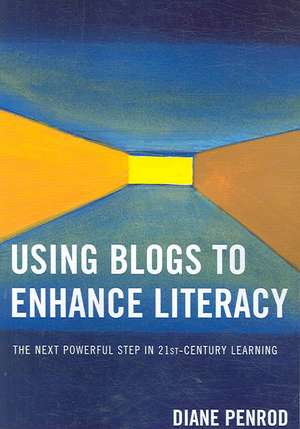
Using Blogs to Enhance Literacy: The Next Powerful Step in 21st-Century Learning
Autor Diane Penroden Limba Engleză Paperback – 6 mar 2007
Preț: 292.85 lei
Preț vechi: 376.37 lei
-22%
Puncte Express: 439
Carte tipărită la comandă
Livrare economică 08-22 iunie
Specificații
ISBN-13: 9781578865666
ISBN-10: 1578865662
Pagini: 175
Dimensiuni: 154 x 233 x 15 mm
Greutate: 0.28 kg
Editura: Bloomsbury Publishing
Colecția R&L Education
Locul publicării:New York, United States
ISBN-10: 1578865662
Pagini: 175
Dimensiuni: 154 x 233 x 15 mm
Greutate: 0.28 kg
Editura: Bloomsbury Publishing
Colecția R&L Education
Locul publicării:New York, United States
Cuprins
1 Why Blog?
2 Blogging and New Literacies
3 Blogs as a New Writing Genre
4 Gender and Blogging
5 Ethnicity and Blogging
6 Blogs and Bullying
7 Encouraging Safe Blogging Practices
8 Integrating Multiple Intelligences and Blogging
9 Creating a Classroom Ethics for Blogging
10 Blogging Matters
2 Blogging and New Literacies
3 Blogs as a New Writing Genre
4 Gender and Blogging
5 Ethnicity and Blogging
6 Blogs and Bullying
7 Encouraging Safe Blogging Practices
8 Integrating Multiple Intelligences and Blogging
9 Creating a Classroom Ethics for Blogging
10 Blogging Matters
Recenzii
Beginning with the preface, Diane Penrod takes on the notion of change as the constant in being literate for today's world. In her examination of the blog phenomenon, she asks important questions about the role of blogs in changing what we know, how we know it, what we do, and how we do those things.
Penrod clearly supports the use of blogs in education, linking much of her discussion throughout the book to the presence of blogs in the classroom. She explains that weblogs support cooperative learning, critical thinking, cross-curricular learning initiatives, student centered classrooms and multiple intelligences. Penrod's premise is a solid one: Technology is changing the way we understand literacy, and educational practices must respond to that change.
This book's thesis is positive and timely: blogs can engage K-12 students, empowering them as writers and members of society. Particularly beneficial are the sections on how blogs can encourage at-risk students to express themselves, bridging the gap between academics and home life.
Using Blogs to Enhance Literacy is the future of teaching composition in the classroom for all different levels. As a teacher in both the high school and college levels, I've found this text insightful for building a curriculum one year at a time. Diane Penrod doesn't just introduce a series of new ideas, she allows the reader to understand how to apply new concepts and actually make them work in both curriculum planning and the classroom. This text forces the reader to prioritize what actually happens in student writing environments and how to make the students think more actively. Whether you're looking for more ways of incorporating technology into the classroom, or just interested in finding new ways to engage students, this text is an important read.
Penrod clearly supports the use of blogs in education, linking much of her discussion throughout the book to the presence of blogs in the classroom. She explains that weblogs support cooperative learning, critical thinking, cross-curricular learning initiatives, student centered classrooms and multiple intelligences. Penrod's premise is a solid one: Technology is changing the way we understand literacy, and educational practices must respond to that change.
This book's thesis is positive and timely: blogs can engage K-12 students, empowering them as writers and members of society. Particularly beneficial are the sections on how blogs can encourage at-risk students to express themselves, bridging the gap between academics and home life.
Using Blogs to Enhance Literacy is the future of teaching composition in the classroom for all different levels. As a teacher in both the high school and college levels, I've found this text insightful for building a curriculum one year at a time. Diane Penrod doesn't just introduce a series of new ideas, she allows the reader to understand how to apply new concepts and actually make them work in both curriculum planning and the classroom. This text forces the reader to prioritize what actually happens in student writing environments and how to make the students think more actively. Whether you're looking for more ways of incorporating technology into the classroom, or just interested in finding new ways to engage students, this text is an important read.