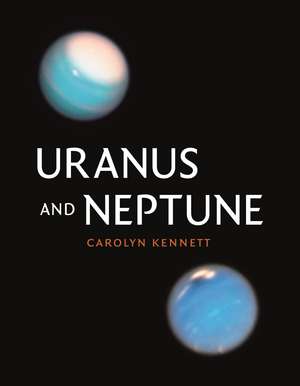
Uranus and Neptune: Kosmos
Autor Carolyn Kennetten Limba Engleză Hardback – 14 noi 2022
Prin lucrarea Uranus and Neptune, Carolyn Kennett aduce o perspectivă actualizată asupra celor mai îndepărtate lumi din sistemul nostru solar, completând lacunele informaționale apărute de la misiunea Voyager 2 până în prezent. Notăm cu interes modul în care autoarea reușește să sintetizeze datele istorice ale descoperirilor din secolele XVIII și XIX cu cele mai noi observații obținute prin tehnologia telescoapelor de ultimă generație. Structura volumului este echilibrată, oferind atât o rigoare științifică necesară profesioniștilor, cât și o accesibilitate vizuală remarcabilă prin cele 100 de ilustrații incloses. Descoperim aici o analiză detaliată a compoziției și a sistemelor de sateliți ale acestor „giganți de gheață”, entități care rămân parțial învăluite în mister din cauza distanței enorme față de Pământ. Cititorii familiarizați cu Neptune de Ellis D. Miner vor aprecia în acest nou volum nu doar istoricul misiunilor NASA, ci și accentul pus pe evoluția tehnicilor de monitorizare de la sol. În timp ce lucrări precum Uranus, Neptune, and Pluto and How to Observe Them se concentrează masiv pe aspectul tehnic al observației, Carolyn Kennett reușește să integreze acest ghid practic într-o narațiune mai largă despre explorarea spațială. Suntem de părere că această abordare hibridă — între istoria științei, monografie planetară și manual de astronomie practică — transformă volumul într-o resursă fundamentală pentru înțelegerea periferiei sistemului solar.
Din seria Kosmos
- 16%
 Preț: 172.02 lei
 - 16%
 Preț: 172.06 lei
 - 15%
 Preț: 178.17 lei
 - 15%
 Preț: 174.48 lei
 - 15%
 Preț: 176.52 lei
 - 15%
 Preț: 178.64 lei
 -
 Preț: 92.13 lei
 -
 Preț: 197.56 lei
 -
 Preț: 106.17 lei
 -
 Preț: 83.41 lei
 -
 Preț: 64.55 lei
 -
 Preț: 82.08 lei
 -
 Preț: 77.28 lei
 -
 Preț: 106.84 lei
 -
 Preț: 75.07 lei
 -
 Preț: 61.32 lei
 -
 Preț: 73.87 lei
 -
 Preț: 149.81 lei
 -
 Preț: 123.65 lei
Preț: 176.96 lei
Preț vechi: 209.27 lei
-15%
Carte disponibilă
Livrare economică 09-16 noiembrie
Livrare express 24-30 octombrie pentru 77.35 lei
Specificații
ISBN-10: 1789146410
Pagini: 216
Ilustrații: 50 color plates, 50 halftones
Dimensiuni: 177 x 223 x 21 mm
Greutate: 0.7 kg
Editura: REAKTION BOOKS
Colecția Kosmos
Seria Kosmos
V-ar putea interesa
-
 Wonders of the Solar SystemBrian CoxPreț: 240.94 lei
 -
 The PlanetsAndrew CohenPreț: 215.17 lei
 -
 The PlanetsAndrew CohenPreț: 80.10 lei
 -
 Unknown UniverseCollins AstronomyPreț: 126.50 lei
 -
 My Book of Stars and Planets: A fact-filled guide to spaceParshati Patel-14%Preț: 64.18 lei74.87 lei
 -
 Gemini and Mercury RemasteredAndy SaundersPreț: 408.99 lei
 -
 -14%Preț: 251.02 lei293.43 leiRecomandat
 -
 -14%Preț: 129.98 lei151.59 lei
 -
 Atlas of Astronomical DiscoveriesGovert SchillingPreț: 368.43 lei
 -
 The PlanetsNirmala Nataraj-17%Preț: 199.89 lei239.75 lei
 -
 The Sky Atlas: The Greatest Maps, Myths and Discoveries of the UniverseEdward Brooke-HitchingPreț: 165.92 lei
 -
 The Search for Our Cosmic NeighboursChloe SavagePreț: 95.50 lei
 -
 Just Visiting This PlanetNeil De Grasse TysonPreț: 123.77 lei
 -
 Lonely Planet The UniverseLonely PlanetPreț: 171.52 lei
 -
 The Sky AtlasEdward Brooke-HitchingPreț: 263.33 lei
 -
 The Solar System (Usborne Beginners)Emily BonePreț: 33.10 lei
 -
 Big Book of Stars & PlanetsEmily BonePreț: 81.27 lei
 -
 Solar SystemGail HarlandPreț: 201.21 lei
 -
 Solar SystemRebecca Phillips-BartlettPreț: 51.25 lei
 -
 VoyagerTed StrykPreț: 204.02 lei
De ce să citești această carte
Această carte este esențială pentru cei care doresc să înțeleagă specificul celor două planete exterioare dincolo de datele generale. Cititorul câștigă o perspectivă clară asupra evoluției astronomiei, de la calculele matematice care au dus la descoperirea lui Neptun, până la imaginile de înaltă rezoluție actuale. Este un instrument excelent pentru astronomii amatori care vor să învețe cum să identifice și să observe aceste lumi îndepărtate cu echipament propriu.
Despre autor
Carolyn Kennett este o scriitoare și astronomă pasionată, cunoscută pentru capacitatea sa de a traduce concepte complexe de astrofizică și istorie a astronomiei pe înțelesul publicului larg. Activitatea sa se concentrează pe explorarea sistemului solar și pe documentarea figurilor istorice care au modelat înțelegerea noastră despre cosmos. În volumul de față, ea își folosește expertiza pentru a oferi o privire de ansamblu asupra planetelor Uranus și Neptun, combinând cercetarea academică cu sfaturi practice pentru comunitatea de astronomi amatori din care face parte.
Descriere scurtă
The most distant planets in our solar system, Uranus and Neptune were unknown by the ancients—Uranus was discovered in the 1780s and Neptune only in the 1840s. Our discovery and observation of both planets have been hampered by their sheer distance from Earth: there has only been one close encounter, Voyager 2 in the late 1980s. The Voyager mission revealed many enticing details about the planets and their moons but also left many more questions unanswered. This book is an informative and accessible introduction to Uranus, Neptune, and their moons. It takes readers on a journey from discovery to the most recent observations made from space- and ground-based telescopes, and it will appeal to amateur and professional astronomers alike.