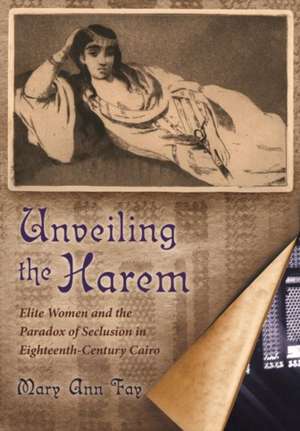
Unveiling the Harem
Autor Mary Ann Fayen Limba Engleză Hardback – 30 iul 2012
Această monografie istorică, publicată de Syracuse University Press, reprezintă o intervenție necesară în studiile despre Orientul Mijlociu, propunând o recalibrare a imaginii femeii egiptene din secolul al XVIII-lea. Observăm cum Mary Ann Fay folosește o metodologie riguroasă, bazată pe cercetarea documentelor de arhivă din Cairo și pe reconstrucția spațială a cartierelor rezidențiale de elită, pentru a contesta narațiunea occidentală a victimei lipsite de putere. Subliniem faptul că autoarea nu se limitează la o critică a reprezentărilor artistice europene, ci demonstrează, prin date concrete, că femeile din gospodăriile puternice dețineau proprietăți imobiliare lucrative și exercitau drepturi legale clare sub incidența legii islamice. Notăm cu interes studiul de caz dedicat lui Sitt Nafisa, a cărei influență depășea sfera privată: aceasta a ctitorit instituții publice și a servit drept punte diplomatică între forțele de ocupație franceze și rezistența condusă de soțul ei. Comparabil cu The Mamluks in Egyptian Politics and Society de Thomas Philipp în ceea ce privește rigoarea analizei structurilor de putere din Egipt, volumul de față aduce un plus de profunzime prin concentrarea specifică pe agenția feminină și pe viața cotidiană din harem, privit ca spațiu social complex, nu doar politic. În timp ce Harem de Alev Lytle Croutier explorează instituția prin prisma memoriilor și a istoriei familiei, Unveiling the Harem se ancorează în înregistrările juridice și economice, oferind o perspectivă academică ce transformă radical înțelegerea autonomiei feminine în perioada premodernă.
Preț: 330.70 lei
Carte disponibilă
Livrare economică 20 iulie-03 august
Specificații
ISBN-10: 0815632932
Pagini: 352
Dimensiuni: 163 x 234 x 27 mm
Greutate: 0.64 kg
Ediția:1
Editura: Syracuse University Press
V-ar putea interesa
-
 The Struggle for Egypt: From Nasser to Tahrir SquareSteven A. CookPreț: 137.36 lei
 -
 -22%Preț: 400.57 lei512.02 lei
 -
 -15%Preț: 416.29 lei489.75 lei
 -
 The Arab Spring: Critical AnalysesKhair El-Din Haseeb-18%Preț: 762.74 lei930.17 lei
 -
 Family Life in the Ottoman Mediterranean: A Social HistoryBeshara B. Doumani-11%Preț: 631.60 lei709.67 lei
 -
 The Written Word in the Medieval Arabic LandsKonrad Hirschler-17%Preț: 192.05 lei232.61 lei
 -
 An Incurable PastMériam N. BelliPreț: 203.16 lei
 -
 MontazeriSussan SiavoshiPreț: 271.41 lei
 -
 The Political Economy of the Kurds of TurkeyVeli Yadirgi-20%Preț: 192.92 lei241.80 lei
 -
 Slavery in the Islamic WorldMary Ann Fay-15%Preț: 504.78 lei593.86 lei
 -
 An Uncertain Ally: Turkey under Erdogan's DictatorshipDavid L. PhillipsPreț: 388.50 lei
 -
 Ali Pasha, Lion of IoanninaEugenia RussellPreț: 193.87 lei
 -
 Gendered Identities: Criticizing Patriarchy in TurkeyFazilet Ahu Özmen-21%Preț: 312.94 lei396.48 lei
 -
 -39%Preț: 796.00 lei1295.97 lei
 -
 -29%Preț: 794.54 lei1111.54 lei
 -
 -39%Preț: 763.51 lei1245.52 lei
 -
 -39%Preț: 735.20 lei1203.80 lei
 -
 -39%Preț: 761.26 lei1244.12 lei
 -
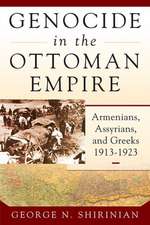 Genocide in the Ottoman EmpireGeorge N. Shirinian-23%Preț: 842.03 lei1093.55 lei
 -
 -18%Preț: 175.06 lei214.16 lei
 -
 Human Interaction with the Environment in the Red SeaDionysius A. Agius-23%Preț: 1064.69 lei1382.72 lei
De ce să citești această carte
Recomandăm această carte cercetătorilor și studenților la istorie sau studii de gen care doresc să depășească clișeele despre lumea islamică. Cititorul câștigă o perspectivă documentată asupra modului în care femeile de elită din Cairo au utilizat dreptul de proprietate pentru a influența societatea. Este un argument solid împotriva mitului opresiunii uniforme, demonstrând că haremul era, în realitate, un centru de putere și inițiativă economică.