Cantitate/Preț
Produs

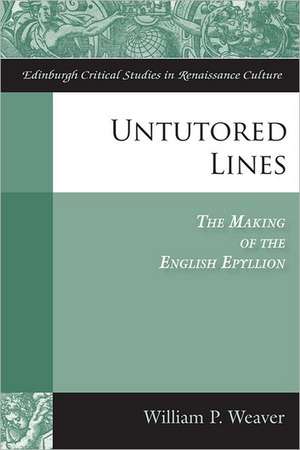
Untutored Lines

Autor William P Weaver
en Limba Engleză Hardback – 7 mar 2012

În Untutored Lines, William P Weaver propune o reevaluare riguroasă a modului în care educația umanistă a modelat poezia narativă elisabetană. Considerăm că noutatea acestei ediții rezidă în focalizarea pe un text pedagogic adesea ignorat, dar fundamental: Progymnasmata de Aphthonius. Autorul demonstrează cum aceste exerciții preliminare de retorică nu erau simple sarcini școlare, ci structuri care au definit maturizarea literară a unor figuri precum Christopher Marlowe sau William Shakespeare. Structura volumului oglindește parcursul unui elev în școala de gramatică, fiind împărțită în două secțiuni principale: „Rudiments of Eloquence: Boyhood” și „First Exercises: Adolescence”. Această organizare ne permite să observăm tranziția de la utilizarea fabulei și a parafrazei la tehnici complexe de narratio și confirmatio. Reținem analiza detaliată a poemului Venus and Adonis, interpretat aici nu doar ca text erotic, ci ca exercițiu de tip chreia, unde stilul juvenil este pus în serviciul unei structuri retorice stricte. Lucrarea acoperă o arie tematică similară cu Shakespeare's Schoolroom de Lynn Enterline, însă Untutored Lines adoptă o abordare mai aplicată pe micro-structurile textuale ale exercițiilor de retorică, oferind o perspectivă tehnică asupra procesului de compoziție.

Citește tot Restrânge

Preț: 59100 lei

Preț vechi: 79630 lei
-26%

Puncte Express: 887

Carte disponibilă

Livrare economică 11-25 iunie


Specificații

ISBN-13: 9780748644650
ISBN-10: 0748644652
Pagini: 232
Dimensiuni: 155 x 236 x 23 mm
Greutate: 0.57 kg
Editura: EDINBURGH UNIVERSITY PRESS

De ce să citești această carte

Recomandăm această carte cercetătorilor și studenților interesați de istoria educației și critică literară renascentistă. Cititorul va câștiga o înțelegere profundă a mecanismelor prin care rigoarea școlii de gramatică din secolul al XVI-lea a alimentat creativitatea poetică. Este un instrument esențial pentru a descifra codurile retorice din spatele marilor poeme narative elisabetane, explicând de ce autorii vremii scriau cu o precizie structurală atât de specifică.


Despre autor

William P Weaver este un specialist recunoscut în literatura renascentistă și istoria retoricii, cu un interes academic marcat pentru pedagogia umanistă. Studiile sale se concentrează pe intersecția dintre practicile educaționale ale perioadei Tudor și producția literară de vârf. Prin Untutored Lines, publicată la EDINBURGH UNIVERSITY PRESS, Weaver contribuie la un dialog academic extins despre modul în care textele clasice grecești și latine au fost receptate și transformate în instrumente de predare în Anglia elisabetană.


Descriere scurtă

Provides a new understanding of the epyllion as a genre exploiting the subversive potential of various educational thresholds, such as the transition from grammar to rhetoric.

Notă biografică

William P. Weaver is an assistant professor of literature in the Honors College of Baylor University, where he teaches Great Texts. His articles on Renaissance poetry and rhetoric have appeared in Shakespeare Quarterly, Studies in Philology, Spenser Studies, and Rhetorica.

Cuprins

Acknowledgements; Introduction; Rites of passage; Scenes of performance: 1. Progymnasmata: Humanist Rites of Passage; The progymnasmata as an introduction to the art of rhetoric; Disciplinary boundaries in the English grammar school; Literary exercise between the disciplines; From discursive plenitude to disciplinary correction; Part I. Rudiments of Eloquence: Boyhood; 2. Fabula: Observing 'Amorous Rites' in Hero and Leander; Musaeus among the rudiments of eloquence; Marlowe's paraphrase; Leander in the scene of culture; Puberty rites and the English epyllion; 3. Chreia: Making Themes in Venus and Adonis; Boyhood study; Boyhood style; 'The lesson is but plain'; Venus' frustrated banquet; 4. Narratiuncula: Coming of Age in Oenone and Paris; Vivid narration; Paris at the crossroads; Paris in the upper forms; Irony, pathos, and the 'courteous reader'; Part II. First Exercises: Adolescence; 5. Narratio and Confirmatio: Forensic Performance in Lucrece; Adolescent study and style; Lucrece's narratio; Night, opportunity, and time; Troy and the perjured self; Lucrece's confirmatio; 6. Encomium: Antinous as Lord of Misrule in Orchestra; Aphthonian man; Tedious praise; Misrule; Poetic rule; 7. Thesis: Controlling Speech in Cephalus and Procris; 'Methinks the man amendeth the matter much'; Man, horse, and dogs; On contrarieties he answer made; Secret muse; Epilogue: Jesus' First Exercises in Paradise Regained; Appendix; Notes.

Recenzii

William Weaver's book is a learned contribution to the growing reinvestigation of humanist pedagogy. He draws much-needed attention to an under-examined, but influential, school text - Aphthonius's Progymnasmata - in ways that deepen our understanding of the connection between rhetorical training and masculinity in Ovidian minor epics. -- Lynn Enterline, Vanderbilt University This book offers a highly original rewriting of the so-called minor epic in the Renaissance, linking it to the rite of passage in the humanist school while offering arresting observations on everything from Shakespearean sources to the reception of Ovid in the English Renaissance. A must read for historians of rhetoric, education, and early modern literature. -- Craig Kallendorf, Texas A&M University William Weaver's book is a learned contribution to the growing reinvestigation of humanist pedagogy. He draws much-needed attention to an under-examined, but influential, school text - Aphthonius's Progymnasmata - in ways that deepen our understanding of the connection between rhetorical training and masculinity in Ovidian minor epics. This book offers a highly original rewriting of the so-called minor epic in the Renaissance, linking it to the rite of passage in the humanist school while offering arresting observations on everything from Shakespearean sources to the reception of Ovid in the English Renaissance. A must read for historians of rhetoric, education, and early modern literature.