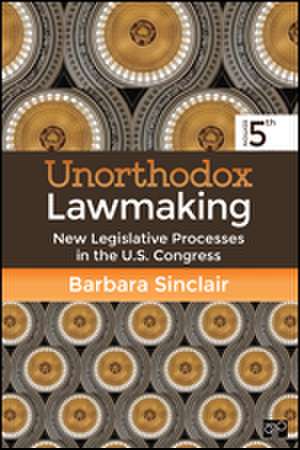
Unorthodox Lawmaking: New Legislative Processes in the U.S. Congress
Autor Barbara L. Sinclairen Limba Engleză Electronic book text – 5 iul 2016
Preț: 382.20 lei
Puncte Express: 573
Preț estimativ în valută:
61.100€ • 71.09$ • 53.58£
61.100€ • 71.09$ • 53.58£
Indisponibil temporar
Doresc să fiu notificat când acest titlu va fi disponibil:
Se trimite...
Specificații
ISBN-13: 9781506322827
ISBN-10: 1506322824
Pagini: 320
Dimensiuni: 152 x 229 mm
Ediția:Fifth Edition
Editura: SAGE Publications
Colecția CQ Press
Locul publicării:Washington DC, United States
ISBN-10: 1506322824
Pagini: 320
Dimensiuni: 152 x 229 mm
Ediția:Fifth Edition
Editura: SAGE Publications
Colecția CQ Press
Locul publicării:Washington DC, United States
Recenzii
“Unorthodox
Lawmakingdoes
an
excellent
job
of
synthesizing
the
legislative
process
in
each
chamber.
I
have
not
found
another
book
on
the
market
that
so
clearly
addresses
the
differences
like
this
one
does.”
“Unorthodox Lawmakingis a superb foundational text, exploring well-researched variations in lawmaking in ways that are not typically found in other academic resources. It is one of the best examinations of legislative practices available the academic market. Sinclair uses robust research to uncover and analyze the complexities of lawmaking in comprehensible ways. This text is a go-to resource for information about U.S. legislative practices.”
“Barbara Sinclair does an excellent job of showing how contemporary lawmaking departs from the traditional legislative process. I can't imagine teaching a course on Congress without this text—it’s absolutely indispensable.”
“Unorthodox Lawmakingdoes a great job of using contemporary examples to provide an in-depth look at the complicated and highly politicized process that defines how a bill becomes a law in modern Congress.”
“Unorthodox Lawmakingputs the transformation of the lawmaking process in Congress into context, documenting specific changes that have occurred and providing an argument for precisely why they took place. Sinclair illustrates the use of these new techniques in a way that keeps students interested.”
“Unorthodox Lawmakingis a great read, with a strong foundation about Congress as an institution. Sinclair strikes a balance between general statements and nuance, and demonstrates how complicated the policy process has become. Yet she doesn't leave the reader without some general take-away points about how the process deviates from traditional textbook explanations.”
“My students have enjoyed readingUnorthodox Lawmakingmore than most of the other assigned texts. Sinclair’s writing makes the material approachable and helps precipitate lively discussions.”
“The concept and content ofUnorthodox Lawmakingfrom the very beginning is well done. Sinclair’s use of case studies to illustrate the shift from ‘traditional’ to ‘unorthodox’ processes is impressive.”
“Unorthodox Lawmakingis straightforward and to-the-point. Sinclair does an excellent job of covering the primary topics, and the examples of unorthodox lawmaking are equally as good. I have used this text myself since reading the second edition.”
“Unorthodox Lawmakingis a superb foundational text, exploring well-researched variations in lawmaking in ways that are not typically found in other academic resources. It is one of the best examinations of legislative practices available the academic market. Sinclair uses robust research to uncover and analyze the complexities of lawmaking in comprehensible ways. This text is a go-to resource for information about U.S. legislative practices.”
“Barbara Sinclair does an excellent job of showing how contemporary lawmaking departs from the traditional legislative process. I can't imagine teaching a course on Congress without this text—it’s absolutely indispensable.”
“Unorthodox Lawmakingdoes a great job of using contemporary examples to provide an in-depth look at the complicated and highly politicized process that defines how a bill becomes a law in modern Congress.”
“Unorthodox Lawmakingputs the transformation of the lawmaking process in Congress into context, documenting specific changes that have occurred and providing an argument for precisely why they took place. Sinclair illustrates the use of these new techniques in a way that keeps students interested.”
“Unorthodox Lawmakingis a great read, with a strong foundation about Congress as an institution. Sinclair strikes a balance between general statements and nuance, and demonstrates how complicated the policy process has become. Yet she doesn't leave the reader without some general take-away points about how the process deviates from traditional textbook explanations.”
“My students have enjoyed readingUnorthodox Lawmakingmore than most of the other assigned texts. Sinclair’s writing makes the material approachable and helps precipitate lively discussions.”
“The concept and content ofUnorthodox Lawmakingfrom the very beginning is well done. Sinclair’s use of case studies to illustrate the shift from ‘traditional’ to ‘unorthodox’ processes is impressive.”
“Unorthodox Lawmakingis straightforward and to-the-point. Sinclair does an excellent job of covering the primary topics, and the examples of unorthodox lawmaking are equally as good. I have used this text myself since reading the second edition.”
Cuprins
Chapter
1:
Clean
Air:
An
Introduction
to
How
the
Legislative
Process
Has
Changed
A Note on Data
Chapter 2: Multiple Paths: The Legislative Process in the House of Representatives
Bill Introduction
Bill Referral
Postcommittee Adjustments
Suspension of the Rules
Special Rules
On the Floor
Unorthodox Lawmaking in the House
Chapter 3: Routes and Obstacles: The Legislative Process in the Senate
Bill Introduction
Bill Referral
Postcommittee Adjustments
Scheduling Legislation for the Floor
The Senate Floor
Unorthodox Lawmaking in the Senate
Chapter 4: Getting One Bill: Reconciling House-Senate Differences
Traditional Nonconference Reconciliation Procedures
Conference Committees
The President in the Postpassage Legislative Process
The Final Step
Reconciling Differences: How Much Change?
Chapter 5: Omnibus Legislation, the Budget Process, and Summits
Omnibus Legislation
Authorizations, Appropriations, and Earmarks
The Budget Process
Congress, the President, and Summitry
What Is the Regular Process?
Chapter 6: Why and How the Legislative Process Changed
From Decentralization to Individualism in the Senate
Reform and Its Legacy in the House
Budget Reform
A Hostile Political Climate as a Force for Innovation: The 1980s and Early 1990s
How Internal Reform and a Hostile Climate Spawned Unorthodox Lawmaking
Unorthodox Lawmaking in a Hyperpartisan Era
Chapter 7: Making Nonincremental Policy Change through Hyperunorthodox Procedures: Health Care Reform in 2009-2010
The First Phase: Consultation and Drafting
Building Winning Coalitions to Pass Health Care: Postcommittee and Floor Action
A Long and Convoluted End Game
Making Nonincremental Policy Change in a Partisan Era
Chapter 8: High-Stakes Budget Politics: The 2013 Government Shutdown and the Ryan-Murray Deal
Act One: The FY2014 Budget Resolutions
Act Two: From Budget Resolution to the Ryan-Murray Deal
Unorthodox Budget Politics
Chapter 9: A Cross-Party Coalition Forces Policy Change: The USA Freedom Act
House Action in the 114th Congress
Senate Action in the 114th Congress
Unorthodox Lawmaking and Forms of Bipartisanship
Chapter 10: The Consequences of Unorthodox Lawmaking
Lawmaking in the Contemporary Congress
Unorthodox Lawmaking and Legislative Outcomes
Other Costs and Benefits
Assessing Unorthodox Lawmaking
A Note on Data
Chapter 2: Multiple Paths: The Legislative Process in the House of Representatives
Bill Introduction
Bill Referral
Postcommittee Adjustments
Suspension of the Rules
Special Rules
On the Floor
Unorthodox Lawmaking in the House
Chapter 3: Routes and Obstacles: The Legislative Process in the Senate
Bill Introduction
Bill Referral
Postcommittee Adjustments
Scheduling Legislation for the Floor
The Senate Floor
Unorthodox Lawmaking in the Senate
Chapter 4: Getting One Bill: Reconciling House-Senate Differences
Traditional Nonconference Reconciliation Procedures
Conference Committees
The President in the Postpassage Legislative Process
The Final Step
Reconciling Differences: How Much Change?
Chapter 5: Omnibus Legislation, the Budget Process, and Summits
Omnibus Legislation
Authorizations, Appropriations, and Earmarks
The Budget Process
Congress, the President, and Summitry
What Is the Regular Process?
Chapter 6: Why and How the Legislative Process Changed
From Decentralization to Individualism in the Senate
Reform and Its Legacy in the House
Budget Reform
A Hostile Political Climate as a Force for Innovation: The 1980s and Early 1990s
How Internal Reform and a Hostile Climate Spawned Unorthodox Lawmaking
Unorthodox Lawmaking in a Hyperpartisan Era
Chapter 7: Making Nonincremental Policy Change through Hyperunorthodox Procedures: Health Care Reform in 2009-2010
The First Phase: Consultation and Drafting
Building Winning Coalitions to Pass Health Care: Postcommittee and Floor Action
A Long and Convoluted End Game
Making Nonincremental Policy Change in a Partisan Era
Chapter 8: High-Stakes Budget Politics: The 2013 Government Shutdown and the Ryan-Murray Deal
Act One: The FY2014 Budget Resolutions
Act Two: From Budget Resolution to the Ryan-Murray Deal
Unorthodox Budget Politics
Chapter 9: A Cross-Party Coalition Forces Policy Change: The USA Freedom Act
House Action in the 114th Congress
Senate Action in the 114th Congress
Unorthodox Lawmaking and Forms of Bipartisanship
Chapter 10: The Consequences of Unorthodox Lawmaking
Lawmaking in the Contemporary Congress
Unorthodox Lawmaking and Legislative Outcomes
Other Costs and Benefits
Assessing Unorthodox Lawmaking
Descriere
This
fifth
edition
updates
the
book
through
to
the
end
of
the
113th
Congress.
Sinclair
incorporates
new
examples
and
new
case
studies
throughout,
including
the
budget
battles
between
President
Obama
and
the
House
of
Representatives
and
failed
immigration
reform
bills.
Notă biografică
Barbara Sinclair is Marvin Hoffenberg Professor of American Politics at the University of California at Los Angeles. She served as chair of the Legislative Studies Section of the American Political Science Association from 1993 to 1995. She is the author of several books, including Legislators, Leaders, and Lawmaking: The U.S. House of Representatives in the Postreform Era, Transformation of the U.S. Senate, which won the Richard F. Fenno Prize and the D. B. Hardeman Prize, and Party Wars: Polarization and the Politics of National Policy Making.