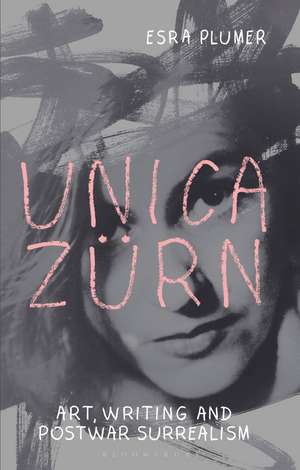
Unica Zürn: Art, Writing and Post-War Surrealism
Autor Esra Plumeren Limba Engleză Hardback – 26 feb 2016
| Toate formatele și edițiile | Preț | Express |
|---|---|---|
| Paperback (1) | 180.56 lei 3-5 săpt. | +0.00 lei 7-13 zile |
| Bloomsbury Publishing – 30 iun 2022 | 180.56 lei 3-5 săpt. | +0.00 lei 7-13 zile |
| Hardback (1) | 735.46 lei 6-8 săpt. | |
| Bloomsbury Publishing – 26 feb 2016 | 735.46 lei 6-8 săpt. |
Preț: 735.46 lei
Preț vechi: 1112.11 lei
-34%
Puncte Express: 1103
Preț estimativ în valută:
130.16€ • 152.12$ • 113.00£
130.16€ • 152.12$ • 113.00£
Carte tipărită la comandă
Livrare economică 19 februarie-05 martie
Preluare comenzi: 021 569.72.76
Specificații
ISBN-13: 9781784530365
ISBN-10: 1784530360
Pagini: 272
Ilustrații: 21 bw illus
Dimensiuni: 138 x 216 x 25 mm
Greutate: 0.47 kg
Editura: Bloomsbury Publishing
Colecția I.B.Tauris
Locul publicării:London, United Kingdom
ISBN-10: 1784530360
Pagini: 272
Ilustrații: 21 bw illus
Dimensiuni: 138 x 216 x 25 mm
Greutate: 0.47 kg
Editura: Bloomsbury Publishing
Colecția I.B.Tauris
Locul publicării:London, United Kingdom
V-ar putea interesa
-
 Preț: 430.90 lei
 -
 Marcel Duchamp and Max Ernst: The Bride SharedDavid Hopkins-34%Preț: 727.63 lei1105.12 lei
 -
 English Wood-Engraving 1900-1950Thomas Balston-21%Preț: 99.70 lei126.10 lei
 -
 This is not a Pipe – 25th Anniversary EditionMichel FoucaultPreț: 147.67 lei
 -
 The Posthuman Dada GuideAndrei CodrescuPreț: 121.30 lei
 -
 Some Sort of GeniusPaul O'KeefePreț: 130.05 lei
 -
 DalíChristopher Masters-17%Preț: 93.36 lei112.48 lei
 -
 Fascist Modernism in Italy: Arts and RegimesFrancesca Billiani-27%Preț: 197.82 lei270.40 lei
 -
 -30%Preț: 898.67 lei1274.85 lei
 -
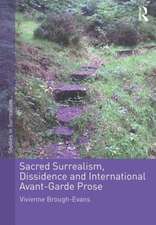 Sacred Surrealism, Dissidence and International Avant-Garde ProseVivienne Brough-Evans-29%Preț: 845.40 lei1195.66 lei
 -
 A Book of Surrealist GamesAlistair BrotchiePreț: 87.76 lei
 -
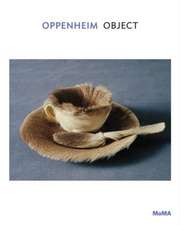 Méret Oppenheim: ObjectCarolyn Lanchner-22%Preț: 79.74 lei101.59 lei
 -
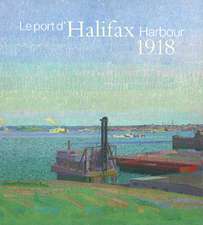 Halifax Harbour 1918 / Le port d'Halifax 1918: Harold Gillman & Arthur LismerAnabelle Kienle Poňka-17%Preț: 175.32 lei212.17 lei
 -
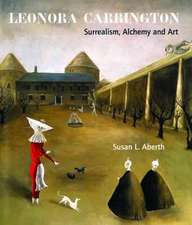 Leonora CarringtonSusan L. AberthPreț: 256.14 lei
 -
 MagritteTaschenPreț: 106.62 lei
 -
 ModiglianiDoris KrystofPreț: 106.92 lei
 -
 SurrealismCathrin Klingsohr-LeroyPreț: 106.64 lei
 -
 Dalí. The PaintingsRobert DescharnesPreț: 147.36 lei
Cuprins
List of Illustrations
Acknowledgements
Foreword by Mary Ann Caws
Introduction
1. Beginnings of Change
2. Exhibitions and Exposure
3. 'Femme de Bellmer': Critical Reception from 1984 to 2014
4. Anagrams
5. Automatism after 1945
6. Notes on Unica Zürn's The Man of Jasmine and Other Narratives
Epilogue
Appendix
Notes
Bibliography
Index
Acknowledgements
Foreword by Mary Ann Caws
Introduction
1. Beginnings of Change
2. Exhibitions and Exposure
3. 'Femme de Bellmer': Critical Reception from 1984 to 2014
4. Anagrams
5. Automatism after 1945
6. Notes on Unica Zürn's The Man of Jasmine and Other Narratives
Epilogue
Appendix
Notes
Bibliography
Index
Recenzii
The first significant and sustained English language study of the writer and artist that attempts to explicitly remove her from Bellmer's leaden shadow and show her as significant in her own right... The result of Plumer's careful and exhaustive scholarship is an image both of Zürn as an individual separate from the better known Bellmer, as well as her body of work as a distinct and unique contribution to postwar arts and literature. Plumer's book is itself a superb and groundbreaking contribution to scholarship on Zürn and postwar Surrealism generally. In particular, Plumer provides great insight and methodological clarity into how to examine the relationship between mental illness and artistic creation without reducing one to the other, an activity that has, unfortunately, been the standard approach for so long.
'Esra Plumer's illuminating study swiftly escapes the claws of psychobiography. Instead, she opts for an informative account of Unica Zürn's oeuvre (both visual and textual) as an outcome of a conscious artistic strategy, at times infused by her mental illness, rather than a product of such illness per se. What emerges is a well-overdue portrait of an exceptional artist who was far more than just la femme de Bellmer, as demonstrated in Plumer's astute analysis of the complexities of artistic and personal collaboration.'
'Esra Plumer's comprehensive study of the literary and artistic works of Unica Zürn is highly informative. She presents Zürn as an autonomous artist and also reviews her early period in Berlin. One particular merit is that it at last enables the English-speaking world to share an insight into the surrealistic oeuvre of an exceptional German-French artist.'
'Esra Plumer's illuminating study swiftly escapes the claws of psychobiography. Instead, she opts for an informative account of Unica Zürn's oeuvre (both visual and textual) as an outcome of a conscious artistic strategy, at times infused by her mental illness, rather than a product of such illness per se. What emerges is a well-overdue portrait of an exceptional artist who was far more than just la femme de Bellmer, as demonstrated in Plumer's astute analysis of the complexities of artistic and personal collaboration.'
'Esra Plumer's comprehensive study of the literary and artistic works of Unica Zürn is highly informative. She presents Zürn as an autonomous artist and also reviews her early period in Berlin. One particular merit is that it at last enables the English-speaking world to share an insight into the surrealistic oeuvre of an exceptional German-French artist.'