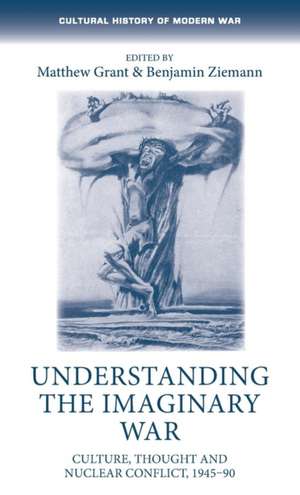
Understanding the Imaginary War: Cultural History of Modern War
en Limba Engleză Hardback – 17 aug 2016
Din seria Cultural History of Modern War
-
 Preț: 229.87 lei
 - 23%
 Preț: 684.77 lei
 -
 Preț: 275.52 lei
 -
 Preț: 151.34 lei
 -
 Preț: 269.26 lei
 - 23%
 Preț: 691.21 lei
 -
 Preț: 268.33 lei
 - 23%
 Preț: 694.07 lei
 -
 Preț: 267.77 lei
 -
 Preț: 268.91 lei
 -
 Preț: 380.29 lei
 -
 Preț: 219.85 lei
 -
 Preț: 276.01 lei
 -
 Preț: 230.55 lei
 - 23%
 Preț: 745.21 lei
 - 23%
 Preț: 694.64 lei
 - 23%
 Preț: 694.37 lei
 - 23%
 Preț: 751.08 lei
 - 23%
 Preț: 692.94 lei
 -
 Preț: 327.77 lei
 -
 Preț: 239.65 lei
 - 23%
 Preț: 600.28 lei
 -
 Preț: 173.45 lei
 - 23%
 Preț: 581.23 lei
 - 30%
 Preț: 525.31 lei
Preț: 746.38 lei
Preț vechi: 969.32 lei
-23%
Puncte Express: 1120
Carte tipărită la comandă
Livrare economică 30 noiembrie-14 decembrie
Livrare prin curier în România Termenul estimat este afișat lângă disponibilitate.
Transport gratuit pentru acest produs Plată online sau ramburs, în funcție de opțiunile comenzii.
Retur gratuit în 14 zile Comandă securizată și suport în română.
Specificații
ISBN-13: 9781784994402
ISBN-10: 1784994405
Pagini: 328
Dimensiuni: 138 x 216 x 19 mm
Greutate: 0.51 kg
Editura: MANCHESTER UNIVERSITY PRESS
Seria Cultural History of Modern War
ISBN-10: 1784994405
Pagini: 328
Dimensiuni: 138 x 216 x 19 mm
Greutate: 0.51 kg
Editura: MANCHESTER UNIVERSITY PRESS
Seria Cultural History of Modern War
V-ar putea interesa
-
 Love and War in the ApenninesEric NewbyPreț: 79.20 lei
 -
 Their Darkest HourLaurence Rees-40%Preț: 64.54 lei107.00 lei
 -
 Clara's WarClara Kramer-19%Preț: 75.97 lei93.47 lei
 -
 Pakistan: A Hard CountryAnatol Lieven-26%Preț: 101.64 lei137.46 lei
 -
 -19%Preț: 459.60 lei567.40 lei
 -
 -26%Preț: 68.55 lei93.26 lei
 -
 Cold War: For Forty-five Years the World Held its BreathJeremy Isaacs-25%Preț: 81.51 lei109.02 lei
 -
 Europe's Troubled PeaceTom BuchananPreț: 281.78 lei
 -
 We Remember with Reverence and LoveHasia R DinerPreț: 312.60 lei
 -
 Understand The Cold War: Teach YourselfCarole Bryan-JonesPreț: 171.69 lei
 -
 Understand Nazi Germany: Teach YourselfMichael LynchPreț: 145.85 lei
 -
 Afgantsy: The Russians in Afghanistan, 1979-89Sir Rodric Braithwaite-19%Preț: 75.30 lei92.51 lei
 -
 BesiegedBarbara DemickPreț: 93.00 lei
Notă biografică
Matthew Grant is Senior Lecturer in History at the University of Essex
Benjamin Ziemann is Professor of Modern German History at the University of Sheffield
Cuprins
Introduction: The cold war as an imaginary war - Matthew Grant and Benjamin Ziemann
1. The apocalyptic fiction: shaping the future in the cold war - Eva Horn
2. Building peace, fearing the apocalypse: Nuclear danger in Soviet cold war culture, 1945-91 - Miriam Dobson
3. Nuclear themes in American culture, 1945 to the present - Paul Boyer
4. The imaginative landscape of nuclear war in Britain, 1945-65 - Matthew Grant
5. German angst? Debating cold war anxieties in West Germany, 1945-90 - Benjamin Ziemann
6. After Hiroshima. Günther Anders and the history of anti-nuclear critique - Jason Dawsey
7. Hiroshima/Nagasaki, civil rights and anti-war protest in Japan's cold war - Ann Sheriff
8. Catholic anti-communism, the bomb and perceptions of apocalypse in West Germany and the USA, 1945-90 - Daniel Gerster
9. 'The nuclear arms race is psychological at its roots.' Physicians and their therapies for the Cold War - Claudia Kemper
10. Imagining the apocalypse: nuclear winter in science and the world - Paul Rubinson
11. Images of nuclear war in U.S. government films from the early cold war - Lars Nowak
Index
Descriere
Presents a comparative overview of the cultural imaginations of nuclear weapons and the anticipation of nuclear destruction. It considers representations of elements of the Cold War in popular culture and thought across Europe, Japan, USSR and the USA, providing a significant addition to Cold War historiography. -- .