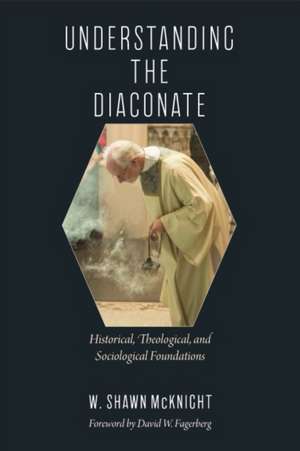
Understanding the Diaconate
Autor W Shawn McKnighten Limba Engleză Paperback – 5 iun 2018
Ceea ce aduce nou lucrarea Understanding the Diaconate în peisajul studiilor teologice actuale este abordarea sa hibridă, care completează sursele patristice și magisteriale cu instrumentele sociologiei și antropologiei. Deși au trecut peste cinci decenii de la Conciliul Vatican II, identitatea diaconului a rămas adesea într-o zonă de ambiguitate structurală. W Shawn McKnight reușește să clarifice acest rol, definind diaconul nu doar prin prisma serviciului de la altar, ci ca pe un „intermediar social”. Considerăm că forța acestui volum rezidă în capacitatea de a ancora misiunea diaconală în realitatea socială a Bisericii. Autorul demonstrează cum diaconul servește drept punte de legătură între episcop sau preot și comunitate, facilitând participarea laicilor la misiunea eclezială. Spre deosebire de abordările strict istorice, acest text propune un model teoretic cu aplicații practice imediate în contextul pastoral contemporan. Reținem, de asemenea, atenția acordată diaconilor tranzitorii, pentru care identitatea de slujitor prezentată aici constituie fundamentul caracterului presbiteral ulterior. Această lucrare reprezintă o alternativă conceptuală la The Character of the Deacon de James Keating pentru cursurile de teologie pastorală și drept canonic, cu avantajul unei metodologii sociologice care lipsește din eseurile tradiționale. În timp ce volumul lui Keating se concentrează pe spiritualitate și rugăciune, W Shawn McKnight oferă o structură organizațională și funcțională mult mai precisă. De asemenea, față de studiul statistic oferit de Word, Liturgy, Charity, lucrarea de față propune o sinteză teoretică ce explică „de ce-ul” din spatele funcției, nu doar frecvența activităților diaconale.
Preț: 228.25 lei
Carte disponibilă
Livrare economică 11-25 noiembrie
Specificații
ISBN-10: 0813230357
Pagini: 336
Dimensiuni: 153 x 223 x 25 mm
Greutate: 0.5 kg
Editura: Catholic University of America Press
De ce să citești această carte
Recomandăm această carte tuturor candidaților la diaconatul permanent și studenților la teologie care doresc să înțeleagă structura organică a Bisericii. Cititorul câștigă o perspectivă clară asupra modului în care diaconul acționează ca liant între sacru și sfera temporală. Este o resursă esențială pentru a înțelege cum Biserica poate interacționa mai eficient cu o lume aflată în suferință, prin cuvânt, liturghie și caritate.