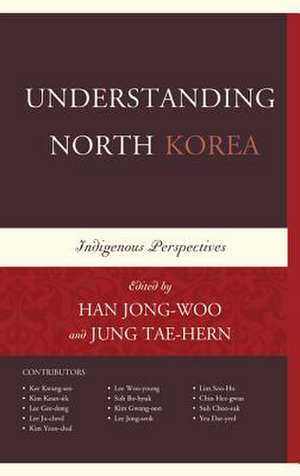
Understanding North Korea: Indigenous Perspectives
Editat de Jongwoo Han, Jung Tae-hern Contribuţii de Chin Hee-gwan, Kee Kwang-seo, Kim Gwang-oon, Kim Keun-sik, Kim Yeon-chul, Lee Gee-dong, Lee Jong-seok, Lee Ju-cheol, Lee Woo-young, Lim Soo-Ho, Suh Bo-hyuk, Suh Choo-suk, Yea Dae-yeolen Limba Engleză Paperback – 25 aug 2015
Also an important aspect to consider is the possibility of socio-economic change in North Korea. Though North Korea has remained relatively static vis-à-vis its political and military systems, it is in the process of becoming rapidly marketized, having continued various attempts to modify its economic policy. In the social realm, said economic shift has elicited the polarization of the disparate classes and the expansion of individualism. Such social transformations, obscured by the easily visible political reality of North Korea, can provide solid grounds for determining the future of the North Korea regime. Moreover, it is imperative that we accurately understand the motivation behind North Korea's intention to develop nuclear weapons-namely, the expansion of deterrence. We must recognize the reasons for the North Korean hostility toward the United States from the very beginning of the DPRK formation and the North Korean fixation on nuclear weapons development. Further, we need to understand the nature of relations between China and North Korea-relations on which the international community has focused since North Korea began its nuclear testing-as well as the history and structure of relations between North and South Korea.
Only when we accurately understand North Korea can we reach solutions to the North Korean nuclear issue. The studies in this volume by Korean scholars will reveal the veiled background of the visible phenomena and thereby help the readers to correctly understand the North Korean behaviors hitherto misunderstood (or even those that were impossible to understand).
| Toate formatele și edițiile | Preț | Express |
|---|---|---|
| Paperback (1) | 366.26 lei 6-8 săpt. | |
| Bloomsbury Publishing – 25 aug 2015 | 366.26 lei 6-8 săpt. | |
| Hardback (1) | 771.83 lei 6-8 săpt. | |
| Bloomsbury Publishing – 4 dec 2013 | 771.83 lei 6-8 săpt. |
Preț: 366.26 lei
Preț vechi: 526.97 lei
-30%
Puncte Express: 549
Preț estimativ în valută:
64.82€ • 75.75$ • 56.28£
64.82€ • 75.75$ • 56.28£
Carte tipărită la comandă
Livrare economică 19 februarie-05 martie
Preluare comenzi: 021 569.72.76
Specificații
ISBN-13: 9781498521093
ISBN-10: 1498521096
Pagini: 428
Ilustrații: 13 BW Illustrations, 15 BW Photos, 23 Tables
Dimensiuni: 155 x 231 x 31 mm
Greutate: 0.66 kg
Editura: Bloomsbury Publishing
Colecția Lexington Books
Locul publicării:New York, United States
ISBN-10: 1498521096
Pagini: 428
Ilustrații: 13 BW Illustrations, 15 BW Photos, 23 Tables
Dimensiuni: 155 x 231 x 31 mm
Greutate: 0.66 kg
Editura: Bloomsbury Publishing
Colecția Lexington Books
Locul publicării:New York, United States
Cuprins
Chapter 1 - Introduction
Is US Policy toward North Korea Actually Beneficial to the United States?
On the Significance of Introducing South Korean Scholarship on North Korea to Anglophone Readers
Jung Tae-hern (Department of Korean History, Korea University) and Han Jong-woo (Graduate Institute of Peace Studies, Kyunghee University)
PART 1 - Historical Evolution of North Korea's Monolithic Political System and Its Main Characteristics
Chapter 2
The Historical Origins and Formation of the Monolithic Political System in North Korea
Kee Kwang-seo (Chosun University)
Chapter 3
The Stability of the Monolithic System under Kim Jong-un: An Analysis
Kim Keun-sik (Kyungnam University) and Lee Gee-dong (Institute for National Security Strategy)
Chapter 4
The Power Elite of North Korea's Monolithic System
Lee Ju-cheol (Korea Broadcasting System)
PART 2 - Change in North Korean Society from the View of Economic Policy and Social Transformation
Chapter 5
Potential for Economic Reform in North Korea
Kim Yeon-chul (Inje University)
Chapter 6
North Korean Economy in Transition: Market Feudalism
Han Jong-woo (Graduate Institute of Peace Studies, Kyung Hee University)
Chapter 7
The Process of Social Change in North Korea
Lee Woo-young (University of North Korean Studies)
PART 3 - North Korea's Foreign Policy, Perception of the United States, and Its Relations with the United States and China (G2)
Chapter 8
Surviving in the Face of Hegemony: North Korea's Post-Cold War American Policy
Suh Bo-hyuk (Seoul National University)
Chapter 9
The Formation and Development of North Korea's Understanding of the United States
Kim Kwang-un (National Institute of Korean History)
Chapter 10
The Transformation of China-North Korea Relations and Its Implications
Lee Jong-seok (Sejong Institute)
Chapter 11
Twenty Years of the North Korean Nuclearization Problem: The North Korean Perspective
Lim Soo-ho (Samsung Economic Research Institute)
Part 4 - The Inter-Korean Relationship, United States and North East Asia
Chapter 12
Change in North Korea's Policy toward South Korea and Its Implications
Chin Hee-gwan (Inje University)
Chapter 13
Understanding Conflict on the Korean Peninsula: A Focus on the Yellow Sea Incident
Suh Choo-suk (Korea Institute for Defense Analyses)
Chapter 14
Economic Cooperation between the Two Koreas: Present and Future
Kim Yeon-chul (Inje University)
Chapter 15
The Irony of American Policy Toward North Korea: Regime Denial
Han Jong-woo (Graduate Institute of Peace Studies, Kyung Hee University)
Chapter 16 - Conclusion
Comprehensive Summary and Prospects for a Better Future
Jung Tae-hern (Department of Korean History, Korea University) and Han Jong-woo (Graduate Institute of Peace Studies, Kyung Hee University)
Appendices
Major Indicators and Statistics and Current Inter-Korean Relations
Yea Dae-yeol (Korea University)
Is US Policy toward North Korea Actually Beneficial to the United States?
On the Significance of Introducing South Korean Scholarship on North Korea to Anglophone Readers
Jung Tae-hern (Department of Korean History, Korea University) and Han Jong-woo (Graduate Institute of Peace Studies, Kyunghee University)
PART 1 - Historical Evolution of North Korea's Monolithic Political System and Its Main Characteristics
Chapter 2
The Historical Origins and Formation of the Monolithic Political System in North Korea
Kee Kwang-seo (Chosun University)
Chapter 3
The Stability of the Monolithic System under Kim Jong-un: An Analysis
Kim Keun-sik (Kyungnam University) and Lee Gee-dong (Institute for National Security Strategy)
Chapter 4
The Power Elite of North Korea's Monolithic System
Lee Ju-cheol (Korea Broadcasting System)
PART 2 - Change in North Korean Society from the View of Economic Policy and Social Transformation
Chapter 5
Potential for Economic Reform in North Korea
Kim Yeon-chul (Inje University)
Chapter 6
North Korean Economy in Transition: Market Feudalism
Han Jong-woo (Graduate Institute of Peace Studies, Kyung Hee University)
Chapter 7
The Process of Social Change in North Korea
Lee Woo-young (University of North Korean Studies)
PART 3 - North Korea's Foreign Policy, Perception of the United States, and Its Relations with the United States and China (G2)
Chapter 8
Surviving in the Face of Hegemony: North Korea's Post-Cold War American Policy
Suh Bo-hyuk (Seoul National University)
Chapter 9
The Formation and Development of North Korea's Understanding of the United States
Kim Kwang-un (National Institute of Korean History)
Chapter 10
The Transformation of China-North Korea Relations and Its Implications
Lee Jong-seok (Sejong Institute)
Chapter 11
Twenty Years of the North Korean Nuclearization Problem: The North Korean Perspective
Lim Soo-ho (Samsung Economic Research Institute)
Part 4 - The Inter-Korean Relationship, United States and North East Asia
Chapter 12
Change in North Korea's Policy toward South Korea and Its Implications
Chin Hee-gwan (Inje University)
Chapter 13
Understanding Conflict on the Korean Peninsula: A Focus on the Yellow Sea Incident
Suh Choo-suk (Korea Institute for Defense Analyses)
Chapter 14
Economic Cooperation between the Two Koreas: Present and Future
Kim Yeon-chul (Inje University)
Chapter 15
The Irony of American Policy Toward North Korea: Regime Denial
Han Jong-woo (Graduate Institute of Peace Studies, Kyung Hee University)
Chapter 16 - Conclusion
Comprehensive Summary and Prospects for a Better Future
Jung Tae-hern (Department of Korean History, Korea University) and Han Jong-woo (Graduate Institute of Peace Studies, Kyung Hee University)
Appendices
Major Indicators and Statistics and Current Inter-Korean Relations
Yea Dae-yeol (Korea University)
Recenzii
This is a fascinating collection of articles on North Korea by top-notch native South Korean specialists. Balanced, penetrating, and empirically rich analyses. The book is a must read for those who are interested in contemporary North Korea.
This book should be read by Korea-concerned scholars, policy makers, media commentators, and the public throughout the world-especially in the United States, Japan, China, Russia, and in both parts of divided Korea.
For Americans who want to go beyond the headlines to deepen their understanding of North Korea, this accessible and informative book by knowledgeable South Korean specialists is an excellent starting point.
This book should be read by Korea-concerned scholars, policy makers, media commentators, and the public throughout the world-especially in the United States, Japan, China, Russia, and in both parts of divided Korea.
For Americans who want to go beyond the headlines to deepen their understanding of North Korea, this accessible and informative book by knowledgeable South Korean specialists is an excellent starting point.