
Ukraine and Russia: The Post-Soviet Transition
Autor Roman Solchanyken Limba Engleză Paperback – 13 dec 2000
The book opens with a conceptual framework that addresses the key issues of the Ukrainian-Russian relationship. The initial chapters illustrate how relations between Kyiv and Moscow changed-in the final analysis, dramatically-under the conditions of a crumbling and ultimately collapsing Soviet state. This is followed by a discussion of how the "Russian question" influences Ukraine's internal developments-political, social, and economic-as well as its behavior in the international arena. The concluding chapters focus specifically on Crimea, a microcosm of the Ukrainian-Russian relationship.
Basing his argument on a wealth of primary source material, the author argues that the success of both Ukraine's and Russia's nation- and state-building projects will be largely determined by the normalization of their historically conditioned relationship. Indeed, success or failure will profoundly influence the direction of regional and European foreign policy and security.
Preț: 380.14 lei
Preț vechi: 515.01 lei
-26%
Puncte Express: 570
Carte disponibilă
Livrare economică 09-23 noiembrie
Livrare prin curier în România Termenul estimat este afișat lângă disponibilitate.
Transport gratuit de la 400.00 lei Plată online sau ramburs, în funcție de opțiunile comenzii.
Retur gratuit în 14 zile Comandă securizată și suport în română.
Specificații
ISBN-13: 9780742510180
ISBN-10: 0742510182
Pagini: 256
Dimensiuni: 148 x 226 x 14 mm
Greutate: 0.34 kg
Ediția:0256
Editura: Bloomsbury Publishing
Colecția Rowman & Littlefield
Locul publicării:New York, United States
ISBN-10: 0742510182
Pagini: 256
Dimensiuni: 148 x 226 x 14 mm
Greutate: 0.34 kg
Ediția:0256
Editura: Bloomsbury Publishing
Colecția Rowman & Littlefield
Locul publicării:New York, United States
V-ar putea interesa
-
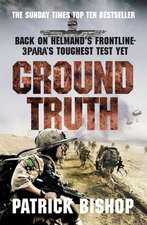 Ground TruthPatrick BishopPreț: 78.51 lei
 -
 Letters from BurmaAung San Suu KyiPreț: 141.49 lei
 -
 -18%Preț: 264.66 lei323.09 lei
 -
 Iron Curtain: From Stage to Cold WarPatrick Wright-13%Preț: 280.77 lei321.73 lei
 -
 -11%Preț: 370.95 lei416.32 lei
 -
 -12%Preț: 344.41 lei391.75 lei
 -
 Khomeini's GhostCon Coughlin-18%Preț: 89.55 lei109.00 lei
 -
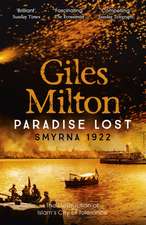 -25%Preț: 75.67 lei101.50 lei
 -
 Phoenix SquadronRowland White-18%Preț: 77.24 lei93.66 lei
 -
 The Long Road HomeBen ShephardPreț: 125.54 lei
 -
 Preț: 264.66 lei
 -
 -40%Preț: 66.60 lei110.15 lei
Cuprins
Chapter 1 Introduction
Chapter 2 A Framework for Discussion, or K Postanovke Problemy
Chapter 3 Ukraine, Russia, and the Center
Chapter 4 After the Fall
Chapter 5 Problems of Transition, Dilemmas of Security
Chapter 6 Foreign and Security Policy: Looking West, Watching East
Chapter 7 State and Society
Chapter 8 Regions and Nations
Chapter 9 The Crimean Imbroglio I: Kyiv and Moscow
Chapter 10 The Crimean Imbroglio II: Kyiv and Simferopol
Chapter 11 Conclusion
Chapter 2 A Framework for Discussion, or K Postanovke Problemy
Chapter 3 Ukraine, Russia, and the Center
Chapter 4 After the Fall
Chapter 5 Problems of Transition, Dilemmas of Security
Chapter 6 Foreign and Security Policy: Looking West, Watching East
Chapter 7 State and Society
Chapter 8 Regions and Nations
Chapter 9 The Crimean Imbroglio I: Kyiv and Moscow
Chapter 10 The Crimean Imbroglio II: Kyiv and Simferopol
Chapter 11 Conclusion
Recenzii
Stands out for its detailed reconstruction of unfolding events, particularly those involving Crimea. Solchanyk enriches the picture by including other dimensions of Ukrainian policy, including the preferred but elusive option of turning toward the West and the burden imposed by Ukraine's domestic failings.
Timely, ably written, and factually rich. . . . The volume provides excellent material for courses covering problems of postcommunist countries. Highly recommended.
The book does an admirable job of discussing the issues surrounding the Ukrainian-Russian relationship.
Solchanyk's study is a welcome addition to the growing English-language literature on modern Ukraine, not least because it is the first to concentrate on the all-important bilateral relationship between Ukraine and Russia. It does so in an informative and illuminating fashion.
Impressive scholarly achievement.
This is a balanced portrayal of two countries trying to come to terms with each other's independence. This is far from a finished process. Solchanyk's book enables us to understand why.
Timely, ably written, and factually rich. . . . The volume provides excellent material for courses covering problems of postcommunist countries. Highly recommended.
The book does an admirable job of discussing the issues surrounding the Ukrainian-Russian relationship.
Solchanyk's study is a welcome addition to the growing English-language literature on modern Ukraine, not least because it is the first to concentrate on the all-important bilateral relationship between Ukraine and Russia. It does so in an informative and illuminating fashion.
Impressive scholarly achievement.
This is a balanced portrayal of two countries trying to come to terms with each other's independence. This is far from a finished process. Solchanyk's book enables us to understand why.