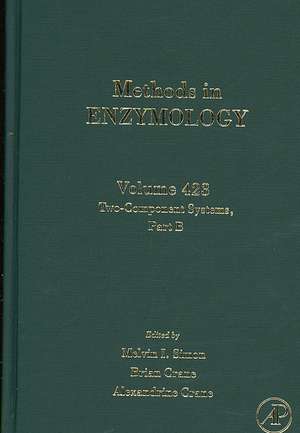
Two-Component Signaling Systems, Part B: Methods in Enzymology, cartea 423
Melvin I. Simon, Brian Crane, Alexandrine Craneen Limba Engleză Hardback – 26 iul 2007
Sections in Two-Component Signaling Systems, Part B include:
- Structural Approaches
- Reconstitution of Heterogeneous Systems
- Intracellular Methods and Assays
- Genome-Wide Analyses of Two-Component Systems
- Presents detailed protocols
- Includes troubleshooting tips
Din seria Methods in Enzymology
- 27%
 Preț: 740.96 lei
 - 27%
 Preț: 744.44 lei
 - 27%
 Preț: 745.82 lei
 - 27%
 Preț: 743.19 lei
 - 5%
 Preț: 970.67 lei
 - 27%
 Preț: 745.50 lei
 - 27%
 Preț: 743.63 lei
 - 27%
 Preț: 739.28 lei
 - 27%
 Preț: 743.51 lei
 - 27%
 Preț: 749.43 lei
 - 27%
 Preț: 745.45 lei
 - 27%
 Preț: 746.70 lei
 - 5%
 Preț: 974.31 lei
 - 27%
 Preț: 741.65 lei
 - 27%
 Preț: 744.14 lei
 - 27%
 Preț: 749.06 lei
 - 27%
 Preț: 745.39 lei
 - 27%
 Preț: 743.27 lei
 - 27%
 Preț: 742.08 lei
 -
 Preț: 464.86 lei
 -
 Preț: 464.24 lei
 - 27%
 Preț: 744.20 lei
 - 27%
 Preț: 741.39 lei
 - 27%
 Preț: 744.44 lei
 - 26%
 Preț: 308.38 lei
 - 27%
 Preț: 746.75 lei
 - 27%
 Preț: 749.06 lei
 - 27%
 Preț: 748.37 lei
 - 27%
 Preț: 744.14 lei
 - 5%
 Preț: 972.54 lei
 - 27%
 Preț: 746.63 lei
 - 27%
 Preț: 741.84 lei
 - 27%
 Preț: 745.39 lei
 - 27%
 Preț: 744.89 lei
 - 25%
 Preț: 316.76 lei
 -
 Preț: 466.82 lei
 - 27%
 Preț: 747.37 lei
 - 27%
 Preț: 747.68 lei
 - 27%
 Preț: 745.69 lei
 - 27%
 Preț: 744.94 lei
 - 27%
 Preț: 748.74 lei
 - 27%
 Preț: 746.19 lei
 - 5%
 Preț: 969.04 lei
 - 27%
 Preț: 742.70 lei
 - 27%
 Preț: 746.31 lei
 - 27%
 Preț: 743.27 lei
 - 27%
 Preț: 747.75 lei
 - 27%
 Preț: 745.08 lei
 - 27%
 Preț: 744.32 lei
 - 27%
 Preț: 740.90 lei
Preț: 830.17 lei
Preț vechi: 1331.25 lei
-38%
Puncte Express: 1245
Carte tipărită la comandă
Livrare economică 01-15 decembrie
Livrare prin curier în România Termenul estimat este afișat lângă disponibilitate.
Transport gratuit pentru acest produs Plată online sau ramburs, în funcție de opțiunile comenzii.
Retur gratuit în 14 zile Comandă securizată și suport în română.
Specificații
ISBN-13: 9780123738523
ISBN-10: 0123738520
Pagini: 648
Ilustrații: Illustrated
Dimensiuni: 152 x 229 x 43 mm
Greutate: 1.67 kg
Editura: ELSEVIER SCIENCE
Seria Methods in Enzymology
ISBN-10: 0123738520
Pagini: 648
Ilustrații: Illustrated
Dimensiuni: 152 x 229 x 43 mm
Greutate: 1.67 kg
Editura: ELSEVIER SCIENCE
Seria Methods in Enzymology
V-ar putea interesa
-
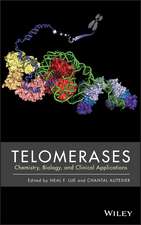 TelomerasesLue-9%Preț: 889.65 lei977.64 lei
 -
 An Introduction to High Content ScreeningSteven A Haney-9%Preț: 840.24 lei923.34 lei
 -
 Bioanalytical Chemistry 2eSR Mikkelsen-27%Preț: 753.46 lei1032.13 lei
 -
 Carbohydrate NanotechnologyKeith J Stine-9%Preț: 1138.05 lei1250.60 lei
 -
 Cysteine: Biosynthesis, Chemical Structure & ToxicityFyodor V Chorkina-27%Preț: 889.95 lei1211.29 lei
 -
 Micelles: Structural Biochemistry, Formation & Functions & UsageDanielle Bradburn-26%Preț: 1223.76 lei1663.65 lei
 -
 Leucine: Biology, Consumption & BenefitsSophia R Newman-27%Preț: 998.68 lei1361.87 lei
 -
 -27%Preț: 1633.90 lei2227.70 lei
 -
 Cellulose & Cellulose Derivatives: Synthesis, Modification & ApplicationsMd Ibrahim H Mondal-27%Preț: 2298.80 lei3130.63 lei
 -
 BiochemistryTerry BrownPreț: 386.39 lei
Public țintă
Biochemists, geneticists, and molecular biologists.Cuprins
Section I: Structural Approaches
[1]: The PICM Chemical Scanning Method for Identifying Domain–Domain and Protein–Protein Interfaces: Applications to the Core Signaling Complex of E. coli Chemotaxis
[2]: Use of Site-Directed Cysteine and Disulfide Chemistry to Probe Protein Structure and Dynamics: Applications to Soluble and Transmembrane Receptors of Bacterial Chemotaxis
[3]: Measuring Distances by Pulsed Dipolar ESR Spectroscopy: Spin-Labeled Histidine Kinases
[4]: Rigid Body Refinement of Protein Complexes with Long-Range Distance Restraints from Pulsed Dipolar ESR
[5]: TonB/TolA Amino-Terminal Domain Modeling
[6]: Functional Dynamics of Response Regulators Using NMR Relaxation Techniques
[7]: The Design and Development of Tar-EnvZ Chimeric Receptors
[8]: Functional and Structural Characterization of EnvZ, an Osmosensing Histidine Kinase of E. coli
[9]: Light Modulation of Histidine-Kinase Activity in Bacterial Phytochromes Monitored by Size Exclusion Chromatography, Crosslinking, and Limited Proteolysis
[10]: A Temperature-Sensing Histidine Kinase—Function, Genetics, and Membrane Topology
[11]: The Regulation of Histidine Sensor Kinase Complexes by Quorum Sensing Signal Molecules
Section II: Reconstitution of Heterogeneous Systems
[12]: Liposome-Mediated Assembly of Receptor Signaling Complexes
[13]: Analyzing Transmembrane Chemoreceptors Using In Vivo Disulfide Formation Between Introduced Cysteines
[14]: Using Nanodiscs to Create Water-Soluble Transmembrane Chemoreceptors Inserted in Lipid Bilayers
[15]: Assays for CheC, FliY, and CheX as Representatives of Response Regulator Phosphatases
[16]: Genetic Dissection of Signaling Through the Rcs Phosphorelay
Section III: Intracellular Methods and Assays
[17]: In Vivo Measurement by FRET of Pathway Activity in Bacterial Chemotaxis
[18]: In Vivo and In Vitro Analysis of the Rhodobacter sphaeroides Chemotaxis Signaling Complexes
[19]: In Vivo Crosslinking Methods for Analyzing the Assembly and Architecture of Chemoreceptor Arrays
[20]: A “Bucket of Light for Viewing Bacterial Colonies in Soft Agar
[21]: Phenotypic Suppression Methods for Analyzing Intra- and Inter-Molecular Signaling Interactions of Chemoreceptors
[22]: Single-Cell Analysis of Gene Expression by Fluorescence Microscopy
Section IV: Genome-Wide Analyses of Two-Component Systems
[23]: Two-Component Systems of Mycobacterium tuberculosis—Structure-Based Approaches
[24]: Transcriptomic Analysis of ArlRS Two-Component Signaling Regulon, a Global Regulator, in Staphylococcus aureus
[25]: Global Analysis of Two-Component Gene Regulation in H. pylori by Mutation Analysis and Transcriptional Profiling
[26]: Phosphotransfer Profiling: Systematic Mapping of Two-Component Signal Transduction Pathways and Phosphorelays
[27]: Identification of Histidine Phosphorylations in Proteins Using Mass Spectrometry and Affinity-Based Techniques
Subject Index
Author Index
[1]: The PICM Chemical Scanning Method for Identifying Domain–Domain and Protein–Protein Interfaces: Applications to the Core Signaling Complex of E. coli Chemotaxis
[2]: Use of Site-Directed Cysteine and Disulfide Chemistry to Probe Protein Structure and Dynamics: Applications to Soluble and Transmembrane Receptors of Bacterial Chemotaxis
[3]: Measuring Distances by Pulsed Dipolar ESR Spectroscopy: Spin-Labeled Histidine Kinases
[4]: Rigid Body Refinement of Protein Complexes with Long-Range Distance Restraints from Pulsed Dipolar ESR
[5]: TonB/TolA Amino-Terminal Domain Modeling
[6]: Functional Dynamics of Response Regulators Using NMR Relaxation Techniques
[7]: The Design and Development of Tar-EnvZ Chimeric Receptors
[8]: Functional and Structural Characterization of EnvZ, an Osmosensing Histidine Kinase of E. coli
[9]: Light Modulation of Histidine-Kinase Activity in Bacterial Phytochromes Monitored by Size Exclusion Chromatography, Crosslinking, and Limited Proteolysis
[10]: A Temperature-Sensing Histidine Kinase—Function, Genetics, and Membrane Topology
[11]: The Regulation of Histidine Sensor Kinase Complexes by Quorum Sensing Signal Molecules
Section II: Reconstitution of Heterogeneous Systems
[12]: Liposome-Mediated Assembly of Receptor Signaling Complexes
[13]: Analyzing Transmembrane Chemoreceptors Using In Vivo Disulfide Formation Between Introduced Cysteines
[14]: Using Nanodiscs to Create Water-Soluble Transmembrane Chemoreceptors Inserted in Lipid Bilayers
[15]: Assays for CheC, FliY, and CheX as Representatives of Response Regulator Phosphatases
[16]: Genetic Dissection of Signaling Through the Rcs Phosphorelay
Section III: Intracellular Methods and Assays
[17]: In Vivo Measurement by FRET of Pathway Activity in Bacterial Chemotaxis
[18]: In Vivo and In Vitro Analysis of the Rhodobacter sphaeroides Chemotaxis Signaling Complexes
[19]: In Vivo Crosslinking Methods for Analyzing the Assembly and Architecture of Chemoreceptor Arrays
[20]: A “Bucket of Light for Viewing Bacterial Colonies in Soft Agar
[21]: Phenotypic Suppression Methods for Analyzing Intra- and Inter-Molecular Signaling Interactions of Chemoreceptors
[22]: Single-Cell Analysis of Gene Expression by Fluorescence Microscopy
Section IV: Genome-Wide Analyses of Two-Component Systems
[23]: Two-Component Systems of Mycobacterium tuberculosis—Structure-Based Approaches
[24]: Transcriptomic Analysis of ArlRS Two-Component Signaling Regulon, a Global Regulator, in Staphylococcus aureus
[25]: Global Analysis of Two-Component Gene Regulation in H. pylori by Mutation Analysis and Transcriptional Profiling
[26]: Phosphotransfer Profiling: Systematic Mapping of Two-Component Signal Transduction Pathways and Phosphorelays
[27]: Identification of Histidine Phosphorylations in Proteins Using Mass Spectrometry and Affinity-Based Techniques
Subject Index
Author Index