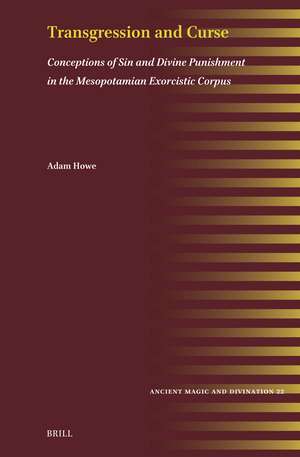
Transgression and Curse: Conceptions of Sin and Divine Punishment in the Mesopotamian Exorcistic Corpus: Ancient Magic and Divination, cartea 22
Autor Adam Hoween Limba Engleză Hardback – 15 feb 2027
Preț: 555.72 lei
Preț vechi: 653.79 lei
-15% Precomandă
Puncte Express: 834
Carte nepublicată încă
Livrare prin curier în România Precomanda se expediază când titlul devine disponibil.
Transport gratuit pentru acest produs Plată online sau ramburs, în funcție de opțiunile comenzii.
Retur gratuit în 14 zile Comandă securizată și suport în română.
Doresc să fiu notificat când acest titlu va fi disponibil:
Se trimite...
Specificații
ISBN-13: 9789004783119
ISBN-10: 9004783113
Pagini: 268
Dimensiuni: 155 x 235 mm
Greutate: 0 kg
Editura: Brill
Colecția Brill
Seria Ancient Magic and Divination
ISBN-10: 9004783113
Pagini: 268
Dimensiuni: 155 x 235 mm
Greutate: 0 kg
Editura: Brill
Colecția Brill
Seria Ancient Magic and Divination
Notă biografică
Adam Howe is Assistant Professor in the Department of Ancient Near Eastern Studies at Philipps-Universität Marburg. His research focuses on the practice of religion, magic, and medicine in Assyria and Babylonia, with a particular emphasis on their insights into social history.
Cuprins
Acknowledgements
Abbreviations and Symbols
1 Introduction
1.1 Approaches to the Question of Sin
1.2 Mesopotamian Sources for Transgression and Divine Punishment
1.3 Sources of Suffering in the Exorcistic Corpus
1.4 Methodology and Chapter Outline
2 Rituals and Incantations against Divine Punishment
2.1 Šurpu
2.2 Namerimburruda Rituals and lipšur-litanies
2.3 Bīt rimki
2.4 Dingir-ša3-dib-ba Prayers
2.5 Rituals against arratu-curse
2.6 Ludlul bēl nēmeqi
3 Crime and Punishment in the āšipūtu Corpus
3.1 Formulaic Lists of Transgression-Related Terminology
3.2 Taboo and Abomination
3.3 Crime and Punishment
3.4 Legalistic and Other Terminology
3.5 Summary
4 Oath, Curse, and Transgression: the Key Concepts
4.1 māmītu
4.2 arratu
4.3 arnu
5 A Litany of Offences: the Causes of Divine Anger
5.1 Lists of Transgressions: Structure and Aims
5.2 The Nature of Possible Transgressions
5.3 Limiting Factors
5.4 Summary
6 Wages of Sin: the Manifestation of Curse and Divine Punishment
6.1 ‘Reduced Existence’: the Experience of Divine Punishment
6.2 Non-Medical Effects of Divine Punishment
6.3 Medical Symptoms of Divine Punishment
6.4 Summary
7 Transformative Justice: Releasing the Punishment and Restoring Order
7.1 Diagnosing Transgression as the Cause of Suffering
7.2 Reconciling with the Gods
7.3 Removing the Lingering Effects of Transgression
7.4 Summary
8 Conclusions: Sin and Divine Punishment in the Mesopotamian Cosmos
Bibliography
Index