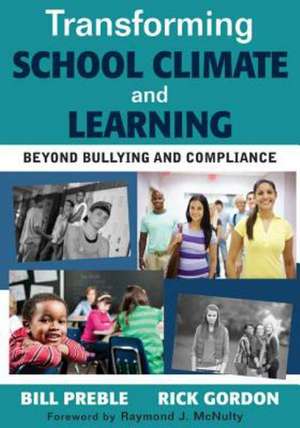
Transforming School Climate and Learning: Beyond Bullying and Compliance
Autor William K. Preble, Rick M. Gordonen Limba Engleză Electronic book text – 30 mai 2012
3. Using data to develop school climate and learning improvement goals
4. Developing a culture that will dramatically improve school climate and student engagement
5. Implementing formative assessment for continuous improvement
This innovative and proven program is advocated by the US Department of Education. Each chapter provides success stories from real schools, strategies and an implementation activity, and book study questions that help all participants transform both their school climate and student learning.
Preț: 198.80 lei
Puncte Express: 298
Indisponibil temporar
Doresc să fiu notificat când acest titlu va fi disponibil:
Se trimite...
Specificații
ISBN-13: 9781452224459
ISBN-10: 1452224455
Pagini: 184
Dimensiuni: 178 x 254 mm
Ediția:1
Editura: SAGE Publications
Colecția Corwin
Locul publicării:Thousand Oaks, United States
ISBN-10: 1452224455
Pagini: 184
Dimensiuni: 178 x 254 mm
Ediția:1
Editura: SAGE Publications
Colecția Corwin
Locul publicării:Thousand Oaks, United States
Recenzii
"The
authors
clearly
illustrate
their
premises,
provide
detailed
descriptions
of
their
reform
procedures,
and
heroically
tackle
many
facets
which
are
often
unaddressed
in
the
educational
literature."
"I haven’t the slightest hesitation in recommending support for any venture with which Bill Preble is associated. He is a man who challenges conventional wisdom and long may he remain so. Read the book. You will discover what transforming school climate and learning really means and how essential it is to support Bill’s vision.”
"Preble and Gordon get it that schools are ecological habitats. They recognize students, and everyone in the school environment, as essential to maintaining the school as a dynamic and healthy system. This book - and the student-led, collaborative action research it describes - is an essential waypoint to making any school a humane, effective and sustainable habitat for its students, teachers, and staff."
"This is a practical book, it is a resource that teachers and administrators will want to use throughout their careers."
"The topic is very current and the need is great. This will become a great handbook for educators on how to transform school climate."
"The book has a real value. Having gone through a very similar experience of focusing on school climate as a means of improving student learning, I found the points made here to be valid. The authors’ Five-Step process identifies key components. Using data to monitor the results, and committing to the long-haul to achieve the goals are two important pieces in this process. The authors demonstrate that well."
"Each chapter contains real-life scenarios; real student, parent, and educator voices; clearly detailed strategies; and pitfalls to avoid. The conclusions are simple, yet powerful. The book’s premise is backed by many years of research."
"I haven’t the slightest hesitation in recommending support for any venture with which Bill Preble is associated. He is a man who challenges conventional wisdom and long may he remain so. Read the book. You will discover what transforming school climate and learning really means and how essential it is to support Bill’s vision.”
"Preble and Gordon get it that schools are ecological habitats. They recognize students, and everyone in the school environment, as essential to maintaining the school as a dynamic and healthy system. This book - and the student-led, collaborative action research it describes - is an essential waypoint to making any school a humane, effective and sustainable habitat for its students, teachers, and staff."
"This is a practical book, it is a resource that teachers and administrators will want to use throughout their careers."
"The topic is very current and the need is great. This will become a great handbook for educators on how to transform school climate."
"The book has a real value. Having gone through a very similar experience of focusing on school climate as a means of improving student learning, I found the points made here to be valid. The authors’ Five-Step process identifies key components. Using data to monitor the results, and committing to the long-haul to achieve the goals are two important pieces in this process. The authors demonstrate that well."
"Each chapter contains real-life scenarios; real student, parent, and educator voices; clearly detailed strategies; and pitfalls to avoid. The conclusions are simple, yet powerful. The book’s premise is backed by many years of research."
Cuprins
Foreword
by
Raymond
J.
McNulty
Acknowledgments
About the Authors
Introduction: Bringing Our Schools Into Balance
Beyond Bullying, Beyond Compliance
Getting Beyond Piecemeal Problem Solving
The Rational for This Book: School Climate as a Key to School Safety, Student Motivation, and Academic Achievement
Guideposts for School Leaders: Administrators, Teachers, AND Students
Organization of the Book
Why Read This Book?
Students and Teachers as Partners in Transforming School Climate
1. School Climate: The Heart and Soul of a School
Making Meaningful Improvement in Schools
Why Is School Climate Important?
School Climate and Effective Schools
Essential School Climate Factors
We All Want Respectful Schools
What Teachers and Students Mean by Respect
Beeper Studies: Our Original Research on Respectful Schools
The Respect Continuum: A Practical Theory of Respect
The Disrespect Side of the Continuum
The Respect Side of the Continuum
How Schools Use the Respect Continuum
Initial Success in One District
Looking Beyond Stopping Misbehavior
Making It Real: A Real-Life Respectful School
Conclusion
Book Study Questions
2. The SafeMeasures Process: A Student-Led, Collaborative Action Research Process
Sarason's Research on School Change
Balancing Adult and Student Leadership
The SafeMeasures Process: An Overview
Bandura's Research on Self-Efficacy
Looking Deeply at Collaborative Action Research
Emancipatory Research
Making It Real: School Climate Improvement
Conclusion
Book Study Questions
3. Stage One: Everyone Is a Leader: Empowering Students and Teachers
The Dignity of Expertise
Getting Started
Administrative Support Is Essential
The Adult Design Team: Membership and Roles
National School Climate Standards as a Guide to Action
Selecting a Diverse Team of Student Leaders
Challenges to Choosing a Diverse Team of Student Leaders
Making it Real: Student Leadership Training
Conclusion
Simple Summary: Stage One
Book Study Questions
4. Stage Two: Including All Voices: School Climate Data Collection
The Importance of Data
What Gets Measured Is What Gets Done
Some Potential Problems With School Data Collection
What and How to Measure
What to Do With Data
When Students Become School Climate Researchers
The Power of Qualitative Data
The Value of Quantitative Data
Making It Real: Elementary School Student Researchers
Conclusion
Simple Summary: Stage Two
Book Study Questions
5. Stage Three: Thinking Together: Data Analysis and Goal Setting
Internal or External Locus of Control: Whose Responsibility
Cognitive Dissonance: Wrestling With Data to Construct Meaning
No Fault, No Blame
Words or Numbers? Analyzing Data With Students
Using Quantitative Data Effectively
Goal Setting With Student Leaders
Why Students Lead the Way: Student and Teacher Data Analysis and Goal Setting
Faculty Data Analysis and Goal Setting
The Work of Goal-Based Action Teams
Making It Real: Data Analysis and Goal Setting With Chain Reaction
Conclusion
Simple Summary: Stage Three
Book Study Questions
6. Stage Four: Making Change Happen: Action Planning and Project Development
Action Planning: Where Change Begins
No One Best System
School Climate Action Teams: Working Effectively With Colleagues
Action Planning Steps
Using the Respect Continuum as a Guide to Action
Moving Toward the Positive
Respectful Teaching
Balanced Leadership: Adults and Students Joining Forces for Change
Making It Real: The Backpack Project
Conclusion
Simple Summary: Stage Four
Book Study Questions
7. Stage Four Specifics: Action Projects to Promote Respectful Teaching and Learning
Changing School Climate Through Respectful Teaching
Engagement Strategies That Work
Providing Students With Choices
Authentic, Applied, Real-World Learning
Altering the Schedule to Provide Learning Opportunities
Making It Real: Sugata Mitra's Hole-in-the-Wall Project
Conclusion
Simple Summary: Stage Four Specifics
Book Study Questions
8. Stage Five: Moving Forward Together: Sustainability and Continuous Improvement
Change Is a Process, Not an Event
Key Elements of Sustainable Change
Closing the Gaps
Dignity and Respect
The Best People Working on the Problem
Socially Based and Action-Oriented Change
Enhance, Extend, and Empower
Make a Multiyear Commitment
Formative Assessment: A Critical Part of the Process
Aligning School Climate and Learning: Demonstrate a Balanced Approach
Guideposts for Sustainability
Making It Real: Talking Walls
Conclusion
Simple Summary: Stage Five
Book Study Questions
9. The Road Ahead: Transforming School Climate and Learning
When Will the Time Be Right?
Continued Resistance, Growing Hope
School Climate As a Coherent Framework for Understanding Schools
Implications for School Leaders, Teachers, and Students
Conclusion
Book Study Questions
List of Appendices
Appendix A: From Violence to Empowerment: A Respect Continuum
Appendix B: Sample School Climate Data Summary
Appendix C: Example of Student Goals and Evidence of Need: Elementary School Data (Grades 3–6)
References
Index
Acknowledgments
About the Authors
Introduction: Bringing Our Schools Into Balance
Beyond Bullying, Beyond Compliance
Getting Beyond Piecemeal Problem Solving
The Rational for This Book: School Climate as a Key to School Safety, Student Motivation, and Academic Achievement
Guideposts for School Leaders: Administrators, Teachers, AND Students
Organization of the Book
Why Read This Book?
Students and Teachers as Partners in Transforming School Climate
1. School Climate: The Heart and Soul of a School
Making Meaningful Improvement in Schools
Why Is School Climate Important?
School Climate and Effective Schools
Essential School Climate Factors
We All Want Respectful Schools
What Teachers and Students Mean by Respect
Beeper Studies: Our Original Research on Respectful Schools
The Respect Continuum: A Practical Theory of Respect
The Disrespect Side of the Continuum
The Respect Side of the Continuum
How Schools Use the Respect Continuum
Initial Success in One District
Looking Beyond Stopping Misbehavior
Making It Real: A Real-Life Respectful School
Conclusion
Book Study Questions
2. The SafeMeasures Process: A Student-Led, Collaborative Action Research Process
Sarason's Research on School Change
Balancing Adult and Student Leadership
The SafeMeasures Process: An Overview
Bandura's Research on Self-Efficacy
Looking Deeply at Collaborative Action Research
Emancipatory Research
Making It Real: School Climate Improvement
Conclusion
Book Study Questions
3. Stage One: Everyone Is a Leader: Empowering Students and Teachers
The Dignity of Expertise
Getting Started
Administrative Support Is Essential
The Adult Design Team: Membership and Roles
National School Climate Standards as a Guide to Action
Selecting a Diverse Team of Student Leaders
Challenges to Choosing a Diverse Team of Student Leaders
Making it Real: Student Leadership Training
Conclusion
Simple Summary: Stage One
Book Study Questions
4. Stage Two: Including All Voices: School Climate Data Collection
The Importance of Data
What Gets Measured Is What Gets Done
Some Potential Problems With School Data Collection
What and How to Measure
What to Do With Data
When Students Become School Climate Researchers
The Power of Qualitative Data
The Value of Quantitative Data
Making It Real: Elementary School Student Researchers
Conclusion
Simple Summary: Stage Two
Book Study Questions
5. Stage Three: Thinking Together: Data Analysis and Goal Setting
Internal or External Locus of Control: Whose Responsibility
Cognitive Dissonance: Wrestling With Data to Construct Meaning
No Fault, No Blame
Words or Numbers? Analyzing Data With Students
Using Quantitative Data Effectively
Goal Setting With Student Leaders
Why Students Lead the Way: Student and Teacher Data Analysis and Goal Setting
Faculty Data Analysis and Goal Setting
The Work of Goal-Based Action Teams
Making It Real: Data Analysis and Goal Setting With Chain Reaction
Conclusion
Simple Summary: Stage Three
Book Study Questions
6. Stage Four: Making Change Happen: Action Planning and Project Development
Action Planning: Where Change Begins
No One Best System
School Climate Action Teams: Working Effectively With Colleagues
Action Planning Steps
Using the Respect Continuum as a Guide to Action
Moving Toward the Positive
Respectful Teaching
Balanced Leadership: Adults and Students Joining Forces for Change
Making It Real: The Backpack Project
Conclusion
Simple Summary: Stage Four
Book Study Questions
7. Stage Four Specifics: Action Projects to Promote Respectful Teaching and Learning
Changing School Climate Through Respectful Teaching
Engagement Strategies That Work
Providing Students With Choices
Authentic, Applied, Real-World Learning
Altering the Schedule to Provide Learning Opportunities
Making It Real: Sugata Mitra's Hole-in-the-Wall Project
Conclusion
Simple Summary: Stage Four Specifics
Book Study Questions
8. Stage Five: Moving Forward Together: Sustainability and Continuous Improvement
Change Is a Process, Not an Event
Key Elements of Sustainable Change
Closing the Gaps
Dignity and Respect
The Best People Working on the Problem
Socially Based and Action-Oriented Change
Enhance, Extend, and Empower
Make a Multiyear Commitment
Formative Assessment: A Critical Part of the Process
Aligning School Climate and Learning: Demonstrate a Balanced Approach
Guideposts for Sustainability
Making It Real: Talking Walls
Conclusion
Simple Summary: Stage Five
Book Study Questions
9. The Road Ahead: Transforming School Climate and Learning
When Will the Time Be Right?
Continued Resistance, Growing Hope
School Climate As a Coherent Framework for Understanding Schools
Implications for School Leaders, Teachers, and Students
Conclusion
Book Study Questions
List of Appendices
Appendix A: From Violence to Empowerment: A Respect Continuum
Appendix B: Sample School Climate Data Summary
Appendix C: Example of Student Goals and Evidence of Need: Elementary School Data (Grades 3–6)
References
Index
Descriere
Advocated
by
the
US
Department
of
Education
and
featuring
the
SafeMeasures™
Collaborative
Action
Research
Process,
this
approach
stresses
teachers
and
students
leading
the
process
of
creating
a
safe
school
climate.