
Traditional Korean Philosophy: Problems and Debates
Editat de Youngsun Back, Philip J Ivanhoeen Limba Engleză Paperback – 8 noi 2016
| Toate formatele și edițiile | Preț | Express |
|---|---|---|
| Paperback (1) | 348.83 lei 6-8 săpt. | |
| Bloomsbury Publishing – 8 noi 2016 | 348.83 lei 6-8 săpt. | |
| Hardback (1) | 868.24 lei 6-8 săpt. | |
| Bloomsbury Publishing – 14 noi 2016 | 868.24 lei 6-8 săpt. |
Preț: 348.83 lei
Preț vechi: 468.45 lei
-26%
Puncte Express: 523
Preț estimativ în valută:
61.67€ • 73.96$ • 53.61£
61.67€ • 73.96$ • 53.61£
Carte tipărită la comandă
Livrare economică 13-27 martie
Specificații
ISBN-13: 9781786601865
ISBN-10: 1786601869
Pagini: 256
Ilustrații: 3 b/w illustrations;
Dimensiuni: 151 x 229 x 20 mm
Greutate: 0.36 kg
Editura: Bloomsbury Publishing
Colecția Rowman & Littlefield Publishers
Locul publicării:New York, United States
ISBN-10: 1786601869
Pagini: 256
Ilustrații: 3 b/w illustrations;
Dimensiuni: 151 x 229 x 20 mm
Greutate: 0.36 kg
Editura: Bloomsbury Publishing
Colecția Rowman & Littlefield Publishers
Locul publicării:New York, United States
V-ar putea interesa
-
 The Things You Can See Only When You Slow DownHaemin Sunim-18%Preț: 63.76 lei77.69 lei
 -
 Maangchi's Real Korean CookingMaangchiPreț: 238.47 lei
 -
 -26%Preț: 208.70 lei283.09 lei
 -
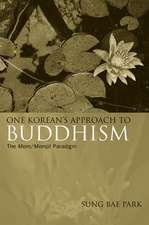 One Korean's Approach to BuddhismSung Bae ParkPreț: 238.64 lei
 -
 Preț: 89.36 lei
 -
 -18%Preț: 81.49 lei99.13 lei
 -
 The Korean WarBruce CumingsPreț: 110.17 lei
 -
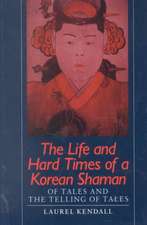 Preț: 170.14 lei
 -
 Korean Short Stories: A Collection from North KoreaHui Gun PyonPreț: 138.46 lei
 -
 -28%Preț: 53.88 lei75.09 lei
 -
 Classic Korean Tales: With CommentariesKey-sook ChoePreț: 162.08 lei
 -
 How to Speak KPOPJungho ParkPreț: 105.78 lei
 -
 Minor Feelings: A Reckoning on Race and the Asian ConditionCathy Park Hong-21%Preț: 54.08 lei68.31 lei
 -
 Preț: 129.02 lei
 -
 Bojagi - Korean Textile ArtSara CookPreț: 161.56 lei
 -
 2000 Most Common Korean Words in ContextLingo MasteryPreț: 85.17 lei
 -
 Preț: 46.36 lei
 -
 Korean gamesStewart CulinPreț: 87.48 lei
Cuprins
Acknowledgments / Conventions / Introduction / 1. From Structure to Action: The Concepts of 'Substance' (che ?) and 'Function' (yong ?) in Gwon Geun's Philosophy Halla Kim / 2. Another Look at Yi Hwang's Views about Li and Qi: A Case of Time-lag in the Transmission of Chinese Originals to Korea Yung Sik Kim / 3. The Li-Qi ?? Structures of the Four Beginnings and the Seven Emotions and the Aim of the Four-Seven Debates Hyoungchan Kim / 4. Yi Yulgok and His Contributions to Korean Confucianism: A Non-dualistic Approach Young-chan Ro / 5. Human Nature and Animal Nature: The Horak Debate and Its Philosophical Significance Richard Kim / 6. Jeong Yakyong's Post Neo-Confucianism So-Yi Chung / 7. The Lord on High (Sangje ??) in Jeong Yakyong's Thought Soon-woo Chung / 8. How do Sages Differ from the Rest of Us?: The Views of Zhu Xi and Jeong Yakyong Youngsun Back / 9. The Way to Become a Female Sage: Im Yunjidang's Confucian Feminism Sungmoon Kim / 10. Burdens of Modernity: Baek Seonguk and the Formation of Modern
Recenzii
Connoisseurs will also enjoy a number of fresh approaches and topics, such as, notably, Yung Sik Kim's exploration of the role of "time lags" for religiophilosophical developments in Korean Confucianism.
Readers hungry for insights into Korea's cultural history over the last six centuries need look no farther than this comprehensive survey of traditional Korean philosophy. In these pages they will meet such giants as Toegye, Yulgok and Dasan and will discover that Korean philosophy was both practical and theoretical, reflecting a moral psychology shaped by ethical concerns.
In Traditional Korean Philosophy: Problems and Debates, Youngsun Back and PJ Ivanhoe have marshaled a cadre of some of our most distinguished contemporary scholars to tell their own story of Korean philosophy by engaging with it philosophically. Abjuring survey or historical vignettes, the authors of this anthology offer tightly argued essays that grapple each in its own way with some of the evolving terminologies, subversive voices, and persistent problems of the tradition that has given this narrative its distinctively Korean character.
Readers hungry for insights into Korea's cultural history over the last six centuries need look no farther than this comprehensive survey of traditional Korean philosophy. In these pages they will meet such giants as Toegye, Yulgok and Dasan and will discover that Korean philosophy was both practical and theoretical, reflecting a moral psychology shaped by ethical concerns.
In Traditional Korean Philosophy: Problems and Debates, Youngsun Back and PJ Ivanhoe have marshaled a cadre of some of our most distinguished contemporary scholars to tell their own story of Korean philosophy by engaging with it philosophically. Abjuring survey or historical vignettes, the authors of this anthology offer tightly argued essays that grapple each in its own way with some of the evolving terminologies, subversive voices, and persistent problems of the tradition that has given this narrative its distinctively Korean character.