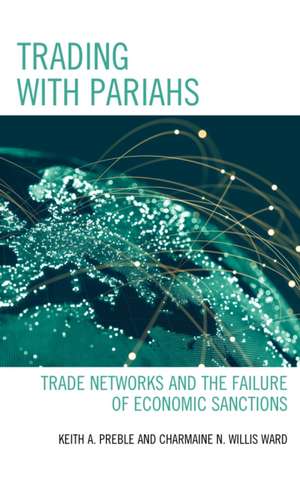
Trading with Pariahs: Trade Networks and the Failure of Economic Sanctions
Autor Keith A. Preble, Charmaine N. Willisen Limba Engleză Hardback – 22 aug 2024
Preț: 525.34 lei
Preț vechi: 816.02 lei
-36%
Puncte Express: 788
Carte tipărită la comandă
Livrare economică 12-26 noiembrie
Livrare prin curier în România Termenul estimat este afișat lângă disponibilitate.
Transport gratuit pentru acest produs Plată online sau ramburs, în funcție de opțiunile comenzii.
Retur gratuit în 14 zile Comandă securizată și suport în română.
Specificații
ISBN-13: 9781666903737
ISBN-10: 1666903736
Pagini: 200
Ilustrații: 33 b/w illustrations; 7 tables
Dimensiuni: 154 x 232 x 18 mm
Greutate: 0.47 kg
Editura: Bloomsbury Publishing
Colecția Lexington Books
Locul publicării:New York, United States
ISBN-10: 1666903736
Pagini: 200
Ilustrații: 33 b/w illustrations; 7 tables
Dimensiuni: 154 x 232 x 18 mm
Greutate: 0.47 kg
Editura: Bloomsbury Publishing
Colecția Lexington Books
Locul publicării:New York, United States
Cuprins
Chapter 1. Theorizing Trade Linkages and Sanctions
Chapter 2. De-Weaponized Interdependence: The North Korea Sanctions Regime
Chapter 3. Traders with Pariahs: An In-Depth Examination of North Korea's Key Bilateral Relationships
Chapter 4. Opting for Panopticon? The Myanmar Sanctions Regime
Chapter 5. Making Weaponized Interdependence Work: The Iran Sanctions Regime
Chapter 6. Further Applications and The Potential for Weaponized Interdependence
Chapter 2. De-Weaponized Interdependence: The North Korea Sanctions Regime
Chapter 3. Traders with Pariahs: An In-Depth Examination of North Korea's Key Bilateral Relationships
Chapter 4. Opting for Panopticon? The Myanmar Sanctions Regime
Chapter 5. Making Weaponized Interdependence Work: The Iran Sanctions Regime
Chapter 6. Further Applications and The Potential for Weaponized Interdependence
Recenzii
"Through innovative network analysis and detailed case studies, Preble and Willis show how features of trade networks influence the success or failure of economic sanctions. The book provides an important advance in understanding of the ability of countries to withstand economic pressure."
"Keith Preble and Charmaine Willis's Trading with Pariahs is an incisive contribution to our understanding of the effectiveness of sanctions. They have written a fascinating book that delves into the trade networks that three of the most critical pariah states - Iran, North Korea, and Myanmar -- create and exploit to evade sanctions. Using innovative network analysis methods, Preble and Willis show that weaponizing economic interdependence, the primary mechanism by which economic sanctions are supposed to 'work,' is most effective when the pariah state is enmeshed in trade networks with the sanctioning states it cannot easily change. States with limited trade networks with sanctioning states, and greater adaptability in their trading partners, can mitigate their own pain, and the ability of other states to monitor them."
"Sanctions are preferred tools for weaponizing interdependence against countries that break international rules - but even in a liberalized global order, economic sanctions can be blunt instruments. Much depends on the nuances of network structures, as Preble and Willis capably demonstrate in this exciting new book. With its approachable prose and informative visuals, Trading with Pariahs illuminates sanctions (in)effectiveness for observers of international relations at all levels. Sure to take on new relevance as trade networks are transformed by friendshoring, regionalization, and revisionism, this book is essential reading for everyone interested in global security, multilateralism, and the maintenance of international order."
Trading with Pariahs: The Realities of Economic Sanctions in Global Diplomacy by Keith Preble and Charmaine Willis explores of the complexities that arise when using economic sanctions against pariah states. Using historical case studies and engaging with contemporary events, the authors shines a light the networks that pariah states rely on to evade sanctions pressure. Trading with Pariahs serves as a wake-up call, highlighting the moral ambiguities and strategic pitfalls of engaging with outlaw regimes through economic means. It has much to offer scholars and policymakers seeking a deeper understanding of the complexities and trade-offs inherent in engaging with states who have made them outcasts from the global system.
"Keith Preble and Charmaine Willis's Trading with Pariahs is an incisive contribution to our understanding of the effectiveness of sanctions. They have written a fascinating book that delves into the trade networks that three of the most critical pariah states - Iran, North Korea, and Myanmar -- create and exploit to evade sanctions. Using innovative network analysis methods, Preble and Willis show that weaponizing economic interdependence, the primary mechanism by which economic sanctions are supposed to 'work,' is most effective when the pariah state is enmeshed in trade networks with the sanctioning states it cannot easily change. States with limited trade networks with sanctioning states, and greater adaptability in their trading partners, can mitigate their own pain, and the ability of other states to monitor them."
"Sanctions are preferred tools for weaponizing interdependence against countries that break international rules - but even in a liberalized global order, economic sanctions can be blunt instruments. Much depends on the nuances of network structures, as Preble and Willis capably demonstrate in this exciting new book. With its approachable prose and informative visuals, Trading with Pariahs illuminates sanctions (in)effectiveness for observers of international relations at all levels. Sure to take on new relevance as trade networks are transformed by friendshoring, regionalization, and revisionism, this book is essential reading for everyone interested in global security, multilateralism, and the maintenance of international order."
Trading with Pariahs: The Realities of Economic Sanctions in Global Diplomacy by Keith Preble and Charmaine Willis explores of the complexities that arise when using economic sanctions against pariah states. Using historical case studies and engaging with contemporary events, the authors shines a light the networks that pariah states rely on to evade sanctions pressure. Trading with Pariahs serves as a wake-up call, highlighting the moral ambiguities and strategic pitfalls of engaging with outlaw regimes through economic means. It has much to offer scholars and policymakers seeking a deeper understanding of the complexities and trade-offs inherent in engaging with states who have made them outcasts from the global system.