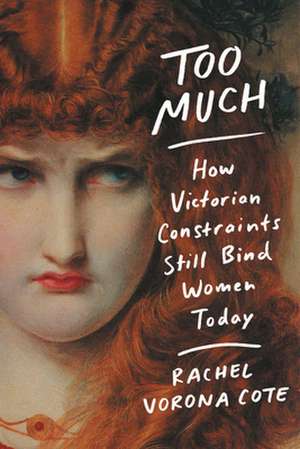
Too Much
Autor Rachel Vorona Coteen Limba Engleză Paperback – 25 feb 2020
Lucrarea Too Much semnată de Rachel Vorona Cote aduce o perspectivă proaspătă în studiile de sociologie culturală, propunând o punte între analiza istorică a epocii victoriene și experiența feminină contemporană. Spre deosebire de textele academice tradiționale, considerăm că această ediție reușește să transforme metafora corsetului dintr-un simplu obiect vestimentar într-un simbol complex al constrângerilor psihologice și sociale. Apreciem modul în care autoarea integrează critica literară cu elemente de storytelling, oferind o voce personală unei analize care altfel ar fi rămas strict teoretică. Comparabil cu Bound to Please de Leigh Summers în rigurozitatea cu care deconstruiește miturile despre corpul modificat, Too Much este actualizat pentru contextul actual al discuțiilor despre sănătate mentală și autonomie corporală. În timp ce Leigh Summers se concentrează pe mecanica și fetișizarea corsetului, Rachel Vorona Cote extinde discuția către modul în care cultura modernă continuă să „strângă șnururile” asupra dorințelor și comportamentului feminin. De asemenea, dacă Suffer and Be Still (Routledge Revivals) documenta stereotipurile împotriva cărora au luptat femeile acum un secol, acest volum analizează reziduurile acelor idealuri victoriene în societatea de azi. Structura narativă este una fluidă, alternând între analiza operelor literare clasice și observații sociologice despre spațiul ocupat de femei în spațiul public.
Preț: 152.51 lei
Carte disponibilă
Livrare economică 06-20 noiembrie
Livrare express 22-28 octombrie pentru 23.24 lei
Specificații
ISBN-10: 1538729709
Pagini: 352
Dimensiuni: 133 x 203 x 30 mm
Greutate: 0.28 kg
Editura: Grand Central Publishing
V-ar putea interesa
-
 Preț: 94.53 lei
 -
 Words...S. J. RobinsonPreț: 91.30 lei
 -
 Pieces of MeMarsha GrixtiPreț: 43.93 lei
 -
 Out EastJohn GlynnPreț: 116.32 lei
 -
 Soul SongTrudy NutterPreț: 69.12 lei
 -
 Love All AroundLibby GreggPreț: 63.18 lei
 -
 Preț: 70.01 lei
 -
 Becoming PlutoJ. S.Preț: 91.54 lei
 -
 Comedy and Trauma in Germany and Austria After 1945Stephanie BirdPreț: 104.51 lei
 -
 Gold MouthHannah D. McClendonPreț: 88.96 lei
 -
 The TotemEdmond Andrae BruneauPreț: 77.22 lei
 -
 RehearsalIrene WillisPreț: 76.04 lei
 -
 Inspired ByMichael C. WalkerPreț: 48.23 lei
 -
 Wer lebtElisabeth BorchersPreț: 71.41 lei
 -
 Kolumnen, KolumnenPeter BichselPreț: 235.38 lei
De ce să citești această carte
Recomandăm această carte cititorilor interesați de sociologie și istorie culturală care doresc să înțeleagă rădăcinile standardelor de conduită feminină. Este o resursă valoroasă pentru cei care au studiat literatura victoriană și vor să vadă cum arhetipurile de atunci influențează percepția actuală asupra corpului. Cititorul câștigă o perspectivă critică asupra modului în care normele sociale modelează identitatea individuală.