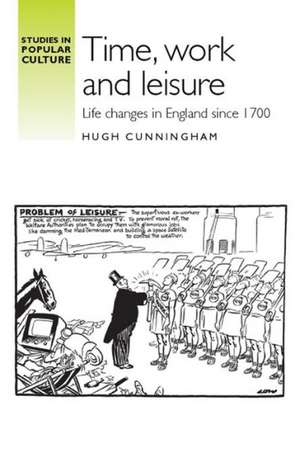
Time, Work and Leisure
Autor Hugh Cunninghamen Limba Engleză Hardback – apr 2014
Preț: 600.27 lei
Preț vechi: 779.56 lei
-23%
Puncte Express: 900
Carte disponibilă
Livrare economică 13-27 noiembrie
Livrare express 29 octombrie-04 noiembrie pentru 33.12 lei
Livrare prin curier în România Termenul estimat este afișat lângă disponibilitate.
Transport gratuit pentru acest produs Plată online sau ramburs, în funcție de opțiunile comenzii.
Retur gratuit în 14 zile Comandă securizată și suport în română.
Specificații
ISBN-13: 9780719085208
ISBN-10: 0719085209
Pagini: 240
Dimensiuni: 163 x 234 x 23 mm
Greutate: 0.5 kg
Ediția:UK edition
Editura: MANCHESTER UNIVERSITY PRESS
ISBN-10: 0719085209
Pagini: 240
Dimensiuni: 163 x 234 x 23 mm
Greutate: 0.5 kg
Ediția:UK edition
Editura: MANCHESTER UNIVERSITY PRESS
V-ar putea interesa
-
 BellePaula ByrnePreț: 93.86 lei
 -
 The Making of the English Working ClassE. P. ThompsonPreț: 147.39 lei
 -
 Migration and EmpireMarjory Harper-19%Preț: 305.98 lei379.58 lei
 -
 Buildings of EmpireAshley Jackson-21%Preț: 214.31 lei270.09 lei
 -
 -17%Preț: 347.59 lei418.75 lei
 -
 -18%Preț: 360.71 lei439.45 lei
 -
 -26%Preț: 73.30 lei99.38 lei
 -
 Great Britain's Great WarJeremy Paxman-18%Preț: 65.30 lei79.66 lei
 -
 The secret battleMichael RoperPreț: 275.52 lei
 -
 Yes: The Radical Case for Scottish IndependenceJames FoleyPreț: 195.44 lei
 -
 The New Royal Family - Prince George, William and KateRobert JobsonPreț: 96.77 lei
Cuprins
1. Introduction 2. Time and society in the eighteenth century 3. Leisure preference and its critics, 1700-1850 4. Leisure and class, 1750-1850 5. Work time in decline, 1830-1970 6. Men, work and leisure, 1850-1970 7. The leisured class, 1840-1970 8. Towards 'work-life balance' Conclusion Select bibliography Index
Notă biografică
Hugh Cunningham is Emeritus Professor of Social History at the University of Kent
Descriere
Explores the major changes in our use of and attitude to time over three centuries. Asks why the 1960s and 1970s expectation that leisure time would increase has failed to come about