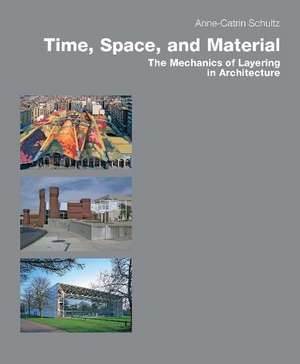
Time, Space & Material: The Mechanics of Layering in Architecture
Autor Anne-Catrin Schultzen Limba Engleză Hardback – mar 2015
Preț: 283.38 lei
Preț vechi: 331.83 lei
-15%
Puncte Express: 425
Carte disponibilă
Livrare economică 02-16 noiembrie
Livrare prin curier în România Termenul estimat este afișat lângă disponibilitate.
Transport gratuit de la 400.00 lei Plată online sau ramburs, în funcție de opțiunile comenzii.
Retur gratuit în 14 zile Comandă securizată și suport în română.
Specificații
ISBN-13: 9783936681888
ISBN-10: 3936681880
Pagini: 80
Ilustrații: 160 illu
Dimensiuni: 230 x 300 x 15 mm
Greutate: 0.7 kg
Editura: EDITION AXEL MENGES
Colecția Edition Axel Menges (D)
Locul publicării:Germany
ISBN-10: 3936681880
Pagini: 80
Ilustrații: 160 illu
Dimensiuni: 230 x 300 x 15 mm
Greutate: 0.7 kg
Editura: EDITION AXEL MENGES
Colecția Edition Axel Menges (D)
Locul publicării:Germany
V-ar putea interesa
-
 LA+ Journal: WildTatum L HandsPreț: 150.57 lei
 -
 Basics Wasserkreislauf im GebäudeDoris Haas-ArndtPreț: 148.40 lei
 -
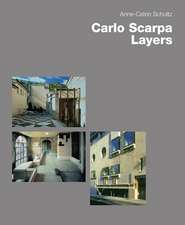 Carlo Scarpa: LayersAnne-Catrin Schultz-13%Preț: 292.11 lei337.57 lei
 -
 -15%Preț: 176.02 lei206.74 lei
 -
 -15%Preț: 224.82 lei265.71 lei
 -
 Cité Judiciaire, Luxembourg: 1991-2008Rob Krier-18%Preț: 462.40 lei564.50 lei
 -
 Champagne RegainedJacqueline Widmar Stewart-11%Preț: 366.28 lei410.54 lei