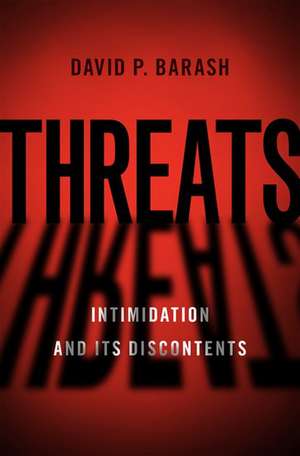
Threats: Intimidation and Its Discontents
Autor David P. Barashen Limba Engleză Hardback – 10 dec 2020
Publicul țintă pentru acest volum este format din studenți la psihologie și științe politice, cercetători în biologie evoluționistă și practicieni din domeniul securității naționale. Aceștia vor găsi în paginile cărții o analiză riguroasă a modului în care amenințarea — de la semnalele biologice oneste la cacealmaua strategică — modelează interacțiunile umane și animale. Ne-a atras atenția modul în care David P. Barash refuză să trateze amenințarea doar ca pe un instrument politic, ancorând-o în mecanismele supraviețuirii speciilor. Subliniem rigoarea cu care este demontată teoria descurajării nucleare, autorul argumentând că răspunsul prin contra-amenințare agravează riscurile în loc să le diminueze. Stilul narativ îmbină erudiția literară cu datele din zoologie, oferind o perspectivă interdisciplinară rară. Apreciem în mod deosebit capitolele dedicate „fricii de celălalt” și modului în care internalizarea amenințărilor duce la ascensiunea populismului naționalist. Alternativă la Deterrence de Anastasia Filippidou pentru cursurile de relații internaționale, lucrarea de față are avantajul de a integra psihologia comportamentală și biologia, oferind o explicație structurală pentru eșecul politicilor bazate pe intimidare. Spre deosebire de abordările pur tehnice, Barash chestionează etica comunicării și limitele raționalității în situații de conflict extrem.
Preț: 198.86 lei
Preț vechi: 237.63 lei
-16%
Carte disponibilă
Livrare economică 06-11 noiembrie
Specificații
ISBN-10: 0190055294
Pagini: 248
Dimensiuni: 239 x 155 x 25 mm
Greutate: 0.45 kg
Editura: Oxford University Press
Colecția OUP USA
Locul publicării:New York, United States
V-ar putea interesa
-
 The Age of Surveillance Capitalism: AN OBSERVER BEST BOOK OF THE CENTURYProfessor Shoshana ZuboffPreț: 91.15 lei
 -
 Mi6 Spy Skills for CiviliansRed RileyPreț: 104.05 lei
De ce să citești această carte
Recomandăm această carte oricărui cititor interesat de mecanismele puterii și ale fricii. Veți câștiga o înțelegere profundă a modului în care biologia ne influențează deciziile politice și sociale. Este o lectură esențială pentru a înțelege de ce strategiile de intimidare eșuează adesea și cum putem folosi comunicarea mai înțelept pentru a evita scenarii distructive, de la conflicte interpersonale la catastrofe globale.
Despre autor
David P. Barash este profesor de psihologie și zoologie la University of Washington, fiind o figură centrală în dezvoltarea sociobiologiei. Cu peste 20 de cărți publicate, opera sa explorează intersecția dintre biologie și comportamentul uman. În lucrări precum The Soul Delusion, el a analizat critic concepte metafizice, în timp ce în Madame Bovary's Ovaries a aplicat lentila darwinistă asupra literaturii. În Threats, Barash își folosește expertiza vastă pentru a sintetiza date din domenii aparent divergente, continuându-și misiunea de a explica natura umană prin prisma evoluției.
Descriere
Recenzii
We're surrounded by threats, often to our detriment: threats of capital punishment, of hell, imagined threats leading to proliferation of guns and — worst of all — the threat embodied in nuclear deterrence. 'Must read' is a cliché, but this one really is! In accurate yet accessible detail, it lays out the deceptions and dangers of deterrence. It's a bright light of reason, terrific writing, and even a spirit of fun that will open your eyes, stimulate your mind, and maybe even save your life.
It's a rare author who can combine literary erudition and an easy fluency of style together with expert knowledge of psychology and evolutionary biology. David Barash adds to all this a far-seeing wisdom and a humane decency that shines through on every page. The concluding section on the senseless and dangerous futility of nuclear deterrence theory is an irrefutable tour de force which should be read by every politician and senior military officer. If only!
From bared fangs to nuclear deterrence, threat is ever-present in the lives of animals, including those animals called human beings. With scintillating prose infused with deep biological knowledge, David Barash takes us on a gripping journey into the role of risk and intimidation in the lives of living things. But Threats is not only a description of the darker side of animal life. It's a call to move beyond domination by violence and fear to secure a better, safer, and saner future for humanity.
This brilliant book compares how animals and humans alike respond to dangers, ending with the existential threat of nuclear war. The arcane and deviant logic of deterrence that justifies and now threatens extermination literally took my breath away. If you love life and if you love this planet, you need to read this book and understand how primitive naivete and obeisance to the power of certain alpha males and their absurd testosterone-fueled aggressive ruthlessness has led too many people to accept these appalling dictates. I ended the book with the clear understanding that it is urgent for everyone--and women in particular--to step up and displace deviant threats with a commitment to nurturance and sanity.
Only the charmingly naïve think that communication is just for exchanging information -- instead, it's as much about disinformation. David Barash explores the communication of threat as a deterrent -- both among animals and humans - and brilliantly shows the mythic nature of beliefs that the threat of execution can deter crime, or that of nuclear weapons can deter war. Ultimately, this superb, important book shows that our biggest threat is the self-serving perception of imaginary threats by the powerful.
This book is one of those so obviously needed that one wonders why no one before thought to write it. It is lucky for readers that David Barash is the one who did. Barash, the professor you wished you had in college, draws on his knowledge of crustaceans, Monarch butterflies, Kant, Shaw, Bentham, and even Jesus in this fascinating exegesis of the all-too-relevant subject of the threats posed by guns, right-wing populism, racism, and nuclear weapons. As Barash, one of America's most distinguished scientists, wisely observes, 'threats often end up making things worse, for threatener and threatened alike.'
Loved the book. David Barash is an amazing researcher and writer; the timing of his new book could not be more propitious, and his expertise is exactly what we need. The section on deterrence is an especially gripping narrative that will keep you up at night, which is all the more reason for you to read it!
A scientific romp that reveals how threats work and why they are often carried out even when that harms everyone. Fascinating examples, from the strategies of snapping shrimp to whether the death penalty deters crime, set the stage for a powerful argument that threats to use nuclear weapons are likely to result in their use and our annihilation.