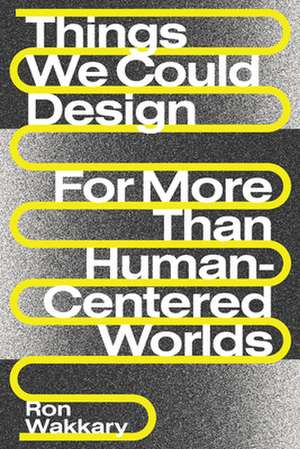
Things We Could Design: Design Thinking, Design Theory
Autor Ron Wakkaryen Limba Engleză Paperback – 24 aug 2021
Recomandăm Things We Could Design studenților la design, cercetătorilor în filozofia tehnologiei și practicienilor care caută o alternativă sustenabilă la modelele de consum actuale. În acest volum publicat de MIT Press Ltd, Ron Wakkary demonstrează că designul centrat pe om, deși considerat progresist în ultimele decenii, a contribuit direct la criza ecologică prin tratarea mediului și a speciilor non-umane exclusiv ca resurse de exploatat. Observăm o structură riguroasă, împărțită în trei piloni: Design, Lucruri (Things) și Designer. Autorul nu se limitează la teorie, ci deschide fiecare capitol cu un „prolog” care analizează artefacte concrete — de la celebrul Fairphone la proiecte experimentale precum Morse Things. Această abordare transformă conceptele abstracte ale postumanismului în „practici nomade”, oferind o perspectivă pluralistă asupra modului în care obiectele și materialele posedă propria lor vitalitate și agenție. Cititorii familiarizați cu Design For More-Than-Human Futures de Martín Tironi vor aprecia modul în care Wakkary extinde dialogul de la etica coexistenței spre o metodologie aplicată de „designing-with”. Dacă Tironi se concentrează pe tranziția etică, Wakkary oferă un cadru operațional prin care designerul devine parte dintr-o rețea materială și existențială complexă. Subliniem importanța celor 51 de ilustrații alb-negru care documentează procesele de prototipare și interacțiune, susținând argumentul că designul viitorului trebuie să fie unul al umilinței și al coabitării. Este o lectură care recalibrează rolul creatorului, deplasându-l de pe poziția de autoritate supremă spre cea de participant într-un ecosistem fragil și interconectat.


Preț: 287.20 lei
Carte disponibilă
Livrare economică 16-30 noiembrie
Livrare express 31 octombrie-06 noiembrie pentru 40.100 lei
Specificații
ISBN-10: 0262542994
Pagini: 320
Ilustrații: 51 black and white illustrations
Dimensiuni: 150 x 225 x 19 mm
Greutate: 0.51 kg
Editura: MIT Press Ltd
Colecția Design Thinking, Design Theory
Seria Design Thinking, Design Theory
De ce să citești această carte
Această carte este esențială pentru cei care doresc să depășească limitele designului tradițional. Veți câștiga o înțelegere profundă a modului în care postumanismul poate fi aplicat practic pentru a crea obiecte sustenabile și etice. Este un manifest pentru o nouă eră a creativității, unde responsabilitatea față de mediul non-uman devine punctul central al oricărui proiect, oferind instrumente teoretice și exemple reale pentru a naviga complexitatea crizei climatice prin design.
Despre autor
Ron Wakkary este un teoretician și practician de renume în domeniul designului, cunoscut pentru explorările sale la intersecția dintre interacțiunea om-calculator (HCI) și filozofia postumanistă. Este profesor la Școala de Arte Interactive și Tehnologie din cadrul Universității Simon Fraser, Canada, și deține o catedră în Design de Interacțiune la Universitatea de Tehnologie din Eindhoven. Activitatea sa se concentrează pe modul în care designul poate facilita noi forme de coabitare între oameni și tehnologii, fiind o figură centrală în seria Design Thinking, Design Theory.
Notă biografică
Cuprins
Part I: Design
Chapter 2 Prologue: Photobox, Long-Living Chair, and Olly
Chapter 2: Nomadic Practices
Chapter 3 Prologue: Fairphone, Pocket Receivers, and Kar-a-Sutra
Chapter 3: Designing Artifacts, Objects, and Products
Part II: Things
Chapter 4 Prologue: Phototrope, +Lichtlijn, New Faces, New Identities, Prayer Companion, and the Great Pacific Garbage Patch
Chapter 4: Things Are Interconnected and Transformative
Chapter 5 Prologue: Tilting Bowl, Being the Machine, Obscura 1C Digital Camera, Morse Things, Burgundian Black Collaboratory, and Mineral Accretion Factory: Underwater Table
Chapter 5: Things are Relational and Vital
Part III: Designer
Chapter 6 Prologue: Living in a Prototype, Greenscreen Dress, Supersurface, and Children Village
Chapter 6: The Designer as Biography
Chapter 7 Prologue: Anti-biographies and Lifepatch
Chapter 7: The Constituency of the Designer
Conclusion
Chapter 8: Designing-with
Notes
References
Index