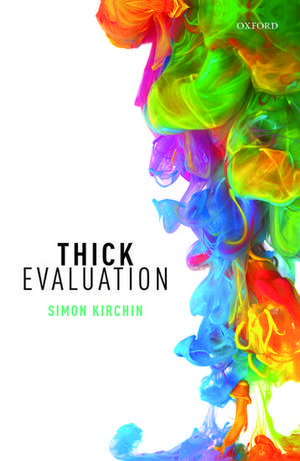
Thick Evaluation
Autor Simon Kirchinen Limba Engleză Hardback – 23 noi 2017
Remarcăm faptul că, deși distincția dintre conceptele etice „subțiri” și cele „groase” este fundamentală pentru viața de zi cu zi, literatura academică a suferit mult timp de o lipsă de studii monografice exhaustive dedicate exclusiv acestui subiect. Thick Evaluation vine să completeze această lacună, oferind o analiză riguroasă a modului în care limbajul nostru îmbină descrierea factuală cu evaluarea morală. Observăm că autorul, Simon Kirchin, se concentrează pe dezbaterea dintre „separationiști” — cei care cred că evaluarea poate fi extrasă din descrierea unui concept — și „non-separationiști”, poziție pe care volumul o susține cu argumente noi.
Suntem de părere că structura volumului este una exemplară pentru cercetarea în filozofie analitică, trecând de la ipoteze trecute cu vederea la o reconstrucție a modului în care bunătatea sau ignoranța capătă sens în context. Cartea acoperă aceeași arie tematică precum The Lewd, the Rude and the Nasty de Pekka Vayrynen, dar cu o abordare care insistă mai mult pe caracterul inseparabil al evaluării de conținutul descriptiv, refuzând simplificarea acestora în componente atomice.
În contextul operei sale, Thick Evaluation reprezintă punctul culminant al cercetărilor începute de autor în Arguing about Metaethics și în volumul colectiv Thick Concepts. Dacă în lucrările anterioare Kirchin explora fundamentele normativității sau scepticismul moral, aici el rafinează instrumentarul lingvistic necesar pentru a înțelege cum valorile sunt încorporate în însăși structura conceptelor noastre. Este o lucrare tehnică, dar esențială pentru a înțelege complexitatea judecății umane.
Preț: 479.26 lei
Preț vechi: 694.52 lei
-31%
Carte tipărită la comandă
Livrare economică 16-22 iulie
Specificații
ISBN-10: 0198803435
Pagini: 212
Dimensiuni: 164 x 238 x 20 mm
Greutate: 0.5 kg
Editura: OUP OXFORD
Colecția OUP Oxford
Locul publicării:Oxford, United Kingdom
De ce să citești această carte
Această carte este esențială pentru studenții și cercetătorii în filozofie morală și metaetică care doresc să înțeleagă nuanțele limbajului evaluativ. Cititorul câștigă o perspectivă clară asupra motivului pentru care termeni precum „generozitate” sau „brutalitate” nu pot fi reduși la simple fapte. Este o resursă academică de prim rang care clarifică o distincție adesea folosită, dar rar analizată în profunzime în literatura de specialitate.
Despre autor
Simon Kirchin este un distins profesor de filozofie, cunoscut pentru contribuțiile sale majore în metaetică și etică normativă. Activitatea sa academică este strâns legată de OUP Oxford, unde a publicat și editat lucrări de referință precum The Future of Normativity și The Philosophy of Comedy. Expertiza sa acoperă o gamă largă de subiecte, de la structura valorilor până la estetică și moralitatea umorului. Prin Thick Evaluation, Kirchin își consolidează poziția de autoritate în dezbaterea despre natura conceptelor etice, reușind să sintetizeze decenii de discuții filozofice într-o viziune originală.