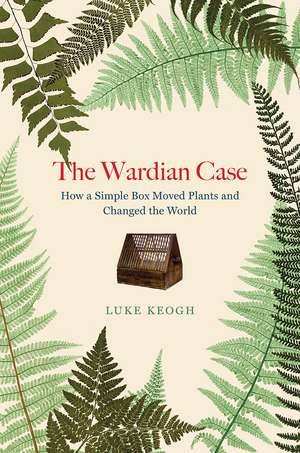
The Wardian Case: How a Simple Box Moved Plants and Changed the World
Autor Luke Keoghen Limba Engleză Hardback – 17 noi 2020
Apreciem modul în care The Wardian Case transformă o curiozitate tehnică — o cutie de sticlă sigilată — într-o lentilă prin care putem înțelege reconfigurarea ecologică a planetei. Volumul debutează cu analiza experimentelor din 1829 ale medicului Nathaniel Bagshaw Ward, care a observat cum flora poate prospera fără udare într-un mediu izolat, rezolvând astfel problema letală a vaporilor de sare și a temperaturilor extreme din timpul transportului maritim. Considerăm că forța acestui studiu rezidă în documentarea riguroasă a modului în care o simplă inovație a facilitat industrii globale, de la comerțul cu plante ornamentale la marile plantații coloniale.
Autorul Luke Keogh extinde cadrul propus de Case Studies de Mark Smith cu date noi extrase din arhivele grădinilor botanice regale, oferind o perspectivă mai amplă asupra logisticii imperiale. Structura cărții este organizată progresiv: prima parte, „Possibilities”, explorează geneza științifică a cutiei, în timp ce a doua parte, „Panoramas”, investighează consecințele sale globale. Spre deosebire de monografia istorică On the Growth of Plants in Closely Glazed Cases, scrisă chiar de Nathaniel Bagshaw Ward, lucrarea lui Keogh nu se limitează la botanică, ci analizează critic impactul social și ecologic, inclusiv problema speciilor invazive care persistă și astăzi. Cele 59 de ilustrații și planșe color incluse oferă un suport vizual esențial pentru înțelegerea acestui „micro-ecosistem” mobil care a permis ca iasomia sau rododendronul să devină prezențe comune în grădinile din întreaga lume.
Preț: 317.95 lei
Carte indisponibilă temporar
Specificații
ISBN-10: 022671361X
Pagini: 288
Ilustrații: 19 color plates, 40 halftones
Dimensiuni: 152 x 229 x 33 mm
Greutate: 0.61 kg
Ediția:First Edition
Editura: University of Chicago Press
Colecția University of Chicago Press
De ce să citești această carte
Recomandăm această carte cercetătorilor și pasionaților de istoria științei care doresc să înțeleagă rădăcinile globalizării biologice. Cititorul câștigă o perspectivă inedită asupra modului în care tehnologia a modelat peisajul natural actual, oferind explicații concrete pentru prezența plantelor asiatice în Europa și pentru dezvoltarea industriilor de cauciuc sau ceai. Este o analiză fascinantă a intersecției dintre botanică, economie și imperialism.
Despre autor
Luke Keogh este un istoric și curator premiat, specializat în istoria mediului și a științei. Cu o experiență vastă în cercetarea muzeală și academică, Keogh s-a concentrat pe modul în care obiectele tehnice și inovațiile științifice au facilitat schimbul de cunoștințe și specii la nivel global. Activitatea sa a fost recunoscută prin numeroase burse de cercetare în instituții de prestigiu din Australia, Europa și Statele Unite, permițându-i să sintetizeze în această lucrare date complexe despre impactul ecologic al epocii victoriene.
Descriere scurtă
Roses, jasmine, fuchsia, chrysanthemums, and rhododendrons bloom in gardens across the world, and yet many of the most common varieties have roots in Asia. How is this global flowering possible? In 1829, surgeon and amateur naturalist Nathaniel Bagshaw Ward placed soil, dried leaves, and the pupa of a sphinx moth into a sealed glass bottle, intending to observe the moth hatch. But when a fern and meadow grass sprouted from the soil, he accidentally discovered that plants enclosed in glass containers could survive for long periods without watering. After four years of experimentation in his London home, Ward created traveling glazed cases that would be able to transport plants around the world. Following a test run from London to Sydney, Ward was proven correct: the Wardian case was born, and the botanical makeup of the world’s flora was forever changed.
In our technologically advanced and globalized contemporary world, it is easy to forget that not long ago it was extremely difficult to transfer plants from place to place, as they often died from mishandling, cold weather, and ocean salt spray. In this first book on the Wardian case, Luke Keogh leads us across centuries and seas to show that Ward’s invention spurred a revolution in the movement of plants—and that many of the repercussions of that revolution are still with us, from new industries to invasive plant species. From the early days of rubber, banana, tea, and cinchona cultivation—the last used in the production of the malaria drug quinine—to the collecting of beautiful and exotic flora like orchids in the first great greenhouses of the United States Botanic Garden in Washington, DC, and England’s Royal Botanic Gardens, Kew, the Wardian case transformed the world’s plant communities, fueled the commercial nursery trade and late nineteenth-century imperialism, and forever altered the global environment.
Notă biografică
Extras
On 23 November 1833 Ward received a letter from Charles Mallard, the ship captain responsible for the two cases: “your experiment for the preservation of plants alive . . . has fully succeeded.” The next challenge was the return journey. In February 1834 the cases were replanted with specimens from Australia. Eight months later, when Ward and his friend George Loddiges, a well- known nursery owner, went aboard the ship in London, they inspected the healthy fronds of a delicate coral fern (Gleichenia microphylla), an Australian plant never before seen in Britain. And along the way a few black wattle seedlings sprouted in the soil. The experiment was a success.
The Wardian case, as it became known, revolutionized the movement of plants around the globe. After the first experiment, thousands of cases were used over the next century to move plants. It was a “simple but beautiful” invention, as one sea captain described it. The first to use the cases on a large scale were the commercial nursery firms, who saw the value of the technology and quickly began to send the cases out. Then the world’s leading botanical institutions, such as the Royal Botanic Gardens, Kew, and London’s Royal Horticultural Society adopted the case to their needs.
Explorers, missionaries, plant hunters, and government officials used the Wardian case, as did all nations with an interest in plants. One robust horticulturalist working on the United States Exploring Expedition (1838– 42) collected plants and packed them in Wardian cases; he landed them home after four years of travel, and they laid the foundations for the United States Botanic Garden in Washington, DC. Over the next half century important agricultural plants such as bananas, cocoa, rubber, tea, and many more were successfully moved in cases and went on to have major commercial impacts. The effects of these impacts were significant and widespread.
This book tells the story of the Wardian case (fig. 1) from its invention in 1829 to its final significant journeys in the 1920s. Specifically, the book is about the worldwide movement of live plants. The Wardian case played an important role in moving all variety of plants and, for good or ill, helped to transform the world we live in today. Many scientists, historians, and garden writers acknowledge the importance of the Wardian case in moving plants around the world, but the full story that charts its long and useful history has never been told.
Cuprins
Part 1. Possibilities
1. Experiments with Plants
2. A Brief History of the Plant Box
3. Global Gardens
4. Science at Sea
5. On the Move
6. House of Ward
Part 2. Panoramas
7. Logistics of Beauty
8. Kew’s Case
9. Case of Colonialism
10. Burning Questions
11. Wardian Cages
Conclusion: Case Closed?
Acknowledgments
Notes
Index