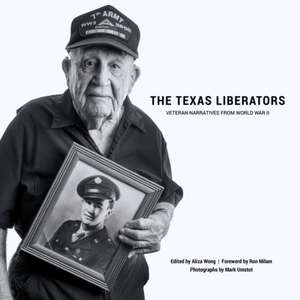
The Texas Liberators
Editat de Aliza Wong Fotografii de Mark Umstoten Limba Engleză Hardback – dec 2017
Această monografie istorică, publicată de Texas Tech University Press, constituie un document de arhivă esențial pentru înțelegerea impactului psihologic al Holocaustului asupra soldaților aliați. Descoperim în paginile volumului The Texas Liberators, editat de Aliza Wong, vocea a 21 de veterani din Texas care, la vârsta de doar 19 ani, au trecut de la realitatea frontului la ororile de neimaginat din lagărele de concentrare. Structura cărții îmbină narațiunea orală cu fotografia documentară, oferind o perspectivă biografică ce depășește simpla cronologie militară. Reținem forța mărturiilor directe, cum este cea a tânărului soldat care descrie ultimele momente ale unui deținut pe nume Herman, ilustrând trauma profundă a celor care au oferit primele rații de hrană supraviețuitorilor decimați. Cititorii familiarizați cu Hell Before Their Very Eyes de John C McManus vor aprecia aici focalizarea regională și umană; dacă lucrarea lui McManus analizează experiența generală a unităților americane, volumul de față aduce o notă de intimitate prin portretele realizate de Mark Umstot. Aceste imagini recente ale veteranilor, acum la vârsta a treia, creează o punte vizuală între memoria istorică și prezent. Tonul este unul sobru, respectând distanța necesară față de subiecte precum represiunea amintirilor ca mecanism de supraviețuire. Cartea nu se limitează la momentul eliberării, ci explorează și dificultatea soldaților de a reveni la o viață „normală” după ce au fost martori la exterminarea sistematică. Este o contribuție valoroasă la istoriografia celui de-al Doilea Război Mondial, oferind o voce necesară celor care au purtat decenii întregi povara acestor amintiri.
Preț: 185.39 lei
Carte disponibilă
Livrare economică 16-30 noiembrie
Specificații
ISBN-10: 1682830241
Pagini: 160
Dimensiuni: 256 x 264 x 22 mm
Greutate: 0.94 kg
Editura: Texas Tech University Press
De ce să citești această carte
Adresată istoricilor și celor interesați de memoria celui de-al Doilea Război Mondial, această carte oferă o perspectivă umană rară asupra eliberării lagărelor. Cititorul câștigă acces la mărturii neditate ale veteranilor texani, completate de portrete fotografice emoționante. Este o resursă valoroasă pentru înțelegerea traumei postbelice și a sacrificiului personal făcut în numele libertății, fiind ideală pentru studiu academic sau lectură istorică aprofundată.