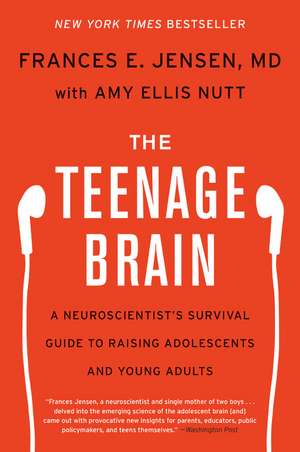
The Teenage Brain
Autor Frances E Jensen, Amy Ellis Nutten Limba Engleză Paperback – 26 ian 2016
Observăm în practica educațională și parentală o nevoie acută de a înțelege mecanismele biologice din spatele comportamentelor dificile ale tinerilor. The Teenage Brain răspunde acestei nevoi prin transpunerea datelor complexe din jurnalele academice într-un ghid aplicabil pentru părinți și profesori. Scrisă de Frances E Jensen, neurolog de renume, și Amy Ellis Nutt, lucrarea fundamentează teoretic de ce adolescenții învață mai repede decât adulții, dar și de ce sunt mult mai vulnerabili la efectele neurotoxicologice ale substanțelor sau la stresul cronic. Ne-a atras atenția rigoarea cu care autoarea explică procesul de „cablare” a creierului, oferind o perspectivă clinică asupra unor fenomene precum dependența de tehnologie și impactul multitasking-ului asupra atenției. Cartea extinde cadrul propus de Unlock Teen Brainpower cu date noi din neurologia clinică, oferind statistici și diagrame care explică diferențele de maturizare dintre sexe — fetele având un avans de aproximativ doi ani în dezvoltarea anumitor centri nervoși. Tonul este unul precis, ancorat în studii MRI recente, evitând speculațiile psihologice în favoarea dovezilor biologice. Față de abordările axate strict pe mediul școlar, precum The Teacher and the Teenage Brain, volumul de față oferă o viziune holistică ce include somnul, riscurile psihiatrice și mecanismele de luare a deciziilor, devenind o resursă esențială pentru curriculumul de psihologie cognitivă și dezvoltarea politicilor educaționale.
Preț: 112.07 lei
Carte disponibilă
Livrare economică 14-28 noiembrie
Specificații
ISBN-10: 0062067850
Pagini: 384
Dimensiuni: 131 x 203 x 32 mm
Greutate: 0.29 kg
Editura: Harpercollins
V-ar putea interesa
-
 The Teenage BrainFrances E. JensenPreț: 124.35 lei
 -
 Becoming NicoleAmy Ellis NuttPreț: 109.50 lei
 -
 Nutt, A: Becoming NicoleAmy Ellis Nutt-20%Preț: 71.46 lei89.43 lei
De ce să citești această carte
Recomandăm această carte oricărui adult care interacționează cu adolescenți și dorește să înțeleagă biologia din spatele impulsivității sau a dificultăților de concentrare. Cititorul câștigă o bază științifică solidă pentru a gestiona situații de criză, înlocuind exasperarea cu strategii bazate pe neurologie. Este un instrument practic pentru a proteja sănătatea mintală a tinerilor într-o lume dominată de stimuli digitali și stres academic.
Despre autor
Frances E Jensen este profesor și șef al departamentului de neurologie la Perelman School of Medicine, University of Pennsylvania. Cu o carieră vastă ca cercetător, clinician și mamă, Jensen are o perspectivă unică asupra neuroplasticității. Expertiza sa în neurologia clinică este completată de colaborarea cu Amy Ellis Nutt, jurnalistă laureată a Premiului Pulitzer, pentru a face știința accesibilă publicului larg. Jensen este recunoscută internațional pentru prelegerile sale care traduc descoperirile despre dezvoltarea creierului în sfaturi concrete pentru comunitățile educaționale.
Descriere scurtă
Renowned neurologist Dr. Frances E. Jensen offers a revolutionary look at the brains of teenagers, dispelling myths and offering practical advice for teens, parents and teachers.
Dr. Frances E. Jensen is chair of the department of neurology in the Perelman School of Medicine at the University of Pennsylvania. As a mother, teacher, researcher, clinician, and frequent lecturer to parents and teens, she is in a unique position to explain to readers the workings of the teen brain. In The Teenage Brain, Dr. Jensen brings to readers the astonishing findings that previously remained buried in academic journals.
The root myth scientists believed for years was that the adolescent brain was essentially an adult one, only with fewer miles on it. Over the last decade, however, the scientific community has learned that the teen years encompass vitally important stages of brain development. Samples of some of the most recent findings include:
- Teens are better learners than adults because their brain cells more readily "build" memories. But this heightened adaptability can be hijacked by addiction, and the adolescent brain can become addicted more strongly and for a longer duration than the adult brain.
- Studies show that girls' brains are a full two years more mature than boys' brains in the mid-teens, possibly explaining differences seen in the classroom and in social behavior.
- Adolescents may not be as resilient to the effects of drugs as we thought. Recent experimental and human studies show that the occasional use of marijuana, for instance, can cause lingering memory problems even days after smoking, and that long-term use of pot impacts later adulthood IQ.
- Multi-tasking causes divided attention and has been shown to reduce learning ability in the teenage brain. Multi-tasking also has some addictive qualities, which may result in habitual short attention in teenagers.
- Emotionally stressful situations may impact the adolescent more than it would affect the adult: stress can have permanent effects on mental health and can to lead to higher risk of developing neuropsychiatric disorders such as depression.
Textul de pe ultima copertă
Interweaving clear summary and analysis of research data with anecdotes drawn from her years as a clinician, researcher, and public speaker, renowned neurologist Frances E. Jensen, MD, explores adolescent brain functioning and development in the context of learning and multitasking, stress and memory, sleep, addiction, and decision making.
The Teenage Brain explains how these eye-opening findings not only dispel commonly held myths about teens but also yield practical suggestions for adults and teenagers negotiating the mysterious and magical world of adolescent biology.
“It’s charming to see good science translate directly into good parenting.”—New York Times Book Review
“This well-written, accessible work...offers support and a way for parents to understand and relate to their own soon-to-be-adult offspring.”—Publishers Weekly
Recenzii
“It’s charming to see good science translate directly into good parenting.” — New York Times Book Review
“Frances Jensen, a neuroscientist and single mother of two boys. . . delved into the emerging science of the adolescent brain [and] came out with provocative new insights for parents, educators, public policymakers and teens themselves.” — Washington Post
“Why’s your child so self-absorbed? Give him time, writes neurologist Jensen: Empathy comes with age.” — Good Housekeeping
“My favorite quote from this marvelous book: ‘The truth of the matter is… adolescents are not an alien species, just a misunderstood one.’ Dr. Jensen uses her considerable expertise as a neuroscientist and a mother to explain the recent explosion of adolescent brain research and how this research can help us better understand and help young people. This book also highlights biologically inherent opportunities to enhance the health and well-being of young people during the second decade of life… opportunities we should not be missing.” — Carol A. Ford, M.D. President, Society for Adolescent Health and Medicine; Professor of Pediatrics, University of Pennsylvania; and Chief, Division of Adolescent Medicine at the Children's Hospital of Philadelphia.
“In The Teenage Brain, neurologist Frances Jensen has brilliantly translated academic science and clinical studies into easily understandable chapters to highlight the many changes in connections and plasticity of the brain. The book is a ‘must read’ for parents, teachers, school nurses, and many others who live with or interact with teens.” — S. Jean Emans, MD. Chief, Division of Adolescent/Young Adult Medicine, Boston Children's Hospital; Professor of Pediatrics, Harvard Medical School
“Meticulously documented and reported, the studies offer proof that it’s not just parents who think their teenagers don’t quite have it all together.” — Kirkus Reviews
“This well-written, accessible work surveys recent research into the adolescent brain, a subject relatively unexplored until just this past decade.… Speaking as one parent to another, she offers support and a way for parents to understand and relate to their own soon-to-be-adult offspring.” — Publishers Weekly
“A captivating chapter, ‘The Digital Invasion of the Teenage Brain,’ calls attention to computer craving and adolescent addiction to the Internet.… [A] sensible, scientific, and stimulating book.” — Booklist
“Recommended for readers who enjoyed Laurence Steinberg’s Age of Opportunity.” — Library Journal (starred review)
“A valuable resource for parents, youth workers, educators, and anyone involved with teens in any way. The book is engaging, understandable, and extremely informative.” — New York Journal of Books
“Marvelous…. Dr. Jensen uses her considerable expertise as a neuroscientist and a mother to explain the recent explosion of adolescent brain research and how this research can help us better understand and help young people.” — Carol A. Ford, M.D. President, Society for Adolescent Health and Medicine; Professor of Pediatrics, University of Pennsylvania; and Chief, Division of Adolescent Medicine at the Children's Hospital of Philadelphia.
“Frances Jensen has brilliantly translated academic science and clinical studies…. A ‘must read’ for parents, teachers, school nurses, and many others who live with or interact with teens.” — S. Jean Emans, MD. Chief, Division of Adolescent/Young Adult Medicine, Boston Children's Hospital; Professor of Pediatrics, Harvard Medical School
“This well-written, accessible work surveys recent research into the adolescent brain.…Chapter by chapter, Jensen covers essential topics….Speaking as one parent to another, she offers support and a way for parents to understand and relate.” — Publishers Weekly