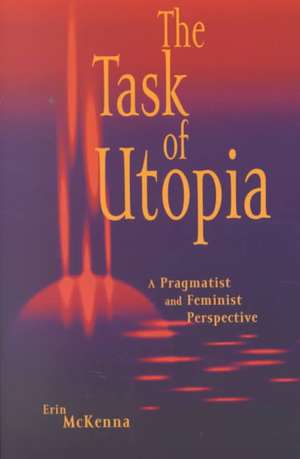
Task of Utopia
Autor Erin Mckennaen Limba Engleză Paperback – 13 noi 2001
Preț: 298.13 lei
Preț vechi: 376.20 lei
-21%
Puncte Express: 447
Preț estimativ în valută:
52.71€ • 62.50$ • 45.72£
52.71€ • 62.50$ • 45.72£
Carte tipărită la comandă
Livrare economică 11-25 martie
Specificații
ISBN-13: 9780742513198
ISBN-10: 074251319X
Pagini: 190
Dimensiuni: 152 x 229 x 10 mm
Greutate: 0.28 kg
Ediția:New.
Editura: Rowman & Littlefield Publishers, Inc.
Locul publicării:New York, United States
ISBN-10: 074251319X
Pagini: 190
Dimensiuni: 152 x 229 x 10 mm
Greutate: 0.28 kg
Ediția:New.
Editura: Rowman & Littlefield Publishers, Inc.
Locul publicării:New York, United States
V-ar putea interesa
-
 Collected PapersGareth Evans-9%Preț: 352.79 lei388.54 lei
 -
 Sensory QualitiesAusten Clark-15%Preț: 362.93 lei425.90 lei
 -
 -11%Preț: 328.22 lei368.79 lei
 -
 Introduction to Medieval LogicAlexander Broadie-14%Preț: 673.91 lei783.62 lei
 -
 Realism in MathematicsPenelope Maddy-15%Preț: 357.96 lei420.77 lei
 -
 -11%Preț: 465.86 lei523.43 lei
 -
 -8%Preț: 323.31 lei350.82 lei
 -
 Intermediate LogicDavid Bostock-11%Preț: 370.50 lei416.28 lei
 -
 Putting Logic in its Place: Formal Constraints on Rational BeliefDavid Christensen-19%Preț: 335.59 lei415.66 lei
 -
 A Philosophical Guide to ConditionalsJonathan BennettPreț: 364.15 lei
 -
 The Philosophy of Mathematics TodayMatthias Schirn-23%Preț: 378.30 lei489.92 lei
 -
 -24%Preț: 364.83 lei481.88 lei
 -
 Vagueness and ContradictionRoy Sorensen-15%Preț: 360.72 lei424.73 lei
 -
 Truth, Thought, Reason: Essays on FregeTyler Burge-13%Preț: 334.63 lei383.75 lei
 -
 New Essays on the Knowability ParadoxJoe Salerno-14%Preț: 679.95 lei790.64 lei
 -
 -14%Preț: 580.97 lei675.55 lei
 -
 An Introduction to Non-Classical LogicGraham PriestPreț: 319.65 lei
 -
 Preț: 227.54 lei
 -
 Pragmatic TurnRichard J BernsteinPreț: 182.52 lei
 -
 Logic: Key Concepts in PhilosophyLaurence Goldstein-18%Preț: 169.14 lei206.93 lei
Cuprins
1 The Problem of the Future
2 The End-state Model of Utopia
3 The Anarchist Model of Utopia
4 Dewey's Democracy: A Process Model of Utopia
5 Feminism, Pragmatism, Community, and Utopia
6 The Future of Utopia
2 The End-state Model of Utopia
3 The Anarchist Model of Utopia
4 Dewey's Democracy: A Process Model of Utopia
5 Feminism, Pragmatism, Community, and Utopia
6 The Future of Utopia
Recenzii
Erin McKenna has convincingly combined two approaches to utopia, pragmatism and feminism, that are unlikely companions. In doing so she has provided insightful readings of both feminist utopias and John Dewey as well as giving us an interesting new approach to utopianism.
In The Task of Utopia Erin McKenna reminds us how valuable utopias can be in structuring moral motivations and energies. The Task of Utopia signals a new level of maturity in feminist pragmatism.
In The Task of Utopia, Erin McKenna writes imaginatively about imagination, constructively about the possibilities and forms of criticism, realistically about hope, and compellingly about the task of envisioning human communities worthy of human commitment. McKenna defends the utopian imagination with a sharp sense of the deep suspicions currently surrounding it, yet her utopianism is clear-eyed: it reckons with the actualities of an irrevocable history as much as it projects the possibilities of a future different from the past. Thus, her processive, pragmatist, and feminist orientation to social philosophy is itself a sign of hope, and a feat of imagination.
In The Task of Utopia Erin McKenna reminds us how valuable utopias can be in structuring moral motivations and energies. The Task of Utopia signals a new level of maturity in feminist pragmatism.
In The Task of Utopia, Erin McKenna writes imaginatively about imagination, constructively about the possibilities and forms of criticism, realistically about hope, and compellingly about the task of envisioning human communities worthy of human commitment. McKenna defends the utopian imagination with a sharp sense of the deep suspicions currently surrounding it, yet her utopianism is clear-eyed: it reckons with the actualities of an irrevocable history as much as it projects the possibilities of a future different from the past. Thus, her processive, pragmatist, and feminist orientation to social philosophy is itself a sign of hope, and a feat of imagination.