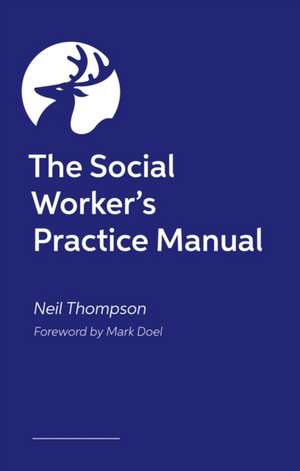
The Social Worker's Practice Manual: The Neil Thompson Practice Collection
Autor Neil Thompson Cuvânt înainte de Mark Doelen Limba Engleză Paperback – 21 aug 2023
Complicated subjects such as cultural sensitivity and managing conflict are discussed thoughtfully and pragmatically, helping you understand the roots of tricky situations and find effective solutions. Each section successfully combines theory and practice to give a holistic view of social work that can be tailored to help each unique client.
Over 45 years of experience distilled into one manual for success.
Preț: 160.26 lei
Preț vechi: 200.29 lei
-20%
Puncte Express: 240
Carte disponibilă
Livrare economică 12-26 noiembrie
Livrare express 28 octombrie-03 noiembrie pentru 69.39 lei
Livrare prin curier în România Termenul estimat este afișat lângă disponibilitate.
Transport gratuit de la 400.00 lei Plată online sau ramburs, în funcție de opțiunile comenzii.
Retur gratuit în 14 zile Comandă securizată și suport în română.
Specificații
ISBN-13: 9781839978036
ISBN-10: 1839978031
Pagini: 288
Ilustrații: 118 images
Dimensiuni: 152 x 228 x 16 mm
Greutate: 0.42 kg
Editura: JESSICA KINGSLEY PUBLISHERS
Colecția Jessica Kingsley Publishers
Seria The Neil Thompson Practice Collection
Locul publicării:London, United Kingdom
ISBN-10: 1839978031
Pagini: 288
Ilustrații: 118 images
Dimensiuni: 152 x 228 x 16 mm
Greutate: 0.42 kg
Editura: JESSICA KINGSLEY PUBLISHERS
Colecția Jessica Kingsley Publishers
Seria The Neil Thompson Practice Collection
Locul publicării:London, United Kingdom
Recenzii
From the inaugural, undergraduate assignment submission, through to the final edit of the most experienced social work practitioner's thesis, there is little in social work that is not highly influenced by the work of Neil Thompson - and this book confirms why. Through chapters that insightfully articulate the attitudes and values that underpin our profession, being prepared and making a difference, to everyday challenges such as working in partnership with others and on into the nuance of professional practice via managing conflict and handling criticism, the essence of good social work practice is beautifully illustrated in this book. Written with authority, confidence and providing vital helpful extras such as 'key points', 'reflective moments' and 'value exercises' to further expand our learning, this book is a gift back to the profession and should be cherished.
Thompson so effortlessly summarises something that I have been trying to instil in the Social Work profession over the last 30 years ... At any level of practice the text offers a go-to manual that allows self-exploration and self-reflection. The exercises are particularly helpful. I am sure that this is a book that I will pick up time and time again.
Thompson so effortlessly summarises something that I have been trying to instil in the Social Work profession over the last 30 years ... At any level of practice the text offers a go-to manual that allows self-exploration and self-reflection. The exercises are particularly helpful. I am sure that this is a book that I will pick up time and time again.
Cuprins
Contents
Welcome!
About the author
Acknowledgements
Foreword by Professor Mark Doel
Preface
Introduction
Why a manual?
Who is it for?
How do I use it?
1.Begin at the beginning
What is social work?
Who needs social work?
What is the value of social work?
2.Attitudes and values
Why are you in social work?
Why are you in this person's life?
Personal and professional values
3.Being prepared
Social work knowledge
The three Rs
Confidence
Preparing yourself
4.Making a difference
Theorizing practice
Social work processes
Social work skills
Social work tools
5.Thinking holistically
The organizational context
The legal and policy context
The social context
The political context
The historical context
6.Working in partnership
With clients
With carers
With fellow professionals
Why partnership?
7.Equality, diversity and social justice
Equality and difference
Difference and diversity
Discrimination and social justice
Pitfalls to avoid
Principles of good practice
8.Being a professional
The alternatives
Knowledge
Skills
Values
Accountability
Development
Identity
Pride
Authentic professionalism
9.Spirituality
The importance of religion
Beyond religion
The implications for practice
10. Reflective practice
What is reflective practice?
What is critical practice?
What is critically reflective practice?
Why do we need critically reflective practice?
11. Growth and change
Ages and stages
Child development
Adolescent development
Adult transitions
Growing old
Facing death
Identity and its importance
12. Health and well-being
Defining health and well-being
Social aspects of health and well-being
Health and disability
The social work role in relation to health
Mental health and well-being
Conclusion
13. Human connection
Authentic connection
Listening
Getting the tone right
Nonverbal communication
Empathy
Social factors
14. Working with families
Family ideology
Family problems and solutions
Family scripts
Power dynamics
Conclusion
15. Working with groups
Why use groupwork?
Planning and purpose
Managing the dynamics
Rising to the challenges
16. Working with communities
Why work with communities?
Capacity building
Effective networking
Conclusion
17. Residential work
Home or institution?
Time and space
Conclusion
18. Court work
Why court work?
What is expected?
What skills are needed?
Conclusion
19. Report writing and record keeping
Why we write
What we write
How we write
20. Managing conflict
Clarifying conflict
The four levels
The RED approach
Conclusion
21. Loss, grief and trauma
The grief paradox: prevalence and invisibility
Beyond stages
Responding to loss
Responding to trauma
Conclusion
22. Risk and decision making
Balancing risk
Assessing risk
Managing risk
Conclusion
23. Focusing on outcomes
What is an outcome?
Why are outcomes important?
Systematic practice
Conclusion
24. Handling dilemmas and tensions
What is a dilemma?
Managing dilemmas and tensions
Conclusion
25. Handling criticism
Doing society's dirty work
Understanding the media
Complaints
Don't take it personally!
Conclusion
26. Pitfalls to avoid
Types of pitfall
Thoughts
Feelings
Actions
Values
Conclusion
27. Surviving and thriving
Motivation and morale
Stress and burnout
Self-care
Surviving and thriving
28. Managing your placement experience
Clarifying expectations
Focusing on learning
Using supervision
Conclusion
29. Managing your career
What is a career?
Upwards or onwards?
The importance of consolidation
Conclusion
30. Keeping the learning going
The importance of learning
Obstacles to learning
Making learning happen
Self-directed learning
Conclusion
Conclusion
Guide to further learning
References
Welcome!
About the author
Acknowledgements
Foreword by Professor Mark Doel
Preface
Introduction
Why a manual?
Who is it for?
How do I use it?
1.Begin at the beginning
What is social work?
Who needs social work?
What is the value of social work?
2.Attitudes and values
Why are you in social work?
Why are you in this person's life?
Personal and professional values
3.Being prepared
Social work knowledge
The three Rs
Confidence
Preparing yourself
4.Making a difference
Theorizing practice
Social work processes
Social work skills
Social work tools
5.Thinking holistically
The organizational context
The legal and policy context
The social context
The political context
The historical context
6.Working in partnership
With clients
With carers
With fellow professionals
Why partnership?
7.Equality, diversity and social justice
Equality and difference
Difference and diversity
Discrimination and social justice
Pitfalls to avoid
Principles of good practice
8.Being a professional
The alternatives
Knowledge
Skills
Values
Accountability
Development
Identity
Pride
Authentic professionalism
9.Spirituality
The importance of religion
Beyond religion
The implications for practice
10. Reflective practice
What is reflective practice?
What is critical practice?
What is critically reflective practice?
Why do we need critically reflective practice?
11. Growth and change
Ages and stages
Child development
Adolescent development
Adult transitions
Growing old
Facing death
Identity and its importance
12. Health and well-being
Defining health and well-being
Social aspects of health and well-being
Health and disability
The social work role in relation to health
Mental health and well-being
Conclusion
13. Human connection
Authentic connection
Listening
Getting the tone right
Nonverbal communication
Empathy
Social factors
14. Working with families
Family ideology
Family problems and solutions
Family scripts
Power dynamics
Conclusion
15. Working with groups
Why use groupwork?
Planning and purpose
Managing the dynamics
Rising to the challenges
16. Working with communities
Why work with communities?
Capacity building
Effective networking
Conclusion
17. Residential work
Home or institution?
Time and space
Conclusion
18. Court work
Why court work?
What is expected?
What skills are needed?
Conclusion
19. Report writing and record keeping
Why we write
What we write
How we write
20. Managing conflict
Clarifying conflict
The four levels
The RED approach
Conclusion
21. Loss, grief and trauma
The grief paradox: prevalence and invisibility
Beyond stages
Responding to loss
Responding to trauma
Conclusion
22. Risk and decision making
Balancing risk
Assessing risk
Managing risk
Conclusion
23. Focusing on outcomes
What is an outcome?
Why are outcomes important?
Systematic practice
Conclusion
24. Handling dilemmas and tensions
What is a dilemma?
Managing dilemmas and tensions
Conclusion
25. Handling criticism
Doing society's dirty work
Understanding the media
Complaints
Don't take it personally!
Conclusion
26. Pitfalls to avoid
Types of pitfall
Thoughts
Feelings
Actions
Values
Conclusion
27. Surviving and thriving
Motivation and morale
Stress and burnout
Self-care
Surviving and thriving
28. Managing your placement experience
Clarifying expectations
Focusing on learning
Using supervision
Conclusion
29. Managing your career
What is a career?
Upwards or onwards?
The importance of consolidation
Conclusion
30. Keeping the learning going
The importance of learning
Obstacles to learning
Making learning happen
Self-directed learning
Conclusion
Conclusion
Guide to further learning
References